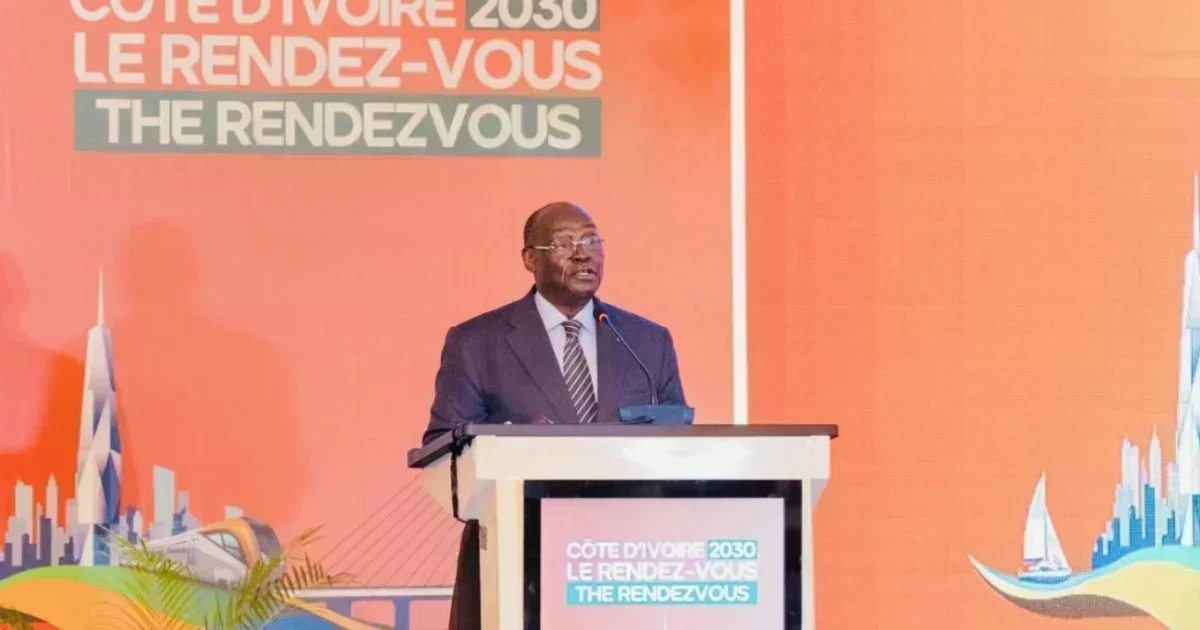
Côte d’Ivoire has once again demonstrated its strong economic appeal by securing international funding far beyond initial projections for its National Development Plan (NDP) through 2030. The announcement, made by the Minister of Planning, revealed commitments exceeding $80 billion—quadrupling the originally anticipated $20 billion target.
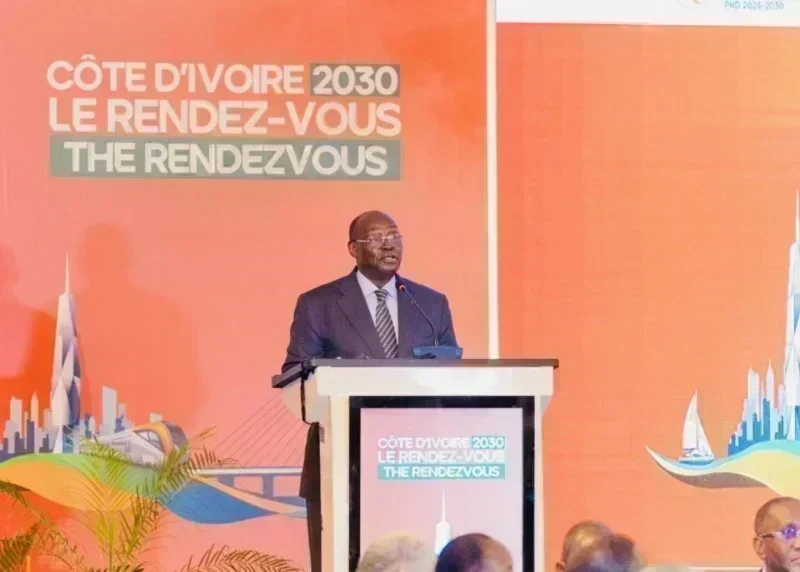
This remarkable achievement underscores Côte d’Ivoire’s economic resilience and growing investor confidence, following years of post-crisis recovery. With an average annual growth rate of 6.5% over the past decade, the country has positioned itself as one of West Africa’s most dynamic economies.
A high-profile two-day conference in Abidjan brought together government officials and hundreds of public and private investors to finalize funding for the NDP. The plan prioritizes key sectors including security enhancement, agricultural modernization—which contributes 20% to national GDP—and the creation of homegrown corporate leaders. Major infrastructure projects, including a high-speed rail network, are also part of the ambitious roadmap.
Breakdown of secured funding
While Côte d’Ivoire initially sought $20 billion in public financing, international partners committed over $80 billion—four times the requested amount. Major contributors include the World Bank, the African Development Bank, and the European Union.
The Minister of Planning emphasized the country’s strong macroeconomic indicators, noting that over 70% of the total NDP funding—amounting to more than $147 billion—is expected from the private sector. The overall NDP budget now stands at $209 billion, with significant contributions from the Ivorian government itself.
This financial milestone follows Côte d’Ivoire’s successful $1.3 billion international bond issuance in February, secured at exceptionally favorable terms for an emerging market. Earlier in June, the International Monetary Fund also approved nearly $833 million in additional support, praising the nation’s resilient economy while projecting a slight growth slowdown to 6% in 2026, compared to 6.5% in 2025, alongside a projected inflation rate of 3.3% for the year.
The Ivorian economy, traditionally anchored in agriculture, has been diversifying into mining, gas, and oil sectors in recent years, further strengthening its growth prospects.