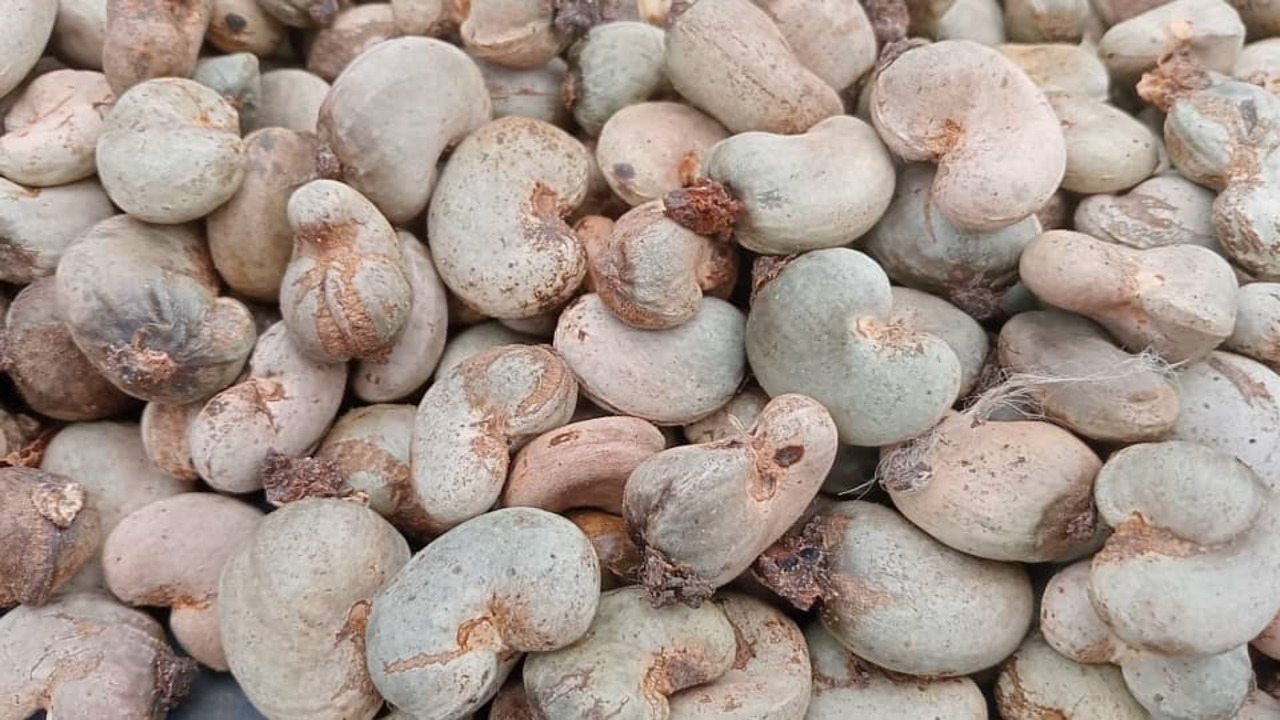
Côte d’Ivoire is currently experiencing the heart of its cashew harvest season, a critical period for the nation’s economy. This year, the Cotton and Cashew Council projected a harvest of 1.3 million tonnes, a figure consistent with recent seasons. However, early assessments reveal a potential shortfall of 200,000 tonnes compared to last year’s output.
Among the regions facing challenges, Bounkani, located in the northeastern part of the country, is grappling with the most significant difficulties. The irregularities in seasonal rainfall patterns have severely impacted cashew production in this area.
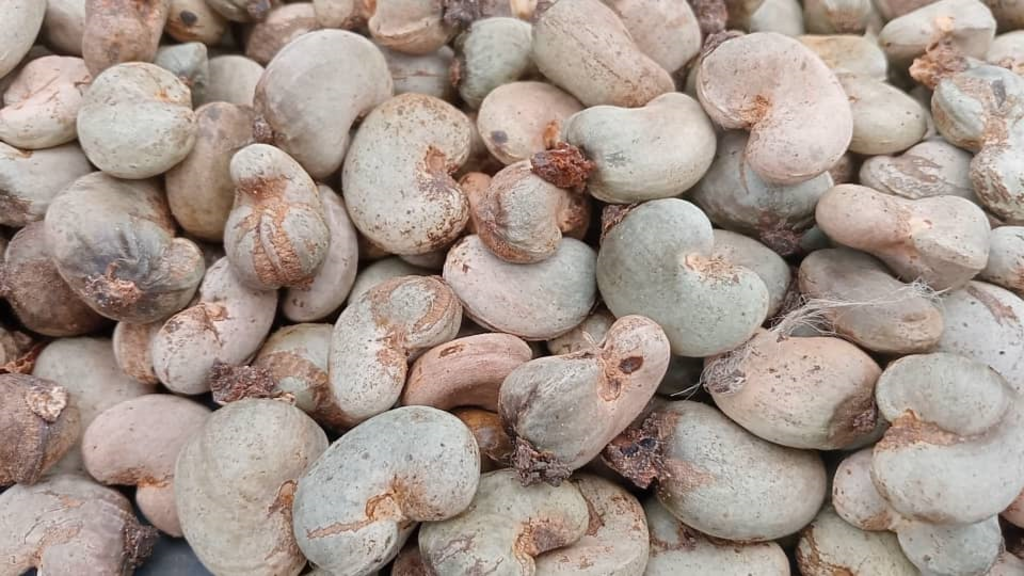
Kouamé Ouattara, a farmer in Bouna, shared his concerns during a recent visit. His three-hectare cashew plantation, which previously yielded 500 kg per hectare, produced almost nothing this season. «Three years ago, I could harvest 500 kg per hectare. Now, I barely manage to collect two bags from the entire 3 hectares,» he explained.
Ouattara attributed the decline to disrupted rainfall patterns. «Normally, heavy rains from November to December encourage flowering in cashew trees,» he noted. «This year, the rains stopped in October. No significant rainfall occurred from October through February, and without flowering, there can be no harvest. The damage is done, and we’ll have to wait until next year.»
The consequences extend beyond cashew farmers. Beekeepers, who rely on cashew plantations for their hives, are also suffering. Koffi Ouattara, president of the Koflangué Beekeepers Association, reported a drastic reduction in honey production. «Last year, we harvested 100 litres of honey. This year, we’ve barely managed 30 litres,» he lamented. «It’s a significant loss for us.»
Addressing farming practices for a sustainable future
While climate factors play a role, experts point to unsustainable agricultural practices as a major contributor to the crisis. Dr. Sibirina Soro, a researcher at the University of Daloa and coordinator of the National Cashew Research Project, highlighted the issue of plantation density. «Many cashew plantations resemble forests rather than cultivated fields,» he explained. «The initial planting density was not respected. We now advise farmers to rehabilitate their orchards to achieve an optimal density of 100 trees per hectare.»
Soro also emphasized the importance of training farmers to combat pests and improve crop resilience. In Côte d’Ivoire, cashew farmers avoid chemical pesticides, relying instead on natural methods. While this approach protects the environment, it leaves farmers more vulnerable to losses during poor harvests.