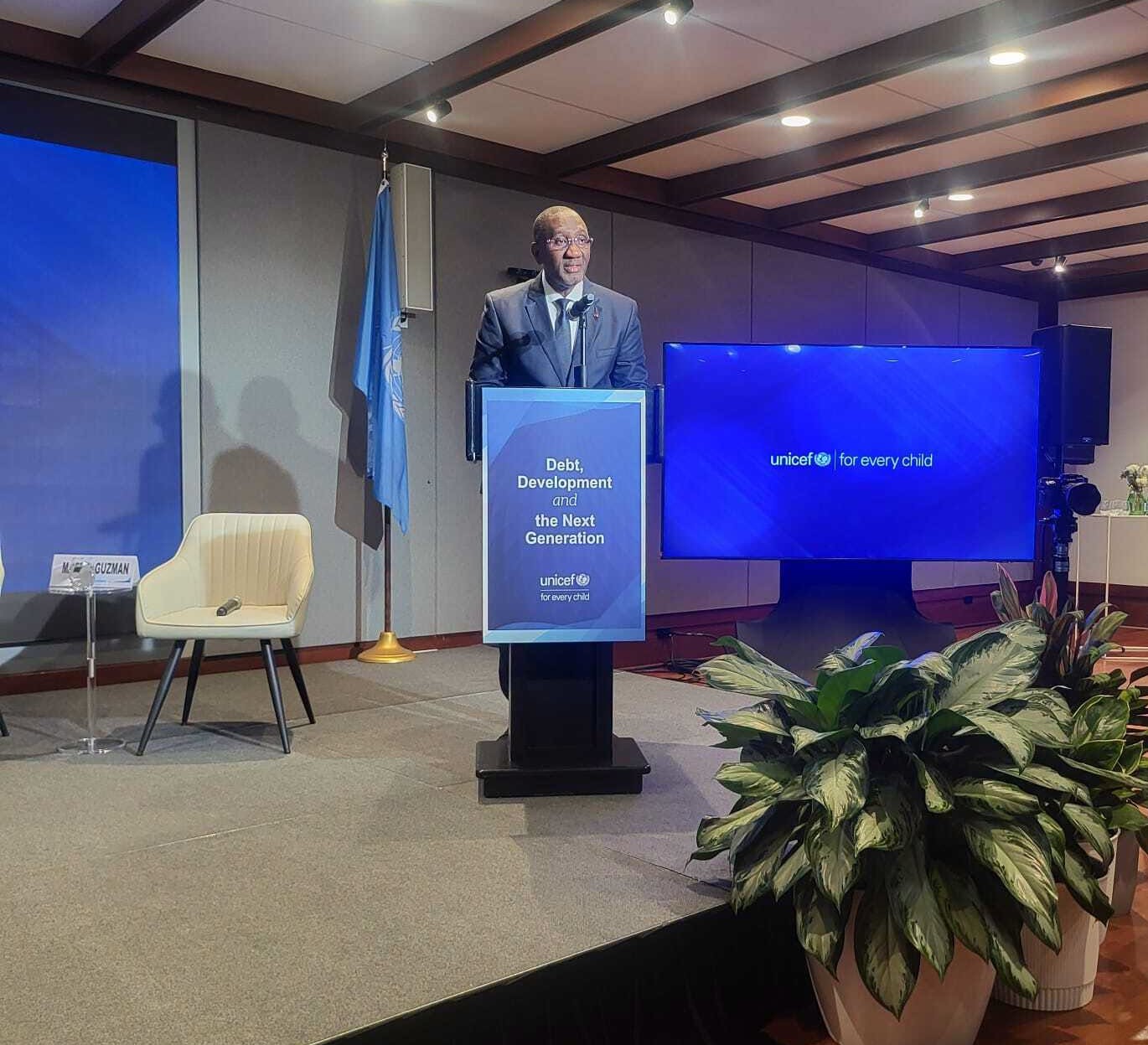
What matters more for a nation’s children: the weight of its debt or the way that debt is used? That is the question Côte d’Ivoire carried to New York on 21 and 22 September 2026, when Planning and Development Minister Dr Souleymane Diarrassouba took part in two high-level UNICEF gatherings. One focused on financing artificial intelligence in education; the other tackled how debt burdens future generations. In both rooms, he laid out the Ivorian experience and the deliberate choices made to shield human capital investment.
An ai compact that puts learning first
On 21 September, the minister spoke at the Learn AI Global Compact, a UNICEF initiative built around the theme of responsible artificial intelligence serving every learner. His message centred on how Côte d’Ivoire finances sustainability — and what that could mean for classrooms.
The country took a decisive step in 2025 by adopting a dedicated framework and securing a €433.3 million loan whose financial terms shift according to results in renewable energy and forest restoration. The deal carries a joint guarantee from the International Bank for Reconstruction and Development and the Multilateral Investment Guarantee Agency. It stands as West Africa’s first sovereign sustainability-linked loan.
From forests to learning outcomes
In New York, the conversation turned to whether the same model could be extended to human capital through a sustainability-linked bond. Under that scenario, borrowing conditions would be tied to learning results measured at national level.
Such a mechanism demands reliable, verifiable learning indicators and careful management of financial risk. Loan duration would need to match the lifespan of the investments it funds. Child data protection, along with the accountability of states and teachers in pedagogical decisions, also featured among the principles Côte d’Ivoire put forward.
The National Development Plan 2026-2030 envisages greater use of digital tools and artificial intelligence, particularly in education and training. Côte d’Ivoire signalled its readiness to keep working with UNICEF and Learn AI Global Compact partners on verifiable learning indicators and a suitable guarantee mechanism.
The stakes for 400 million children
On 22 September, the minister addressed a second high-level UNICEF meeting on debt, development and future generations. UNICEF estimates that nearly 400 million children live in countries where debt is growing faster than investment in health, education and nutrition.
He restated Côte d’Ivoire’s position: the impact of debt on people depends on how it is allocated, how it is structured and what it costs.
The National Development Plan 2026-2030 provides the reference framework for that policy. It gives significant weight to human capital, skills and employment, and sets targets for maternal and child health, universal health coverage, social protection and improvement of the human capital index.
Swapping debt for development
Alongside these efforts, Côte d’Ivoire manages its debt around risk control, budget sustainability and the pursuit of better financing terms.
In 2024, with support from the World Bank Group, the country completed a debt-for-development swap. Close to €400 million of commercial debt was refinanced. The operation is expected to free up roughly €330 million in budgetary resources over five years, with a substantial share channelled to education through national budget mechanisms.
“A debt with a human face is not a cancelled debt. It is a debt whose allocation, structure and cost serve health, education and the protection of children,” Dr Souleymane Diarrassouba declared.
The choices that will define a generation
Through these two interventions, Côte d’Ivoire presented the principles guiding its development financing policy: preserve debt sustainability, direct resources toward national priorities and explore new instruments when they can contribute to the goals of the National Development Plan 2026-2030. Education, health, social protection and, more broadly, human capital development remain at the heart of those priorities.