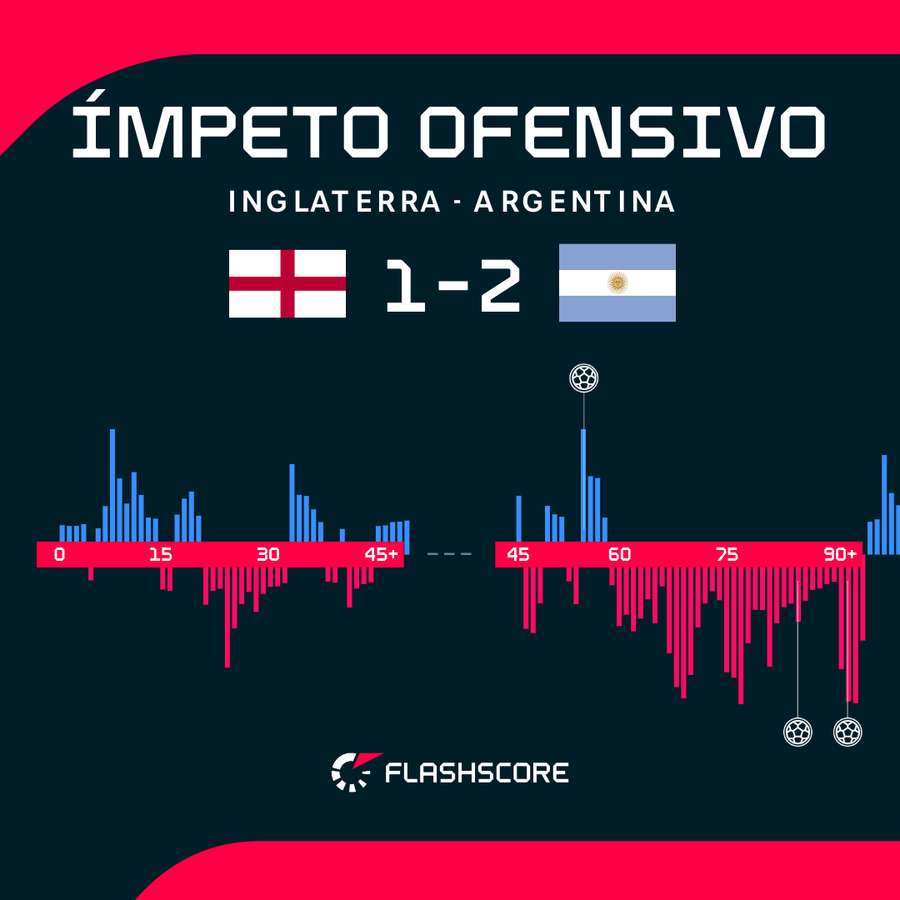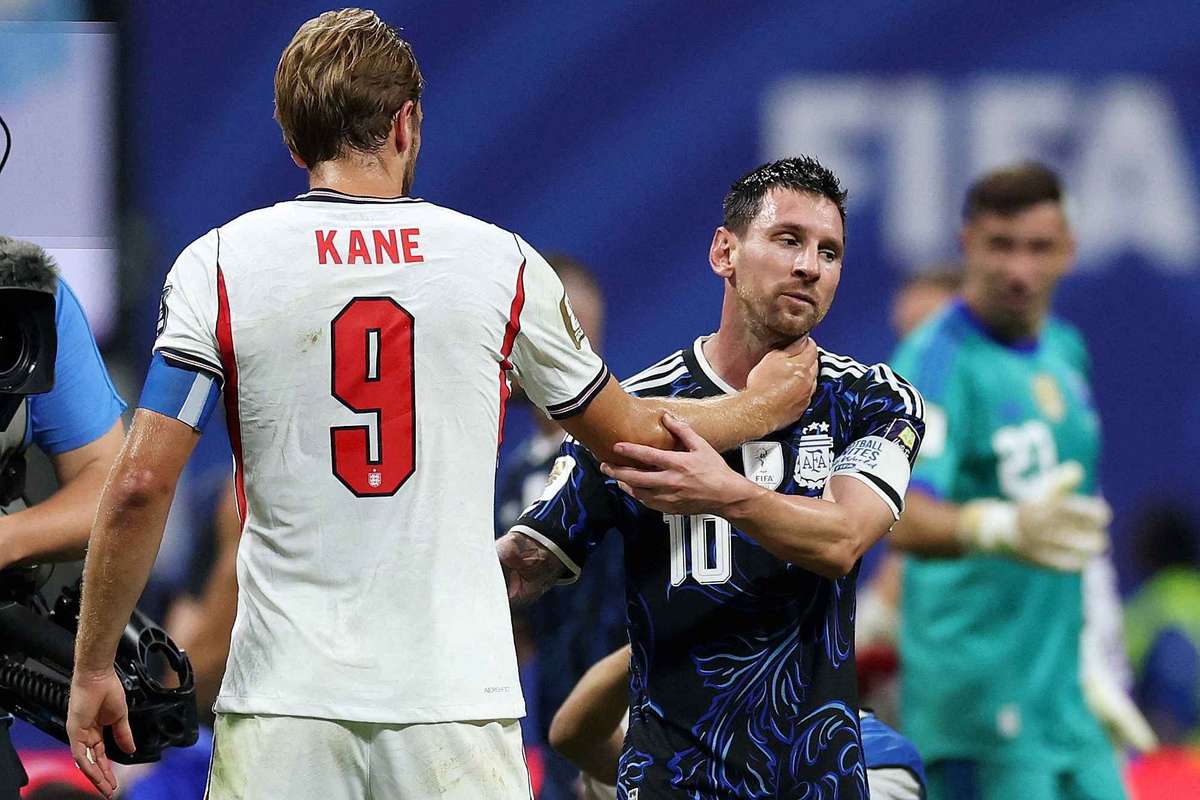
The first 48 minutes of the World Cup semifinal between England and Argentina would have been forgettable if it had lasted the entire match. With just three shots taken—none on target—and a combined expected goals (xG) of 0.08, the opening half offered little excitement. Argentina dominated possession at 56%, but their controlled passing (90% accuracy) lacked penetration, producing only two attempts.
Then came the second half—a complete transformation. The match erupted with 17 shots, five times more than the first period, including 13 for Argentina. Their xG skyrocketed to 1.81 in the final 45 minutes, nearly matching their total for the entire game (1.84). Possession surged to 73%, while pass accuracy in the final third improved to 89% from 74% earlier.
England’s tactical shift after conceding was stark. Anthony Gordon’s 54th-minute goal prompted a defensive retreat, with manager Thomas Tuchel introducing three defensive reinforcements—Ezri Konsa, Dan Burn, and Nico O’Reilly—while sacrificing midfield control. The result? A team increasingly pinned back, struggling to launch attacks.
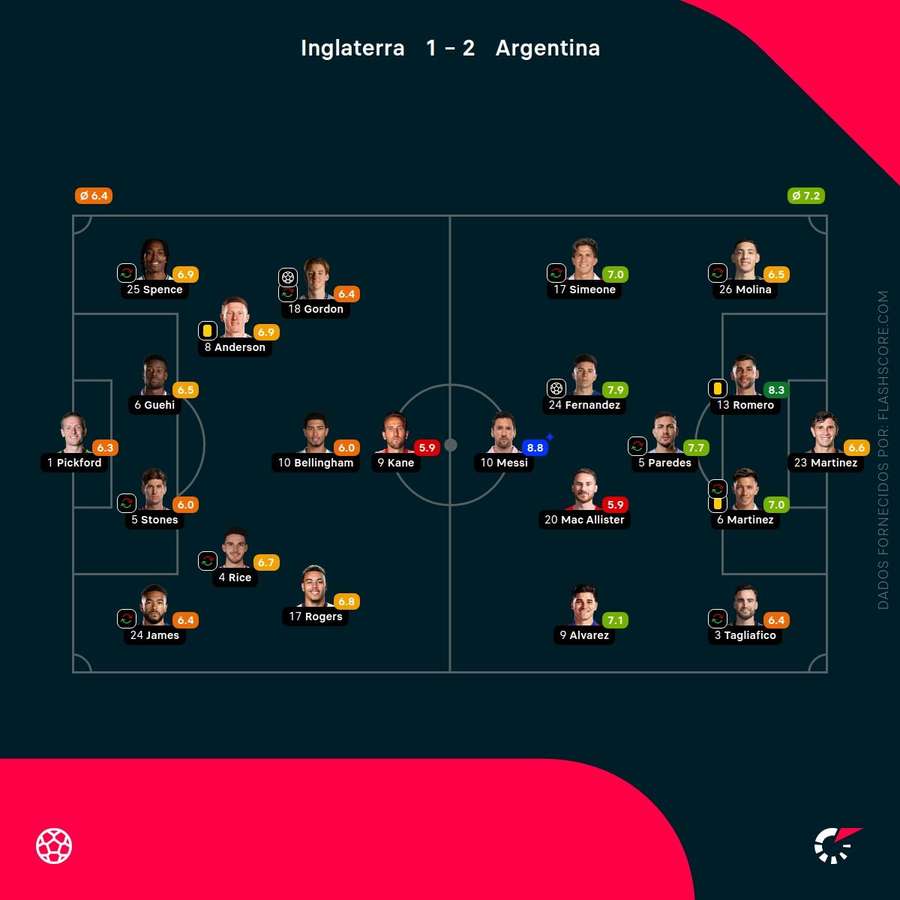
Argentina’s aggressive response contrasted sharply. Lionel Scaloni’s substitutions prioritized attack, bringing on Nico González, Gonzalo Montiel, Rodrigo De Paul, and Nicolás Otamendi, with Lautaro Martínez entering at 81 minutes. The Albiceleste’s pressure grew relentless, culminating in two goals in the final 10 minutes: Enzo Fernández equalized at 85’, followed by Martínez’s winner at 90’+2’.
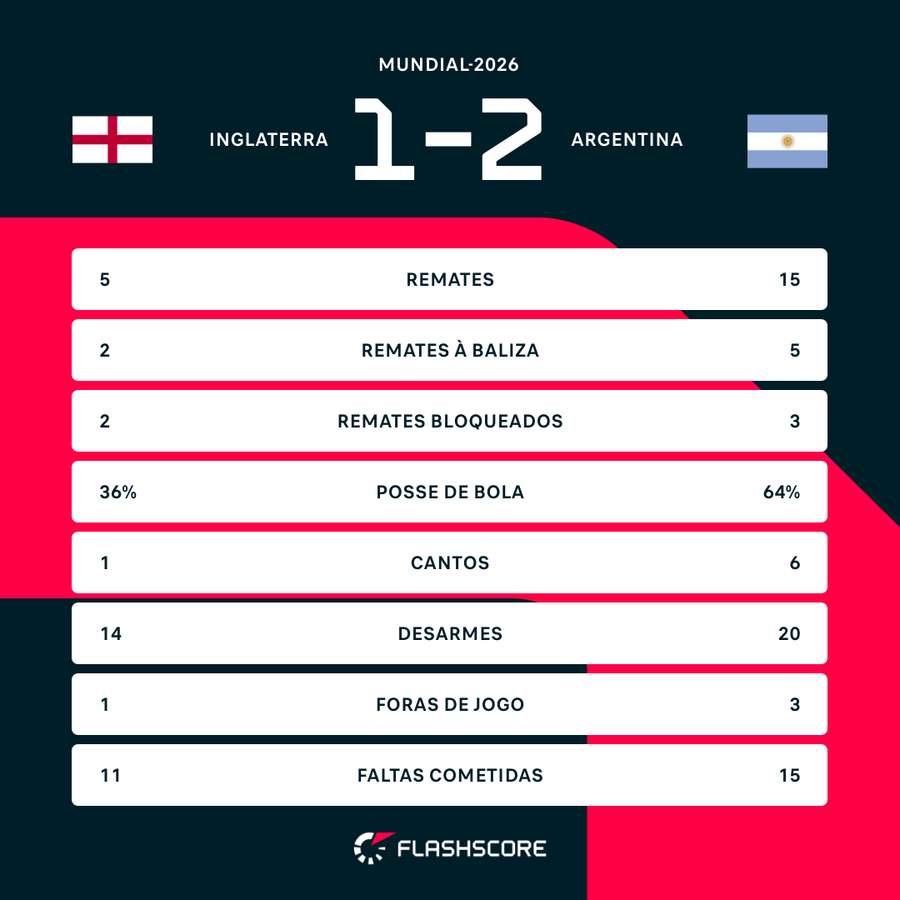
The match’s final tally—2-1—barely reflects the one-sided second half. England managed just five shots to Argentina’s 15, with the majority arriving after the Albiceleste seized control. The disparity in intent and execution sealed England’s fate long before the whistle blew.