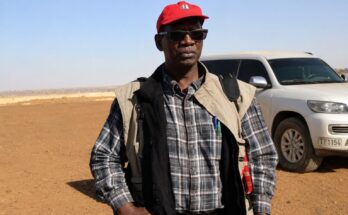
Venance Konan exposes the contradictions of modern panafricanism

As the South African judiciary prepares to rule on Kémi Séba’s case—detained in April while allegedly attempting illegal entry to Zimbabwe—the writer Venance Konan questions whether the activist, a social media influencer with 1.5 million followers, truly embodies the spirit of modern panafricanism. This moment invites a deeper look at the movement’s evolution and its current contradictions.

Kémi Séba, whose real name is Stellio Gilles Robert Capo Chichi, holds dual citizenship in Benin and Niger, along with a diplomatic passport. His recent arrest in South Africa alongside his 18-year-old son and François Van der Merwe—a white South African apartheid nostalgia advocate—raises serious questions about the nature of his activism. While Séba heads the NGO Urgences panafricanistes, he is primarily recognized for his militant anti-French, anti-CFA franc, and antisemitic rhetoric, which led to the revocation of his French nationality.
According to reports, Séba was attempting to enter Zimbabwe illegally, possibly en route to Europe. He faces prosecution in Benin for “glorifying crimes against state security and inciting rebellion” after sharing a video supporting soldiers involved in a failed December coup. An international arrest warrant has been issued against him.
Russian propaganda and support for Sahel dictatorships
Kémi Séba, Franklin Nyamsi, and Nathalie Yamb represent the most vocal voices of panafricanism in Francophone Africa. Together, they form the vanguard of opposition to French influence on the continent. Yet they also serve as the most prominent propagandists for Russia in Africa and staunch supporters of the three military leaders of the Alliance of Sahel States (AES)—Assimi Goïta of Mali, Ibrahim Traoré of Burkina Faso, and Abdourahamane Tiani of Niger. Does this new panafricanism entail rejecting France only to embrace Russian dominance while backing putschists who openly reject democracy?
To understand this shift, it’s essential to revisit the origins of panafricanism. Conceived in the early 20th century within Black American and Caribbean intellectual circles, this ideology and political movement sought to unite, emancipate, and solidarize African peoples and the diaspora. It championed self-determination, dignity, and economic cooperation, serving as a driving force behind anticolonial struggles across Africa. Key figures like Kwame Nkrumah of Ghana, Sékou Touré of Guinea, and Patrice Lumumba of the Democratic Republic of Congo emerged as its most prominent advocates.
The decline of panafricanism and the rise of micro-nationalism
The struggle for independence in the late 1950s and early 1960s was widely seen as a triumph of panafricanist ideals. The creation of the Organization of African Unity (OAU) in 1963 was hailed as a milestone toward continental unity. However, the momentum stalled as micro-nationalisms took hold. Instead of integration, the continent witnessed secessions such as Eritrea’s independence and the division of Sudan. Attempts at secession, like in Biafra and Casamance, further fragmented the vision of a unified Africa. In 2002, Libyan leader Muammar Gaddafi attempted to revive the dream of a united Africa by transforming the OAU into the African Union (AU), but this initiative failed to gain traction. By 2011, Gaddafi himself was overthrown by a Franco-American-British coalition. The AU introduced the New Partnership for Africa’s Development (NEPAD) in 2001, yet this ambitious project has since faded into obscurity.
From civil wars to the persecution of Africans
Today, the term “panafricanism” is often invoked more for political convenience than genuine commitment. In Ivory Coast, former President Laurent Gbagbo recently launched the Parti des Peuples Africains-Côte d’Ivoire (PPA-CI), positioning it as a panafricanist movement. Similarly, Senegal’s ruling party, the Patriotes Africains du Sénégal pour le Travail, l’Éthique et la Fraternité (PASTEF), claims panafricanist ideals. Yet, in practice, African nations frequently engage in hostility toward one another. While some regions, like the Horn of Africa or the Great Lakes, endure civil wars, others—such as South Africa—persecute African migrants within their borders. Meanwhile, West African nations, particularly those in the Sahel and the Economic Community of West African States (ECOWAS), remain deeply divided.
The urgency of true panafricanism
Where, then, are today’s panafricanists? Kémi Séba, Franklin Nyamsi, and Nathalie Yamb dominate social media discourse with their fiery rhetoric. Séba, originally from Benin, lost his French citizenship due to his extreme anti-French stance. Nyamsi, from Cameroon, also faces scrutiny from Paris for his vocal opposition to France, while Yamb, of Cameroonian-Swiss descent, has been sanctioned by the European Union for similar reasons. They portray themselves as persecuted champions fighting Western oppression, particularly against France. But where does panafricanism stand when these figures openly align with Russian interests on the continent? Can liberation truly be achieved by submitting to another form of domination? The atrocities committed by Russian mercenaries in the Sahel speak for themselves. Where is the panafricanist spirit when these activists lend their voices to oppressive regimes that suppress freedoms, imprison dissenters, and silence opposition?
According to Séba’s leaked phone conversations, Nyamsi and Yamb—whom he dismisses as “opportunists”—are allegedly now in the employ of Faure Gnassingbé, the Togolese president. Séba himself has publicly expressed regret over losing his French nationality, revealing the contradictions in his own stance. This so-called panafricanism reeks of hypocrisy and opportunism. Yet, in a world dominated by predatory powers, Africa’s survival hinges on rapid unity. The continent must urgently embrace a renewed, authentic panafricanism to reclaim its future.