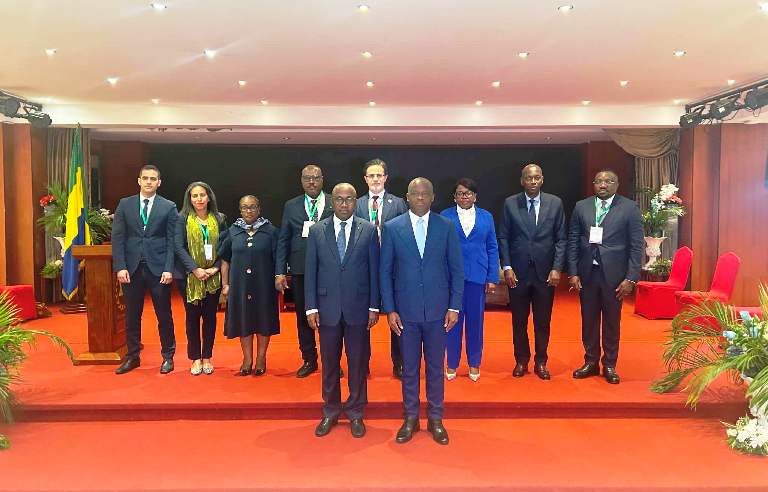
Senior government officials and international experts gathered in Libreville for a high-stakes anti-corruption dialogue, marking the launch of Gabon’s second-cycle evaluation under the United Nations Convention against Corruption (UNCAC).
The four-day session, inaugurated by Vice-President Hermann Immongault on June 29, 2026, brings together public sector technocrats, UN Office on Drugs and Crime (UNODC) specialists, and global partners to assess progress in transparency, accountability, and institutional governance reforms.
Gabon ratified the UNCAC in 2007, committing to systemic improvements across public administration. Speaking at the opening, Immongault emphasized the transformative power of integrity in governance: « Public integrity drives governmental efficiency, safeguards investments, enhances economic competitiveness, and fosters sustainable, inclusive development ».
The evaluation focuses on two critical areas: preventive measures and asset recovery—key pillars of the UNCAC’s second review cycle. Séraphin Ondoumba, UNODC focal point and anti-corruption commissioner, described the dialogue as a strategic platform to « not only gauge national efforts but also deepen international cooperation and share best practices ».
Mission leader Mohamed Cherbal outlined the team’s mandate: « This week, we will scrutinize Gabon’s corruption control frameworks, with special attention to UNCAC articles on prevention and illicit asset recovery ».
This assessment follows Gabon’s 2010–2015 first-cycle review, which evaluated legal enforcement and international cooperation. Now, the stakes are higher as officials seek to refine policies and address lingering challenges. Nestor Mbou, Chair of Gabon’s anti-corruption commission, framed the dialogue as an opportunity to « transcend legal assessments and chart concrete improvements »—identifying strengths, gaps, and actionable recommendations.
The findings will guide future reforms, aiming to strengthen prevention, oversight, and asset recovery mechanisms. Ultimately, the goal is a more transparent, accountable administration aligned with citizen expectations.