The central theme, “Empowering Robust Enterprises for Sustainable Growth and Shared Prosperity,” powerfully articulated the dynamic economic expansion envisioned for Gabon. This core message resonated strongly throughout the addresses delivered by both leading economic operators and former state officials participating in this significant gathering.
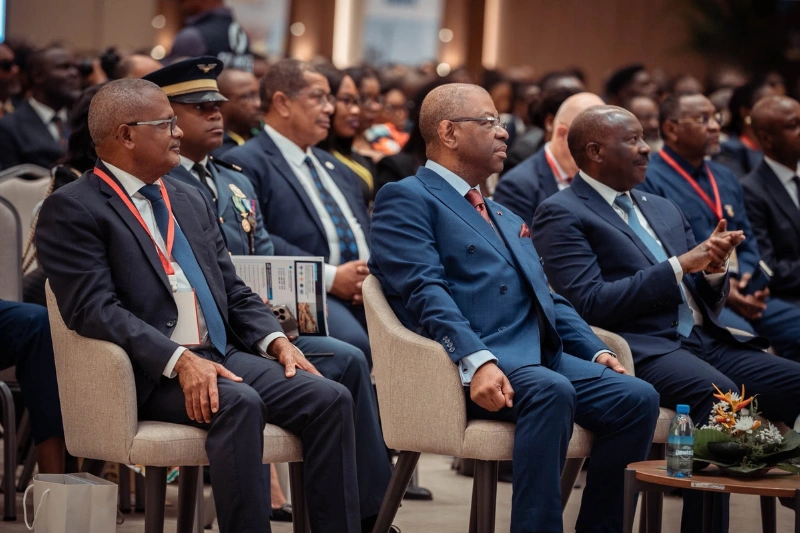
The second edition of the Gabon Economic Forum (GEF) recently convened at the Palais des Congrès in the Cité de la Démocratie, an initiative spearheaded by the Federation of Gabonese Enterprises (FEG). Discussions at the forum predominantly focused on defining the crucial position and role of the private sector within the nation’s evolving economic direction.
Alain-Claude Kouakoua, President of the FEG, passionately advocated for a partnership founded on mutual trust between the private sector and the State, highlighting its indispensability for Gabon’s economic development and competitiveness. Republic Vice-President Hugues Alexandre Barro Chambrier readily concurred, acknowledging, “Without such trust, progress is impossible, and vital investments will simply not materialize.”
In this spirit, while the preceding GEF edition provided an objective assessment of the challenges confronting the Gabonese economy, GEF 2026 calls for a decisive leap forward. Mr. Kouakoua emphasized the imperative to transcend mere analysis, asserting, “A diagnosis, no matter how insightful, holds little value unless it culminates in actionable solutions; observations alone do not enhance citizens’ lives; reports do not generate employment. Ultimately, only concrete results truly matter.”
Mr. Barro Chambrier underscored the collective responsibility, indicating that each stakeholder must fulfill their part. He offered assurances that “the State will continue its efforts to foster an attractive business climate and ensure that sound public financial management facilitates prompt payments to companies.”
These affirmations collectively confirm a fundamental truth: no nation has achieved sustainable development without robust domestic enterprises, nor has any government created widespread employment without significant private investment and a vibrant entrepreneurial ecosystem. In essence, the private sector is not a peripheral player in development; it is its indispensable engine.
Demonstrating a profound grasp of economic and developmental principles, the Vice-President articulated that “the private sector must assume its pivotal role as the driver of economic transformation, wealth generation, and the enhancement of living standards for the populace,” naturally, with essential government backing.
—
—
Following the conclusion of the second Gabon Economic Forum, there is a palpable hope for a decisive shift from extensive discourse to tangible action. While some advancements have been observed in recent years, the undeniable reality persists: the true hurdle is no longer about making announcements, but rather about effective execution.
This is because investors deploy capital based on clear visibility, confidence in institutions, the reliability of public commitments, regulatory stability, a fair justice system, and the collective capacity to honor pledges. Alain-Claude Kouakoua reiterated, “This is why the FEG will persistently advocate for an economic landscape anchored in predictability, legal certainty, transparency, and the faithful observance of commitments.”
For him, the operationalization of the African Continental Free Trade Area (AfCFTA) heralds a transformative chapter in the continent’s economic narrative. For Gabonese enterprises, the focus extends beyond merely supplying the domestic market. The imperative now is to strategize how to produce for the broader African continent, penetrate new markets, seamlessly integrate into regional value chains, and cultivate national champions capable of elevating Gabon’s presence far beyond its national boundaries.