Benin is undergoing a radical transformation in its fruit export sector, driven by a bold strategy to modernize its agricultural value chain. With the construction of a state-of-the-art industrial unit for vitroplant production in Glo-Djigbé and the development of a high-tech fruit terminal at Cotonou International Airport, the country is redefining its role in global agribusiness. This visionary approach, spearheaded under the leadership of President Romuald Wadagni, aims to boost economic impact, enhance local self-sufficiency, and position Benin as a competitive player in high-demand international markets.
Breaking new ground in agricultural economics
For decades, Benin’s economy has relied heavily on agriculture, but traditional practices and inadequate infrastructure have long hindered its potential. Historically, the country exported raw, unstandardized produce, suffering significant post-harvest losses due to poor logistics. The current administration has taken decisive action to overhaul this model. The focus is no longer solely on production but on end-to-end mastery of the value chain to maximize added value.
The government’s strategy targets high-value fruits such as pineapple, cashew, and mango—commodities in strong global demand but subject to stringent quality standards. The economic benefits are substantial: projected increases in export revenues, stabilized incomes for local farmers, and the creation of skilled jobs within newly developed technological and logistical hubs. Spearheaded by the Agricultural Competitiveness and Export Diversification Support Project (PACOFIDE), this initiative is shifting Benin from subsistence farming to a competitive agro-industry.
Glo-Djigbé: the seed of agricultural revolution
At the heart of this transformation lies the Special Economic Zone (SEZ) of Glo-Djigbé, home to an advanced industrial facility for vitroplant production nearing completion. With an annual capacity of 13.5 million vitroplants, this facility is set to redefine the country’s agricultural landscape.
During a recent inspection visit, Agriculture Minister Adin Yeton Bloukounon Goubalan emphasized the pivotal role of seed technology in agricultural success: “In every major agricultural power, seed technology is central to sector transformation. No nation can achieve agricultural revolution without controlling its seed industry.”
The economic implications of this plant are twofold:
- For farmers: Access to healthy, uniform, and high-yielding plant material. Gone are the days of unreliable traditional seeds that compromised harvests. Farmers will now have access to disease-resistant, internationally compliant planting material.
- For trade balance: By boosting yields per hectare without expanding cultivated land, Benin optimizes production costs and strengthens its competitive edge against regional rivals.
To ensure a smooth technological transition, the government has allocated 1,000 hectares at the former Glo-Djigbé airport site for elite and demonstration fields. This open-air laboratory will multiply and validate the performance of new pineapple vitroplants before large-scale distribution, ensuring farmers achieve maximum return on investment.
Cotonou’s fruit terminal: bridging the logistics gap
Producing high-quality fruit in abundance is meaningless if perishable goods spoil on airport tarmacs. This critical challenge is addressed by the second pillar of the PACOFIDE strategy: the construction of a modern fruit terminal at Cotonou’s Bernardin Gantin International Airport.
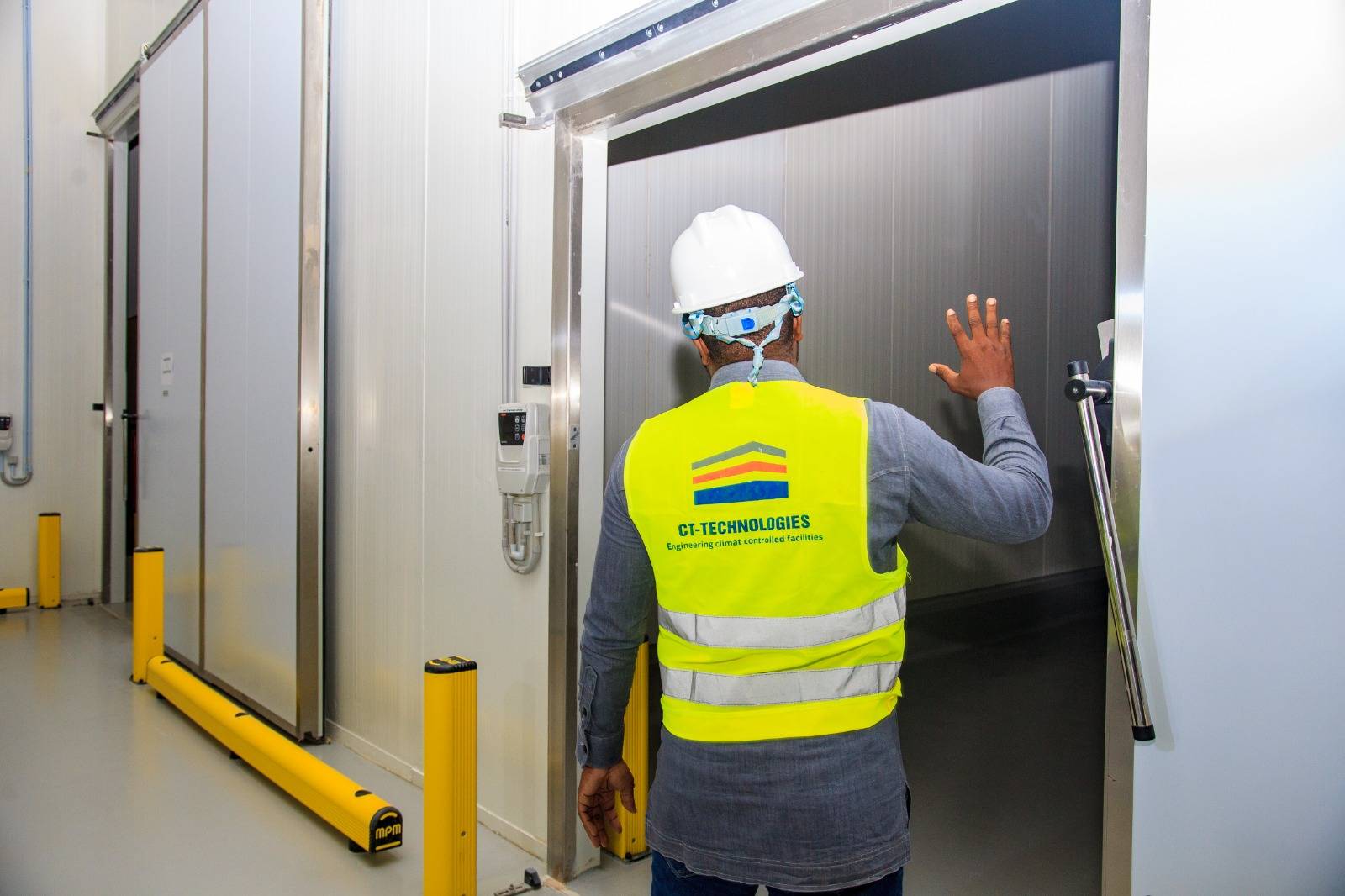
This logistical innovation breathes new life into the export of fresh produce. Equipped with cold storage chambers, refrigerated warehouses, freezers, and dedicated customs and import-export zones, the terminal can simultaneously handle up to 736 fruit pallets. The financial impact is immediate: by maintaining the cold chain from farm to aircraft, Benin drastically reduces shrinkage (merchandise loss). Beninese fruits, particularly sugar pineapple and vegetables, will reach European and Asian markets with unmatched freshness, enabling more favorable pricing negotiations.
A policy welcomed by stakeholders
A recent ministerial inspection confirmed that project timelines are being strictly adhered to. Minister Bloukounon Goubalan expressed strong satisfaction with construction quality, reiterating that under President Wadagni’s leadership, Benin is making a bold choice for economic sovereignty: “Seeds are the primary factor of production. By controlling seed technology, we strengthen our competitiveness. Benin is taking charge of its seed industry.”
This integrated approach—combining upstream scientific research with downstream logistical excellence—addresses a long-standing structural gap. It also reassures private investors and international partners, positioning Benin as an increasingly reliable and structured agricultural actor.
By interconnecting the high-tech SEZ of Glo-Djigbé with the operational efficiency of Cotonou’s fruit terminal, the Beninese government is laying the foundations for a resilient, export-driven agricultural economy. This industrial and scientific wager aims not only to increase volumes but to structurally transform the national economy. By controlling its seeds and cold chain, Benin ensures that the wealth generated by its land remains, for the first time, predominantly in the hands of its local stakeholders. The Beninese green revolution is underway—and it now boasts the technological arguments to make its mark on the global stage.