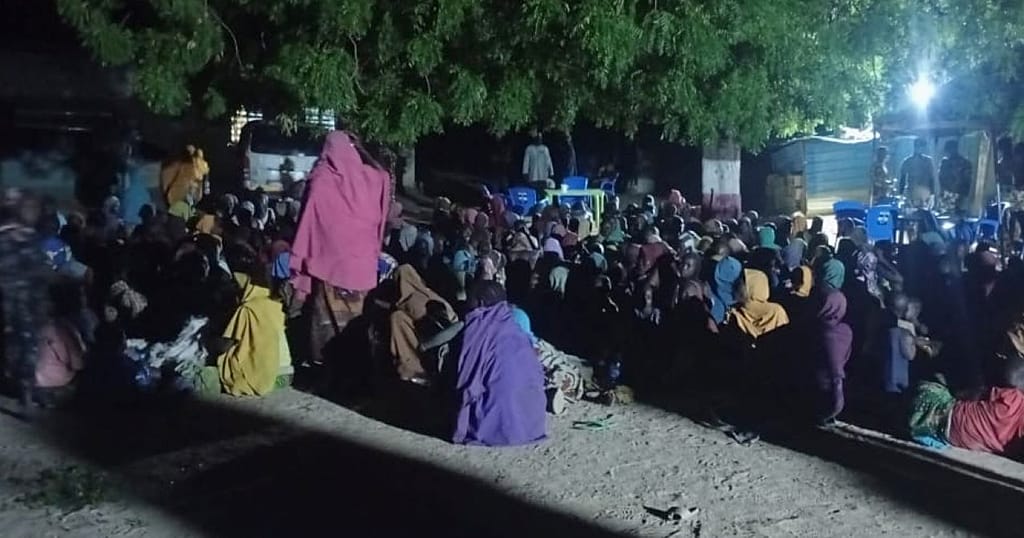
This weekend, hundreds of abducted individuals—previously taken by the militant group Boko Haram earlier this year from a village in Borno State—were released, as confirmed by local officials and youth leaders.
Abductions, often orchestrated for ransom, have become a primary strategy employed by the extremist group in their prolonged insurgency against the Nigerian government, which has persisted for over 17 years and remains concentrated in the country’s northeast.
Samaila Kaigama, leader of the Borno South Youth Alliance (BOSYA), announced that his organization secured the freedom of 416 women and children who had been forcibly removed from Ngoshe.
The captives were set free on Saturday, Kaigama told reporters during a press briefing.
Senator Mohammed Ali Ndume later corroborated the release, acknowledging the successful operation. However, the exact circumstances surrounding their liberation remain unclear at this time.
Survivors recounted harrowing experiences, revealing that they had been held in dire and cramped conditions by Boko Haram militants following their abduction from multiple communities, with Ngoshe—just under 10 kilometers from the Cameroonian border—being a primary target. The rugged terrain of the Gwoza Hills, a known stronghold of the group, has repeatedly witnessed violent raids.
Tragically, two infants perished due to severe exhaustion caused by prolonged captivity and the harsh environment, as disclosed by Daniel Bwala, spokesperson for President Bola Tinubu, via social media.
The Nigerian military revealed that prior to the rescue operation, intelligence gathering and psychological tactics were deployed to undermine cohesion within insurgent ranks, paving the way for the eventual intervention.
Reports indicate that the militants had initially demanded millions of nairas in ransom for the hostages held in Ngoshe. While Nigerian authorities have publicly denied paying any ransoms, security analysts suggest that such payments—whether by the government or victims’ families—are not uncommon in these cases.
Nigeria has faced a spiraling kidnapping crisis, fueled by various armed factions including jihadists, armed bandits, and separatist groups. According to security intelligence estimates, these abductions generated approximately $1.66 million in ransom payments between July 2024 and June 2025 alone.
Since its violent emergence in 2009, the Boko Haram insurgency has evolved into a multifaceted threat, contributing to tens of thousands of fatalities and displacing millions across the region.