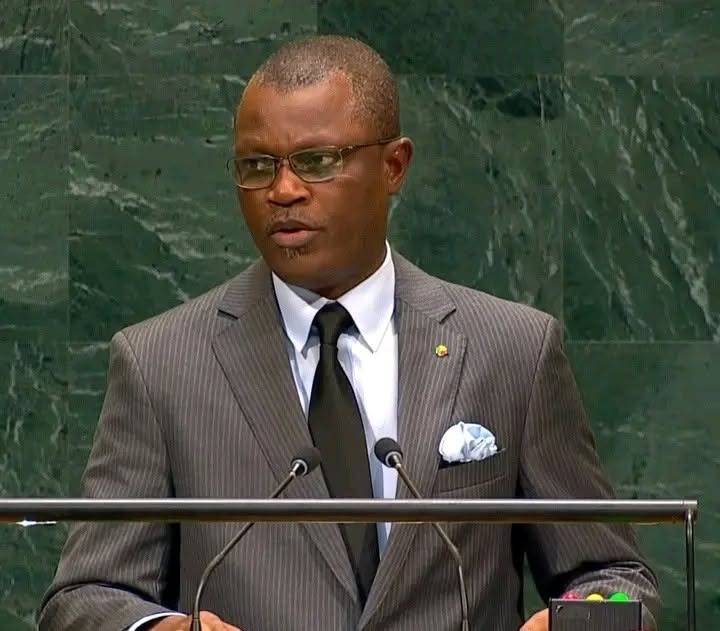
Behind the diplomatic formalities at the United Nations headquarters in New York, Benin’s national statement at the 81st session of the General Assembly revealed a carefully constructed security approach that goes far beyond rhetoric. Foreign Minister Corinne Amori Brunet delivered the address on the final day of the general debate, standing alongside the permanent mission led by Ambassador Marc Hermanne Araba, Benin’s permanent representative to the intergovernmental body. The timing and positioning of this intervention offer a window into the calculations driving Cotonou’s engagement on the world stage.
A speaking slot that speaks volumes
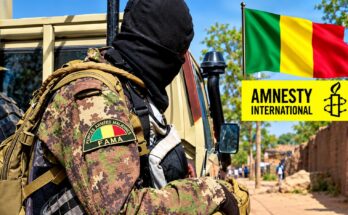
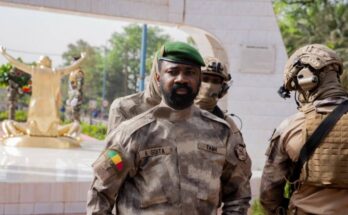
The order of speakers at the UN General Assembly is never accidental. Benin’s foreign minister took the podium immediately after the delegations of Mali, Burkina Faso and Niger — three neighbouring states whose relationship with multilateral institutions has grown increasingly complex. That sequence placed Benin’s message in direct conversation with the security realities of the Sahel, positioning Cotonou as a bridge between international frameworks and regional imperatives. The address carried added weight as Benin approaches the end of its presidency of the African Union’s Peace and Security Council, a role that has sharpened its focus on conflict prevention and cooperative security.
From principles to operational reality
What distinguishes Benin’s UN message is its grounding in concrete measures already underway. Rather than offering abstract commitments, the delegation outlined a comprehensive security doctrine that Cotonou is actively implementing on multiple fronts — from border operations to community-level development.
Operation Mirador: securing the northern frontier
Along Benin’s northern border, where armed terrorist groups have intensified pressure on rural communities, the military has deployed Operation Mirador — a preventative and defensive framework designed to lock down the Pendjari and W national parks while protecting civilian populations. The strategy pairs this operational presence with an expanded territorial network, achieved through significant recruitment and training of new security personnel to close the gaps that violent groups have exploited.
The Accra Initiative: turning cooperation into action
At the sub-regional level, Benin remains a driving force behind the Accra Initiative, working alongside Ghana, Togo, Côte d’Ivoire and Sahelian states. This mechanism translates the principles defended at the UN into practical measures on the ground.
- Tactical intelligence sharing: Regular and direct exchanges between intelligence services to track cross-border movements.
- Joint operations: Coordinated actions on both sides of frontiers to prevent armed groups from finding sanctuary by crossing from one territory to another.
Addressing root causes through border development
Cotonou’s approach recognises that military responses alone cannot deliver lasting stability. Through the Beninese Agency for Integrated Management of Border Areas (ABeGIEF), the state is channelling investment directly into basic infrastructure in the north — schools, water points, health centres and rural roads. The underlying logic is to counter feelings of abandonment, strengthen the resilience of marginalised communities and cut off extremist recruitment networks at their source.
Community security and early warning
The government is also investing in the relationship between the armed forces and the civilian population. By deploying citizen alert mechanisms and dedicated hotlines, local communities are brought into the preventive intelligence chain. This inclusive model aims to build the mutual trust that is essential for countering the infiltration of clandestine networks.
Reading the strategy behind the statement
In a tense sub-regional environment, the case made in New York distils a clear doctrine: combine firm operational control at the borders, socio-economic investment in frontier communities and pragmatic multilateral cooperation with all neighbouring partners. The address was not simply a declaration of intent — it was a statement of method, reflecting a security philosophy that Cotonou has been refining through action on its own territory and through its engagement with regional mechanisms.