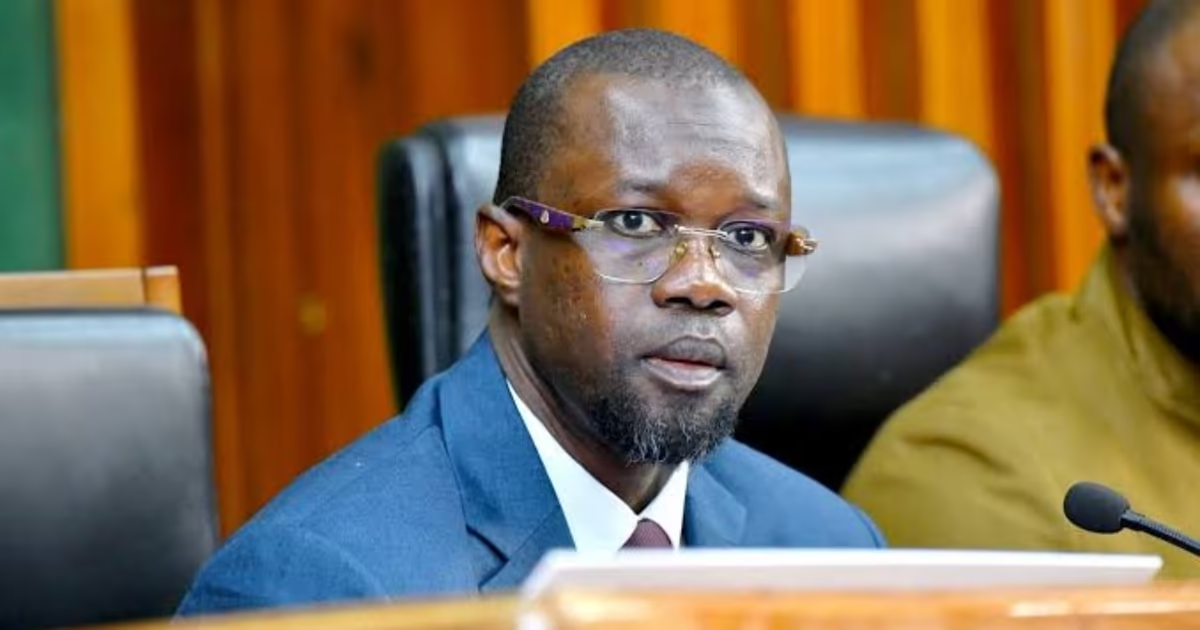
Senegal’s National Assembly is gearing up for a pivotal legislative session, with a sharp focus on institutional reforms and heightened scrutiny of public governance. At the heart of this agenda lies the ambitious vision of Ousmane Sonko, whose political bloc is pushing forward a series of transformative bills designed to strengthen transparency and accountability across the nation’s leadership.
Key reforms poised for adoption
Among the most consequential proposals is a constitutional amendment targeting Article 37, which would mandate that presidents declare their assets upon leaving office. This initiative, already receiving strong backing from the Minister of Justice, seeks to establish a uniform standard for all senior public officials. The move reflects a broader commitment to curbing corruption and ensuring ethical governance.
Parallel to this effort, lawmakers are advancing a stricter legal framework for political campaign financing. Historically, these funds have operated in a regulatory gray area, but the proposed changes aim to introduce rigorous oversight, ensuring full traceability and compliance with financial transparency laws.
Parliamentary probes and high-stakes ratifications
The Assembly has greenlit the formation of three new parliamentary inquiry commissions. The first will investigate the management of state-owned real estate assets, including recent controversies surrounding the Cité Fayçal and the operations of the Sogepa. Another commission will revisit the long-standing issue of TRS (Tax Refund System) reforms, a topic that has lingered unresolved despite prior legislative efforts.
Additionally, the Executive Branch is prioritizing the ratification of several critical bills, most notably the long-awaited Petroleum Code. Given Senegal’s expanding energy sector, this legislation is expected to play a pivotal role in shaping the country’s economic future.