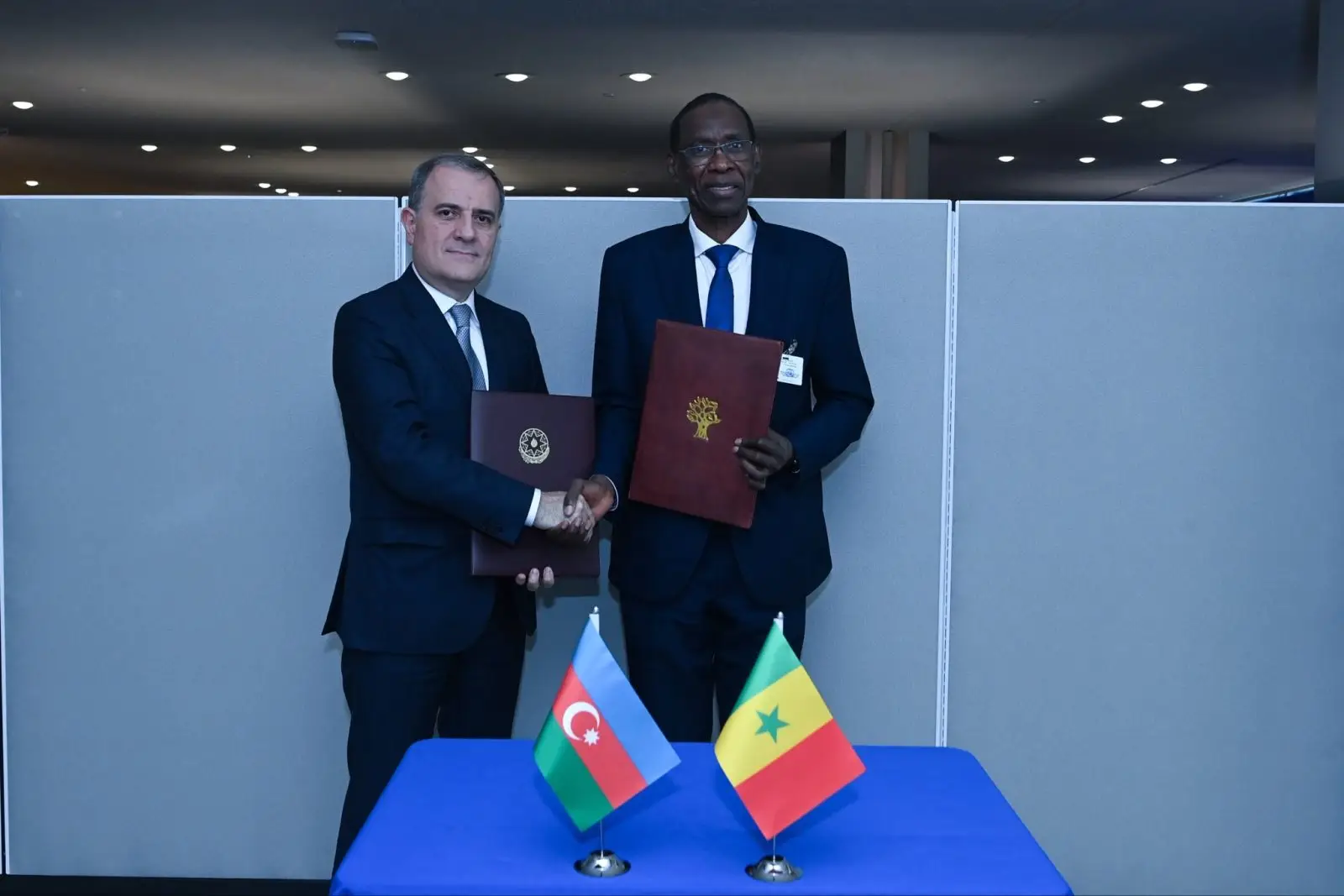
Beneath the formal language of a single signed document, the Senegal-Azerbaijan memorandum of understanding on political consultations reveals a carefully calibrated diplomatic manoeuvre. The agreement, finalised in New York during the high-level week of the 81st session of the United Nations General Assembly, was announced on Friday evening by the Ministry of African Integration, Foreign Affairs and Senegalese Abroad. But the story behind the signature is less about the ceremony itself and more about what it signals: a deliberate effort by Dakar to convert a fleeting international gathering into a durable institutional channel with Baku.
Why a memorandum, and why now
In the routine of bilateral diplomacy, a memorandum of understanding is rarely an end in itself. It is a structural tool, designed to replace ad hoc contacts with a predictable rhythm of exchanges between two administrations. For Senegal and Azerbaijan, this means a standing mechanism through which officials can regularly assess the state of their cooperation and map out where their relationship might go next. The timing is no accident. The UN General Assembly’s high-level week has long served as a compressed window for delegations to finalise texts that would otherwise require dedicated trips. Senegal’s foreign ministry framed the signing as a fresh dynamic between Dakar and Baku, but the practical logic is more prosaic: when the world’s diplomats are in one city, the marginal cost of sealing an agreement drops sharply.
What the text leaves unsaid
As it stands, the memorandum does not specify the precise areas the political consultations will cover. That silence is typical. Agreements of this kind usually serve as a foundation for later discussions that can range from economic questions to multilateral issues and technical cooperation. Nor has the ministry indicated a timeline for implementation or the frequency at which the consultations will be held. Those operational details are expected to emerge in subsequent official communications from both governments. In the meantime, the absence of specifics is itself a signal: the framework is broad enough to accommodate a wide range of interests without committing either side to particular deliverables.
The context: a widening diplomatic net
This signature fits a broader pattern in Senegalese diplomacy. In recent years, Dakar has multiplied bilateral partnerships with countries in Asia and Eastern Europe, steadily expanding its external relations beyond its traditional partners. The memorandum with Azerbaijan is the latest thread in that weave. It reflects a calculated diversification strategy, one that seeks to build relationships across regions without abandoning old alliances. The UN setting adds another layer: by using the General Assembly as a springboard, Senegal can pursue these openings without the logistical burden of separate state visits.
Unanswered questions and next steps
The ministry’s Friday evening announcement did not disclose the identity of the signatories or the exact format of the signing ceremony. Those omissions leave room for further clarification in the coming days. What remains clear is that the memorandum creates a structured mechanism where none existed before. Whether it translates into tangible cooperation will depend on the political will of both sides and the follow-through of their administrations. For now, the document stands as a quiet but deliberate step in Dakar’s evolving diplomatic playbook.