- News
- Politics
Ivorian politics: Legal expert defends Alassane Ouattara’s continued political presence
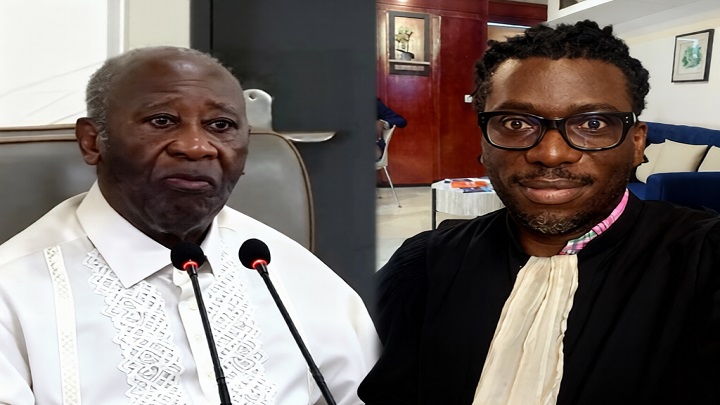
Recent political developments in Côte d’Ivoire have reignited debates about the legitimacy of veteran leaders remaining in public office. Following the reelection of former President Laurent Gbagbo as head of the Parti des Peuples Africains – Côte d’Ivoire (PPA-CI), attorney Ange Rodrigue Dadjé has taken a bold stance regarding President Alassane Ouattara‘s prolonged political career.
In a statement that has since sparked widespread discussion, Dadjé argued that criticism of Ouattara’s decision to stay in politics is no longer warranted. “We can no longer reproach President Ouattara for choosing to remain in politics after he had announced his intention to retire,” he declared during a press briefing on May 15, 2026.
The timing of Dadjé’s remarks coincides with a pivotal moment in Côte d’Ivoire‘s political landscape. Just months after Gbagbo suggested he would step back from active politics following legislative elections in December 2025, his party’s recent congress in Abidjan saw him reinstated as leader by acclamation. In an October 2025 interview, Gbagbo had stated, “While there is no retirement in politics, I will refrain from holding political office, within my party or in government. I have given enough.” At 81 years old, the former president—fully exonerated by the International Criminal Court in 2021—appeared ready to pass the torch to younger PPA-CI members. Yet the party’s decision has now reshaped expectations.
Gbagbo’s return to the forefront was met with enthusiastic applause as he declared, “I remain for the struggle,” effectively silencing speculation about his political exit. Political observers suggest this move could influence perceptions of leaders who, like Ouattara, have faced scrutiny for reversing retirement plans.
Ouattara’s political journey: From promises to persistence
The debate over Ouattara’s extended tenure gained momentum after his 2020 decision to seek a third term, despite earlier pledges to step aside. The opposition, including the PPA-CI, condemned the move as a betrayal of public trust. Dadjé now contends that Gbagbo’s recent actions exemplify how political realities often override initial retirement commitments.
In July 2025, Ouattara formally announced his candidacy for the October 2025 presidential election, citing national stability amid regional security and economic challenges. At 83, he framed his decision as a “maturely considered duty” to serve the nation. “This choice is made in the supreme interest of Ivory Coast,” he emphasized.
Political legacy: When leaders defy retirement
The PPA-CI’s decision to retain Gbagbo has reframed the discourse on political longevity in Côte d’Ivoire. It underscores the influence of party loyalists and grassroots pressure in shaping leadership decisions, even when contrary to stated intentions. As the nation grapples with this dynamic, a pressing question emerges: Can iconic leaders truly disengage from politics when their supporters demand their continued leadership?
The attorney’s defense of Ouattara’s political persistence arrives at a time when Côte d’Ivoire‘s political narrative is being rewritten. With veteran figures like Gbagbo and Ouattara still at the helm, the country’s democratic future hinges on reconciling ambition with accountability.