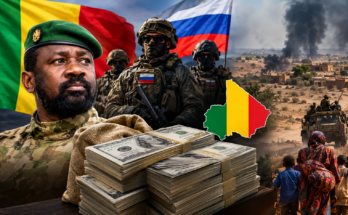
In Mali, the blockade enforced by the Jnim—a jihadist group linked to al-Qaïda—has escalated drastically. Over the weekend, at least ten buses were set ablaze along the critical Ségou-Bamako corridor, a vital supply route for the capital from eastern regions. Simultaneously, electrical infrastructure tied to the Manantali hydroelectric dam in Kayes was deliberately targeted and destroyed. The Malian military continues its counteroffensives across multiple fronts, yet the economic stranglehold on the country remains unbroken.
Manantali: a strategic target in a war of attrition
The assault on Manantali’s equipment is far from incidental. The dam, operated jointly by Mali, Mauritania, and Senegal under the Organisation pour la mise en valeur du fleuve Sénégal (OMVS), serves as a backbone for Mali’s electrical grid. By disabling its power transmission lines, Jnim is no longer focusing solely on military targets; it is striking at the heart of urban life, where outages cripple public services, businesses, and industries almost instantly.
This campaign mirrors a broader pattern unfolding over recent weeks, marked by systematic attacks on fuel convoys entering from Senegal and Côte d’Ivoire. The jihadists aim to weaponize fuel shortages, betting on eroding public confidence in the transitional government led by General Assimi Goïta. Bamako, once relatively insulated from the worst of the conflict, now finds itself at the epicenter of a grinding battle of endurance.
Military response and fragile supply respite
Confronted with this multifaceted offensive, the Malian high command asserts it is sustaining land and air operations across several regions. Military escorts have facilitated the entry of hundreds of fuel tankers into Bamako in recent days, temporarily easing pressure on gas stations under siege. This logistical reprieve is, however, precarious: each convoy demands substantial resources, and the long-term security of national roads remains beyond immediate reach.
The Malian Armed Forces (FAMa) face a dual challenge. In the west and central zones, Jnim has intensified ambushes and infrastructure sabotage. Further north, in the Kidal region, tensions persist in a tense stalemate, with new clashes appearing inevitable against factions of the Cadre stratégique permanent. Bamako is thus navigating two distinct battlefields, with dwindling human and material resources.
A regional domino effect
The blockade’s ripple effects extend far beyond Mali’s borders. Neighboring economies, particularly those of Senegal, Mauritania, and Côte d’Ivoire, watch with growing concern as West African trade corridors deteriorate. Sluggish cargo flows are straining ports in Dakar and Abidjan, where a significant share of trade traditionally routes toward the Sahelian hinterland. The Alliance of Sahel States, comprising Mali, Burkina Faso, and Niger, has yet to forge a unified response to the economic warfare waged by jihadist factions.
The attack on Manantali also raises urgent questions about shared OMVS facilities. Further damage could directly disrupt electricity supply to Senegal and Mauritania, elevating a Malian crisis into a regional dilemma. External partners—whether financial backers or military suppliers—must now weigh their support for Bamako’s sovereignty against the imperative of safeguarding cross-border critical infrastructure.
On the ground, the gap between the army’s operational claims and the stark reality of a besieged capital underscores the unprecedented nature of this conflict phase. Jnim is no longer content with territorial control; it seeks to asphyxiate the state itself. Fresh confrontations are anticipated in the coming days, particularly around Kidal.