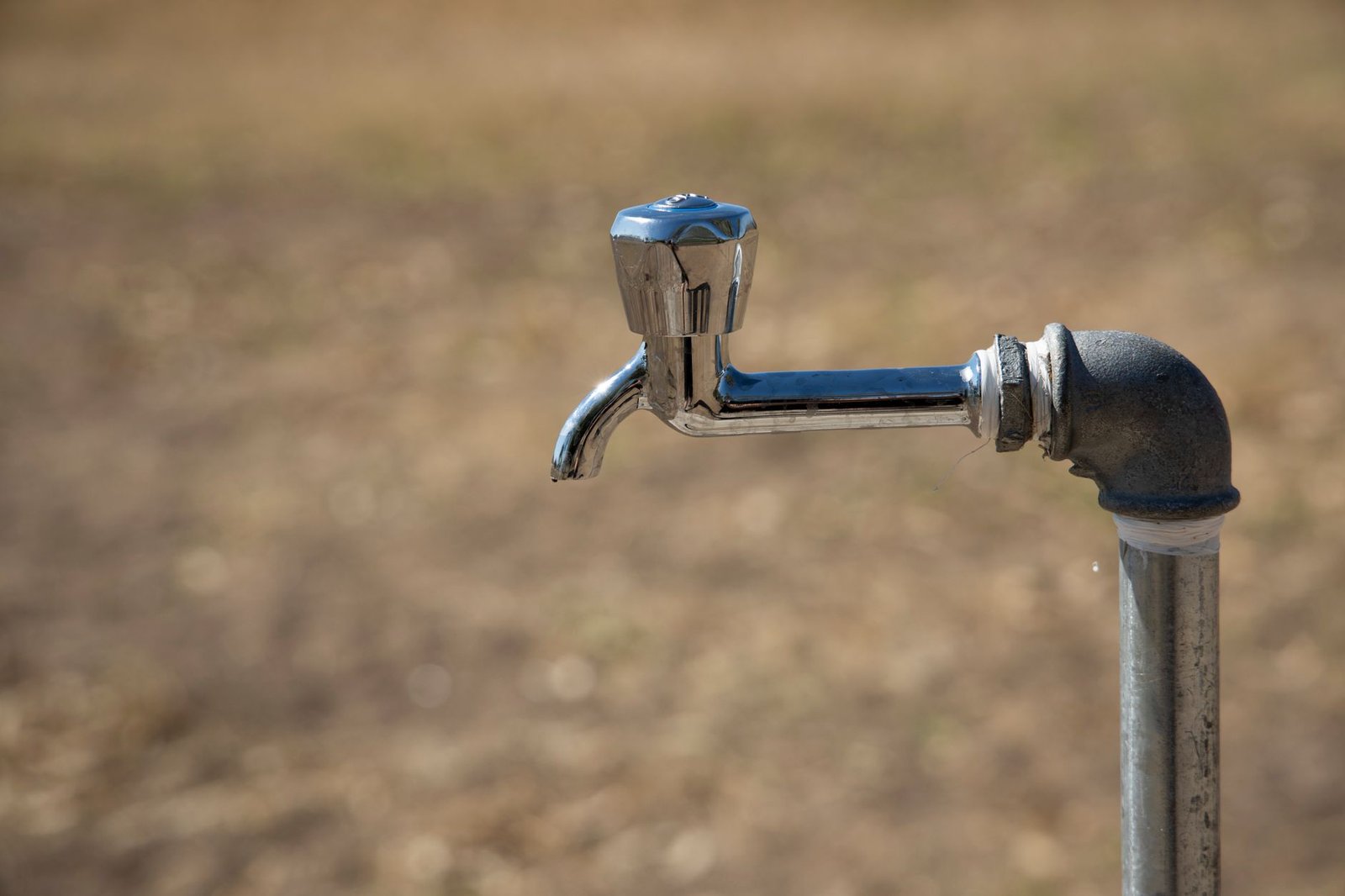
Libreville, Gabon’s capital, is grappling with a severe water shortage that has compelled authorities to declare a state of hydric emergency across the city and its surrounding areas. Residents have endured dry taps for days on end, queuing for hours at the few available distribution points, while the price of water sold in containers has soared in popular neighborhoods. The widespread frustration is palpable, with many comparing the scarcity of water to that of a 10,000 CFA franc banknote – a stark measure of the daily crisis now facing the population.
The magnitude of this challenge stems from a confluence of two critical factors. Firstly, an unusually dry rainy season has significantly depleted the levels of dams and water catchment areas supplying the urban agglomeration. Secondly, the existing water network, a legacy of previous decades, remains severely degraded. This results in high rates of water loss through damaged pipes and treatment plants operating well below their optimal capacity. The cumulative effect is a system pushed to its breaking point, unable to withstand even minor climatic fluctuations.
An aging infrastructure challenges Gabon’s sovereignty
The ongoing water crisis in Libreville starkly highlights the inherent limitations within Gabon’s framework for managing essential services. For an extended period, the distribution of water was entrusted to the Société d’énergie et d’eau du Gabon (SEEG). However, this tenure was marked by contractual disputes and repeated state interventions, without ever establishing a clear or stable investment trajectory. The capital’s needs, serving a population exceeding 700,000 residents including its periphery, have consistently outpaced its production capabilities. Consequently, every severe dry spell now inevitably leads to water rationing in districts furthest from the city center.
The current political transition in Gabon, initiated after the August 2023 regime change, has elevated this issue to the forefront of the national social agenda. The new administration faces a narrow window of opportunity to demonstrate its ability to deliver tangible results to its citizens. The declaration of a hydric emergency in Libreville underscores this pressure, enabling the rapid mobilization of public resources, the requisition of essential materials, and enhanced inter-ministerial coordination. Yet, for these measures to yield lasting effects, they must be underpinned by a robust, multi-year investment program.
Libreville under social tension, a test for the transition
On the ground, communities are improvising to cope. A patchwork of solutions includes tanker trucks dispatched by authorities, sporadic distributions at district town halls, the proliferation of private boreholes, and the widespread resale of water in containers. Businesses, hotels, and hospitals are also enduring the operational repercussions of these outages, leading to a diffuse but undeniable economic cost. Within healthcare facilities, the lack of water severely complicates hygiene management and heightens concerns about the potential for waterborne disease outbreaks.
Authorities have communicated various short-term interventions, such as accelerating upgrades at water treatment plants and importing crucial pumping equipment, alongside efforts to tap into subterranean water sources. However, a substantial financial challenge awaits the transitional government. Multilateral lenders, notably the African Development Bank and the World Bank, have previously supported water supply projects in Greater Libreville. Their renewed large-scale involvement will necessitate greater clarity regarding sector governance and the precise role designated for the historic operator.
A climate warning extending beyond Gabon
Gabon’s current predicament is not isolated; it resonates with a series of hydric alerts impacting several capitals across Central and West Africa. Cities like Kinshasa, Brazzaville, Douala, and Abidjan are experiencing recurrent strains on access to potable water. This regional trend is driven by the combined forces of accelerating urban demographic growth, insufficient infrastructure investment, and heightened climate variability. For a nation like Gabon, long perceived as abundantly rich in freshwater resources due to its extensive forest cover, this episode serves as a powerful refutation of that perception.
The resolution of this crisis will hinge on three pivotal fronts: the comprehensive rehabilitation of existing infrastructure, the strategic diversification of water capture sources, and a fundamental overhaul of the institutional framework governing public water services. The political timeline of the transition mandates swift execution, lest persistent social exasperation influence upcoming electoral processes.