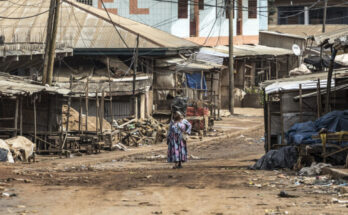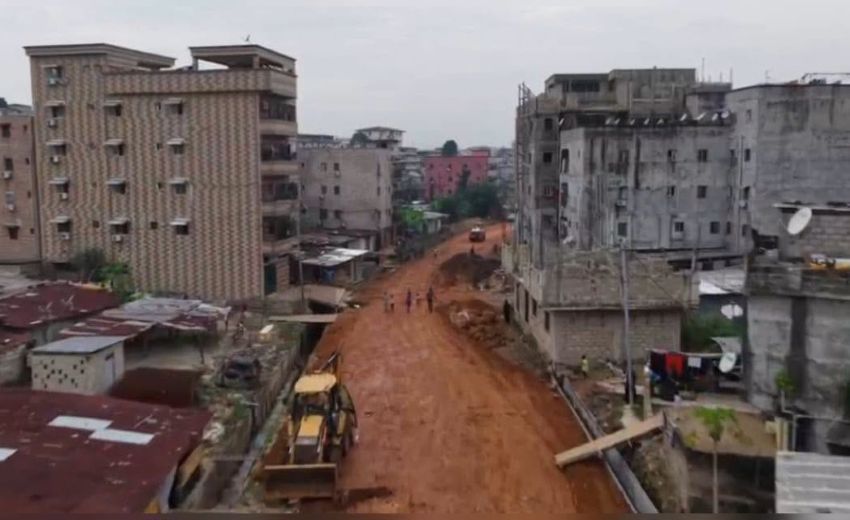
Libreville, Lundi 13 Juillet 2026 (Infos Gabon) – In Libreville, an ultimatum issued on July 10th by Mayor Eugène M’ba is coming to an end. Starting soon, the operational phase of a campaign to tackle urban pollution and anarchist occupation of public spaces will enter a new sequence with its promised wave of evictions, demolition of unauthorized constructions, removal of scrap metal, closure of makeshift garages, and dismantling of businesses operating on public land.
The city’s objective is clear: restore order to the urban landscape, restore circulation, improve hygiene conditions, and offer a modern, attractive image to the Gabonese capital. Few contest today the need to act against progressive occupation of sidewalks, carriageways, canals, and even public roads that have become commercial spaces or private activity extensions over the years.
For many residents, the municipal intervention appears even urgent. A political and economic capital cannot function sustainably in disorder without compromising its mobility, security, and attractiveness. The battle waged by the municipal team responds to a real demand for urban governance.
However, as the deadline approaches, another voice emerges in public debate. A voice that does not challenge the principle of municipal authority but invites broader reflection.
Ahead of the Clearing
The author reminds us that a modern municipality is not solely measured by its ability to enforce regulations. It also measures itself by its capacity to accompany citizens, anticipate social mutations, and build sustainable solutions.
Its analysis deserves to be heard, not as a criticism of the action taken but as an invitation to enhance its effectiveness.
Behind each makeshift stall on sidewalks or every unauthorized construction lies a problem that requires more than just a quick fix. The experience of many African cities, including Libreville, shows that no urban renewal strategy produces lasting results without accompanying it with a strategy for relocation and economic integration.
Tackling the Root Cause
The question is no longer just about maintaining order in the city. It becomes one about the model of town Libreville wishes to build over the coming decades.
Creating new local markets, designing spaces dedicated to small traders, organizing zones for artisans, accompanying informal economy actors towards formalization, and strengthening dialogue between municipal services and residents are all tools that could transform a one-time operation into a genuine public policy.
Raphaël Mouissi-Ntoko summarizes this approach by saying it is often insufficient to fight the fire without addressing the underlying disease. The image is powerful and joins concerns raised by many large cities facing similar challenges of rapid urbanization.
Cities like Lagos, Kigali, Abidjan, or Casablanca have all come to understand that urban modernization rests on a delicate balance between strict regulation and social accompaniment.
The authority remains indispensable. A city cannot prosper without rules, respect for public land, or protection of the community’s heritage. However, history teaches us that an enduring authority is often one that knows how to combine control, pedagogy, and concrete solutions.
A New Urban Contract
The campaign launched by Libreville’s municipal team could mark more than just a simple cleanliness operation. It could become the starting point of a new contract between the city and its residents. The municipal team now has an opportunity to demonstrate that it is possible to re-establish order without breaking dialogue, to enforce laws without ignoring social realities, and to impose rules while creating opportunities.
The challenge facing Libreville in the coming weeks will be to tackle the root cause of urban pollution. If the campaign succeeds, its impact will not only be a victory for administrative order but also the first act of an inclusive, humane, and sustainable transformation for the Gabonese capital.
FIN/INFOSGABON/SO/2026