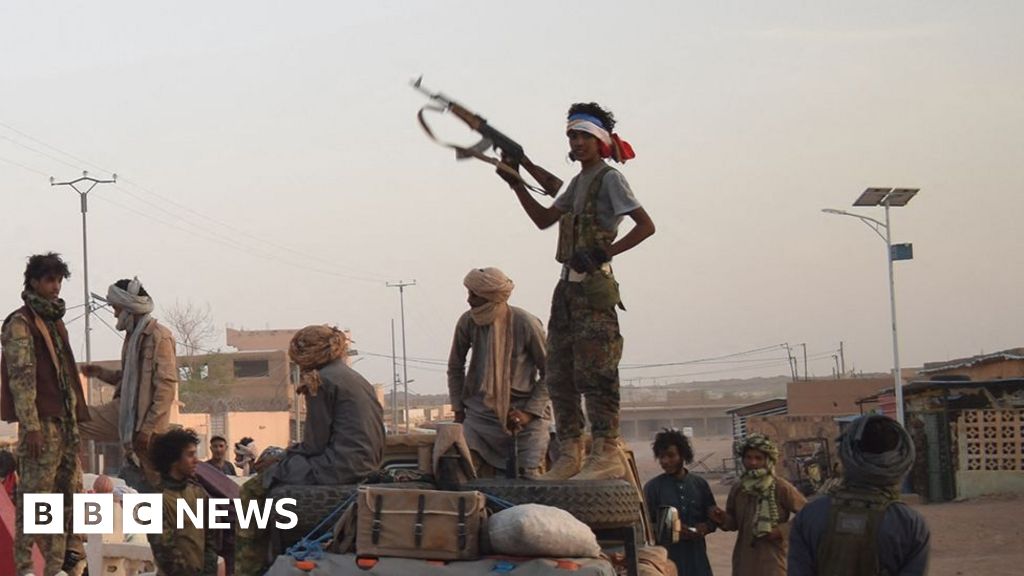
Across West Africa, a wave of stunned disbelief has followed a series of devastating attacks in Mali. Coordinated offensives allowed rebel forces to penetrate the capital, Bamako, assassinate the Defence Minister, and seize control of northern territories.
Residents in multiple cities experienced gunfire and explosions on a Saturday, as confirmed by an alliance of two groups: the separatist Azawad Liberation Front (FLA) and the al-Qaeda-linked Group for the Support of Islam and Muslims (JNIM).
How rebel advances are reshaping Mali’s security landscape
The sheer scope of these offensives has raised serious questions about the effectiveness of Malian and Russian security forces. The recent withdrawal of troops from the northern city of Kidal—now under FLA control—has intensified doubts surrounding the military government led by Colonel Assimi Goïta. This leadership emerged from a coup in August 2020.
Despite the shock reverberating through the country, days passed before Colonel Goïta made a public address, leaving many to ponder the junta’s future course and the role of Russian forces deployed across the region to combat insurgencies.
Key factors determining the junta’s survival
- Control of major cities and institutions: Analysts maintain that the military still holds significant leverage over state operations and urban centres.
- Counter-offensive success: The army’s ability to regain territory and neutralise rebel forces will be pivotal in assessing the junta’s longevity, according to Beverly Ochieng, a Senior Analyst at Control Risks.
- Loss of key military figures: The death of Defence Minister Sadio Camara—a central figure in military coordination—has created substantial obstacles for any potential military operations. His influence also extended to maintaining strong ties with Moscow.
- Public support erosion: While the junta initially gained popularity by promising to address Mali’s persistent security crisis, recent JNIM blockades targeting fuel supplies in the capital have exposed vulnerabilities in the government’s economic warfare strategy.
Three potential scenarios for Mali’s military leaders
Scenario 1: Junta maintains power and launches a counter-attack
Many experts consider this the most probable short-term outcome. The military continues to dominate critical urban areas and state mechanisms.
However, the upcoming days are likely to prove decisive as Malian forces prepare for a large-scale offensive against JNIM and FLA rebels.