Mali launches innovative hybrid malaria vaccination to shield young children

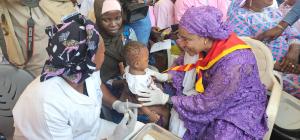
Mali has become the first nation globally to implement a hybrid vaccination strategy against malaria. On World Malaria Day, the country introduced an approach that combines routine age-based dosing with seasonal booster shots, targeting children aged 5 to 36 months.
This milestone makes Mali the 20th African country to add malaria vaccines to its routine immunization programs. The hybrid method delivers three initial doses monthly throughout the year based on age, followed by two seasonal doses in May or June—just before the peak transmission period. Research from Mali confirms this strategy maximizes vaccine effectiveness by aligning protection with periods of highest risk.
Health authorities have allocated 927,800 doses of the R21/Matrix-M vaccine for deployment across 19 priority districts in five regions: Kayes, Koulikoro, Mopti, Ségou, and Sikasso.
Why Mali chose the hybrid vaccination approach
Malaria transmission in Mali peaks between July and December. The hybrid strategy ensures children receive enhanced protection during these high-risk months. Clinical evidence shows seasonal administration can boost vaccine impact by up to 75% in areas with seasonal transmission patterns.
In 2023, Mali accounted for 3.1% of global malaria cases (8.15 million) and 2.4% of global deaths (14,328), ranking among the 11 countries with the heaviest malaria burden worldwide. The African region bears 94% of global cases and 95% of deaths, underscoring the urgent need for innovative solutions.
Collaborative efforts behind Mali’s malaria vaccine rollout
The launch was made possible through partnerships with Gavi, the Vaccine Alliance, UNICEF, and the World Health Organization (WHO). These organizations provided technical, financial, and logistical support to integrate the vaccine into Mali’s Expanded Program on Immunization (EPI).
Colonel Assa Badiallo Touré, Mali’s Minister of Health and Social Development, praised the collective efforts: “This achievement reflects tireless dedication from researchers, partners, and health workers. The malaria vaccine is a vital tool to reduce suffering in Mali, but we must scale this effort to protect more children.”
Gavi’s Director-General, Dr. Sania Nishtar, emphasized the importance of sustained funding: “With 20 countries adopting malaria vaccines and over 24 million doses delivered, consistent investment is critical to ensure equitable access. Gavi remains committed to combating this deadly disease in Africa.”
UNICEF’s Representative in Mali, Dr. Pierre Ngom, highlighted the vaccine’s role alongside existing prevention measures: “After 35 years of research, this vaccine offers hope, but it’s not a standalone solution. We must combine it with mosquito nets, seasonal chemoprevention, and community outreach to create real change.”
The WHO coordinated pilot evaluations of the RTS,S/AS01 vaccine in Ghana, Kenya, and Malawi, which demonstrated a 13% reduction in child mortality in vaccinated age groups. Both RTS,S/AS01 and R21/Matrix-M vaccines are WHO-prequalified and recommended for malaria prevention in children.
Expanding malaria vaccine programs across Africa
Since 2023, over 24 million malaria vaccine doses have been distributed across Africa. Countries like Cameroon and Uganda are seeing promising results from their rollouts, with plans to protect an additional 13 million children by the end of 2025.
Gavi’s 2026–2030 strategy aims to fully immunize 50 million more children if adequate funding is secured. Meanwhile, nations like Nigeria, Chad, Sudan, and the Democratic Republic of the Congo are adapting vaccination programs to local contexts, integrating malaria shots with other child health initiatives.
Key facts about malaria vaccines:
- Target group: Children under five (75% of malaria deaths occur in this age group).
- Efficacy: Both RTS,S/AS01 and R21/Matrix-M reduce malaria cases by over 50% in the first year and up to 75% when administered seasonally in high-risk zones.
- Safety: WHO-prequalified and rigorously tested in clinical trials.
- Global burden: The African region accounts for 94% of cases and 95% of deaths worldwide.
As Mali leads the way with its hybrid strategy, the world watches closely. This innovative approach could redefine malaria control, offering a blueprint for other countries battling seasonal transmission patterns.