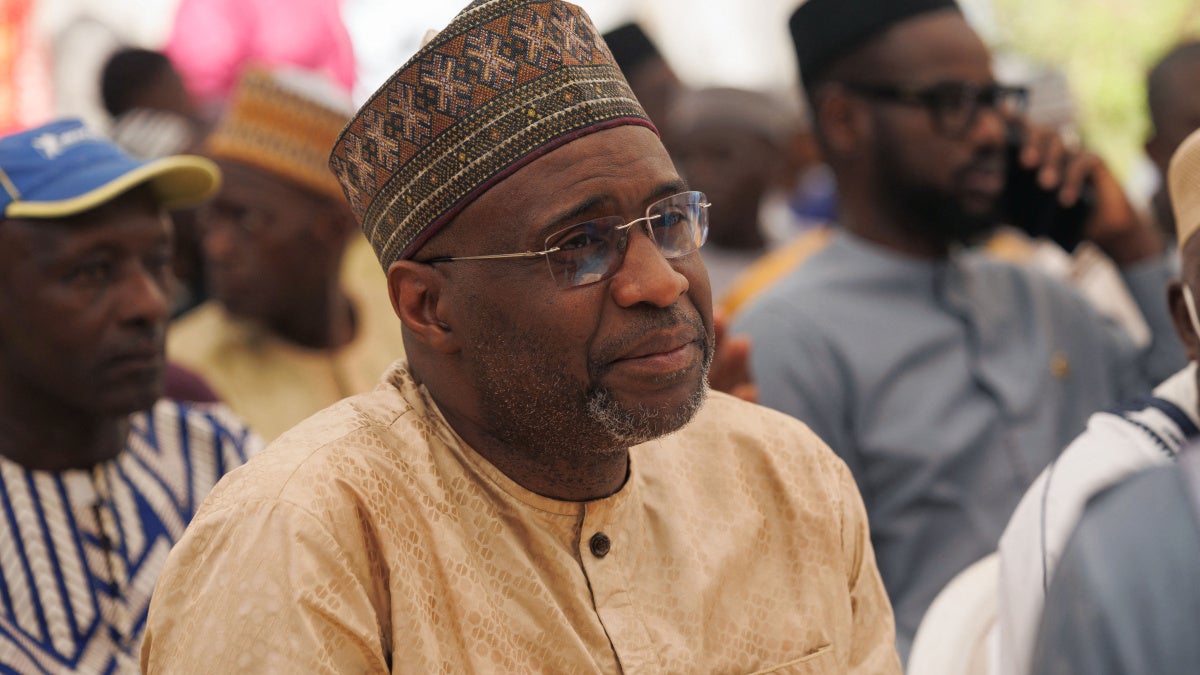
During a recent court appearance in Bamako, the capital of Mali, former Prime Minister Moussa Mara faced a significant setback as judges denied his request for provisional release. The prosecution has pushed for a two-year prison sentence, a move that highlights the ongoing crackdown by the military junta against political opposition and dissenting voices.
Moussa Mara, who served as prime minister from 2014 to 2015, was detained on August 1 following a social media post where he voiced solidarity with imprisoned political figures and pledged to seek justice for them.
The authorities have charged Moussa Mara with undermining state credibility, resisting legitimate authority, inciting public disorder, and spreading false information. His trial, which began on September 29 in a specialized cybercrime court, is nearing its conclusion, with a verdict expected on October 27. Observers have raised serious concerns regarding the fairness of the proceedings.
Legal experts suggest these charges directly infringe upon the right to freedom of expression. Members of his defense team, including Mounkaïla Yayé, have argued that the trial targets the very principle of free speech, warning that such actions set a dangerous precedent for the country.
Since seizing power in a 2021 coup, the military junta led by General Assimi Goïta has systematically restricted civic and media spaces. The administration has banned political parties and targeted journalists and activists with intimidation, imprisonment, and enforced disappearances. General Goïta has maintained control without holding democratic elections, effectively stalling the return to civilian rule.
Furthermore, the junta has consistently ignored demands for accountability regarding abuses committed by security forces. The withdrawal of Mali, along with Burkina Faso and Niger, from the Economic Community of West African States (CEDEAO) has left citizens without key regional avenues for legal recourse. Additionally, the recent move by these three nations to withdraw from the International Criminal Court further limits justice for victims of mass atrocities.
The detention of Moussa Mara signals a growing intolerance for any form of dissent, including simple acts of solidarity. To restore basic rights, the Malian authorities must drop all charges against Moussa Mara, release those held arbitrarily, and uphold the fundamental right to freedom of expression.