Mali faces a critical juncture as military rule reshapes governance
The Malian government declares its military sovereignty restored following the withdrawal of French forces and the strategic distancing from Western security frameworks. Official narratives frame this as a historic triumph—a sovereign African nation reclaiming its territory and rejecting foreign dominance.
Yet beneath the rhetoric lies a more intricate transformation. Bamako’s proclaimed independence has not eliminated its security dependency; it has merely realigned the centers of power, influence networks, and war-linked economic circuits. The void left by departing Western troops was swiftly filled by Africa Corps, a mercenary coalition tasked with combating terrorism while safeguarding regime stability.
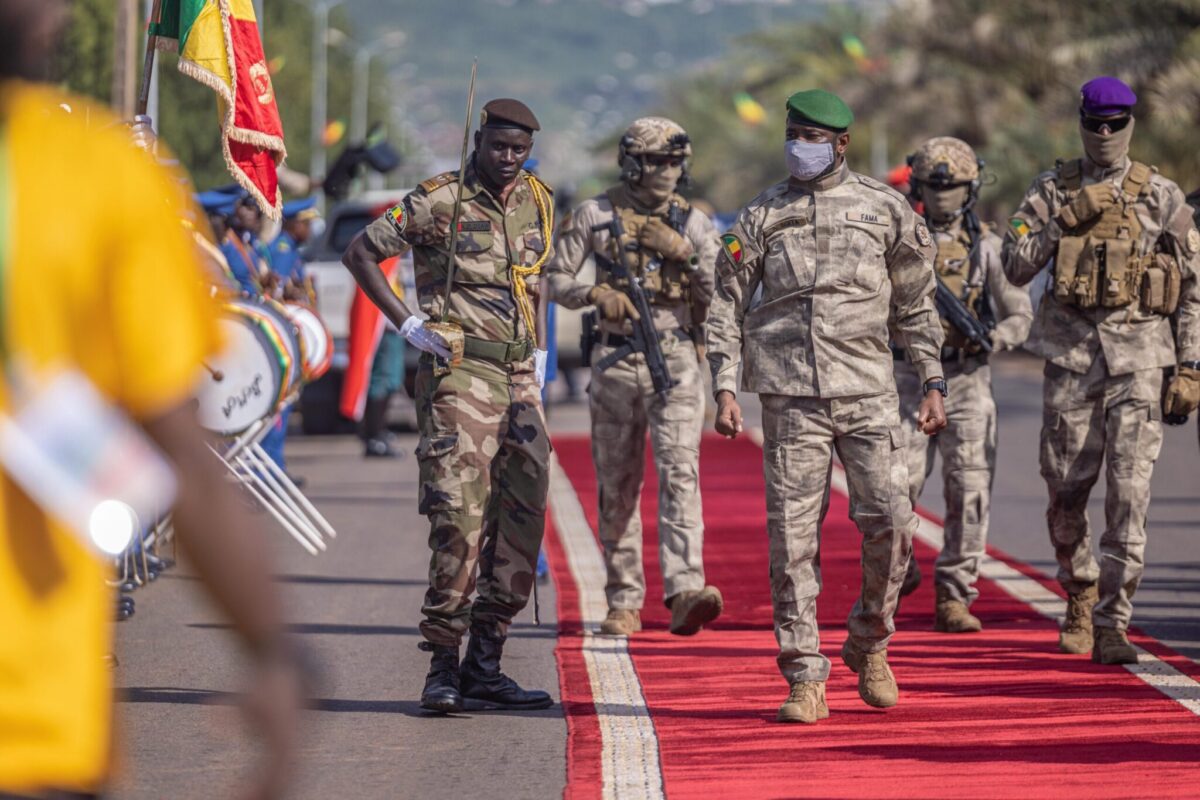
Conflict in Mali has evolved from a temporary challenge into a permanent pillar of political organization. The military now dominates state decision-making, political legitimacy, and internal economic balances. Since the 2022 coup, soldiers hold unchallenged authority, embedding warfare not as a problem to solve but as the very foundation of governance.
The French departure altered regional power dynamics dramatically. For many Malians, severing ties with Paris symbolized liberation after years of intervention perceived as ineffective. The transitional authorities exploited nationalist sentiment to consolidate their legitimacy.
Sovereignty, however, cannot alter harsh realities. Armed groups remain active, violence persists across multiple regions, and the state’s logistical capabilities stay critically limited. Bamako finds itself encircled by jihadist factions. The central dilemma is no longer foreign presence but the Malian state’s capacity to achieve lasting stability.
In this vacuum, new security partners have gained prominence. Russia—directly or indirectly—has emerged as a dominant force in Sahelian military restructuring, sparking both hope and controversy.
International discourse often frames this shift as a geopolitical rivalry between Paris and Moscow. Yet Mali’s strategy is more pragmatic. The regime seeks partners willing to bolster its political survival without imposing Western-style diplomatic constraints.
This evolution carries a profound consequence: the accelerating militarization of Mali’s political economy. Security budgets swell, military institutions gain institutional clout, and conflict becomes a perpetual tool for national mobilization. Escalating threats justify centralized decision-making, reduced political pluralism, and deferred democratic transitions. Warfare ceases to be an external condition; it transforms into a governing resource.
The Alliance of Sahel States (AES)—comprising Mali, Burkina Faso, and Niger—further entrenches this pattern. The bloc is constructing a political space defined by security sovereignty, rejection of former colonial powers, and the primacy of military apparatuses. Yet this alliance rests on shaky ground, reliant on weakened economies, intense social tensions, and an unstable regional environment. These regimes pursue strategic autonomy while remaining financially and militarily vulnerable.
The Malian case exposes a broader paradox of contemporary Sahel. Breaking from Western security frameworks delivers symbolic gains in political sovereignty. Yet this sovereignty remains illusory as long as governance, administration, and security structures continue operating within a framework of perpetual emergency. Warfare evolves from a crisis to a permanent state infrastructure.
Peace itself has become a political risk. Sustainable stabilization would force delayed reckonings with economic redistribution, corruption, local governance, civilian participation, and institutional reconstruction.
This crisis transcends great-power rivalries. It demands a disquieting question: how can a state rebuild when war economies become the primary mode of governance? For Bamako, the challenge is no longer purely military—it is fundamentally political, social, and structural. Until sovereignty is redefined beyond military capacity alone, Mali risks substituting one external dependency for another: a state permanently organized around war and beholden to Russian mercenaries.