Addressing the diplomatic community in Bamako, Mali’s Foreign Minister, Abdoulaye Diop, firmly rejected calls from certain local political factions for negotiations with the jihadist groups controlling parts of the nation. Diop emphasized, « I must clarify that the government does not foresee any dialogue with these armed terrorist entities, who operate without principle or law and are accountable for the tragic circumstances endured by our people for years. »
Evidently, the current strategy prioritizes direct confrontation on the battlefield. In line with this approach, Mali has reportedly acquired additional military equipment from Russia.
In the northern regions, a primary objective for the authorities remains reclaiming control over the city of Kidal, currently held by armed factions. This strategic focus likely explains the repositioning of Russian mercenaries and the Malian army, who, following withdrawals from two other areas within the Kidal region, have now solidified their presence in Aguelok, another key town in the vicinity.
Meanwhile, in the southern territories, the immediate goal is to clear all vital road networks obstructed by jihadist groups, who have established fresh blockades. As of this past Saturday, a significant number of vehicles, commuters, and essential goods remained trapped across various points in the country.
Blockades severely impacting local communities
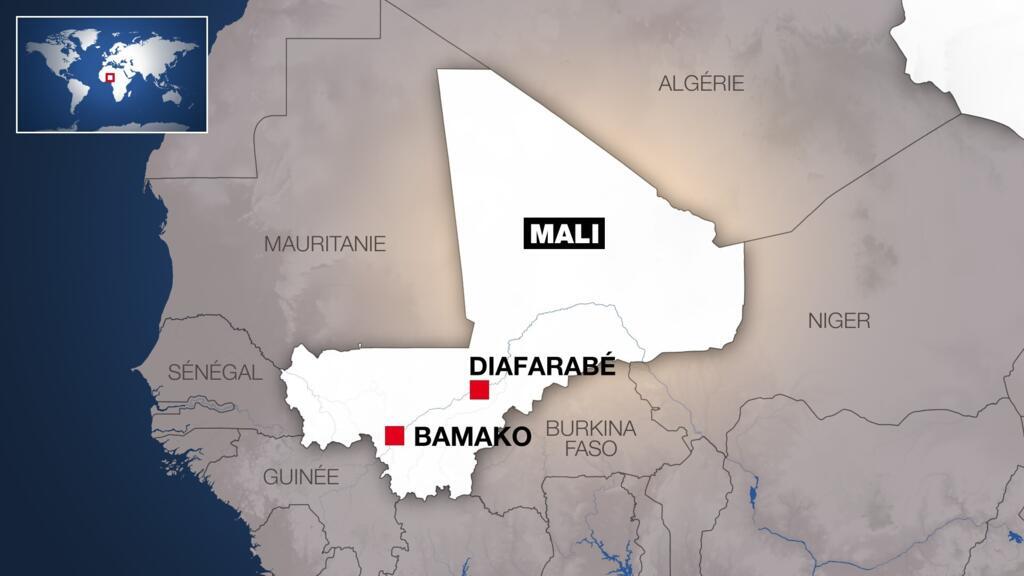
In the central Malian town of Diafarabé, situated within the Mopti region, the humanitarian situation continues to be dire. This community has been under a continuous blockade by Jnim for nearly a year, specifically since May 12, 2025.
A recent plea for assistance, directed at the transitional authorities last Saturday through a widely shared video on social media, has so far yielded no tangible results, according to local residents. The scarcity of food supplies and essential commodities has now reached a critical threshold. With dwindling food, minimal medicine, and inadequate healthcare, the population is utterly exhausted by the ongoing blockade. Caught between fear, acute shortages, and profound isolation, inhabitants describe living in deep despair, as articulated by one resident contacted via telephone.
« No one can enter, and no one can leave. The blockade is absolute. All our local food reserves are depleted; famine is now setting in. We engaged with the military detachment’s commanders, who assured us a food convoy would arrive soon, yet we continue to wait. This discussion followed a protest by our youth and women. The situation has truly reached a point of desperation! There is absolutely nothing left! Previously, during flood seasons, we managed to bring in some provisions by river, gradually, despite the significant dangers involved. I myself was shot during one such attempt, resulting in a fractured arm. Thankfully, I’m much better now. But here, it’s purely about survival. Our singular desire is simply to have food. That is all we ask for at this moment. »