The political trajectory of Togo has been indelibly shaped by a pivotal juncture that continues to cast a long shadow over collective memory and foster societal divisions: the year 2005. While some interpret this period as the dawn of a new era of progress, international assessments and firsthand accounts from victims portray a starkly different reality: one of authority secured through brutal suppression, disproportionately affecting the populations of the southern regions, primarily those from the Ewé ethnic group.
The “constitutional seizure of power”: a disregard for legal frameworks
Events were set in motion on February 5, 2005, with the demise of General Gnassingbé Eyadéma. Within hours, the Togolese Armed Forces (FAT) unilaterally abrogated the Constitution, effectively barring the National Assembly president from returning to the country and positioning Faure Gnassingbé as the new head of state.
In response to widespread condemnation from the African Union and ECOWAS, both of whom denounced the power grab, Faure Gnassingbé eventually resigned. This paved the way for him to contest a hastily arranged presidential election. This forceful institutional maneuver laid the groundwork for deep-seated distrust between the ruling administration and adherents of the opposition.
The April 2005 massacres: a devastating toll
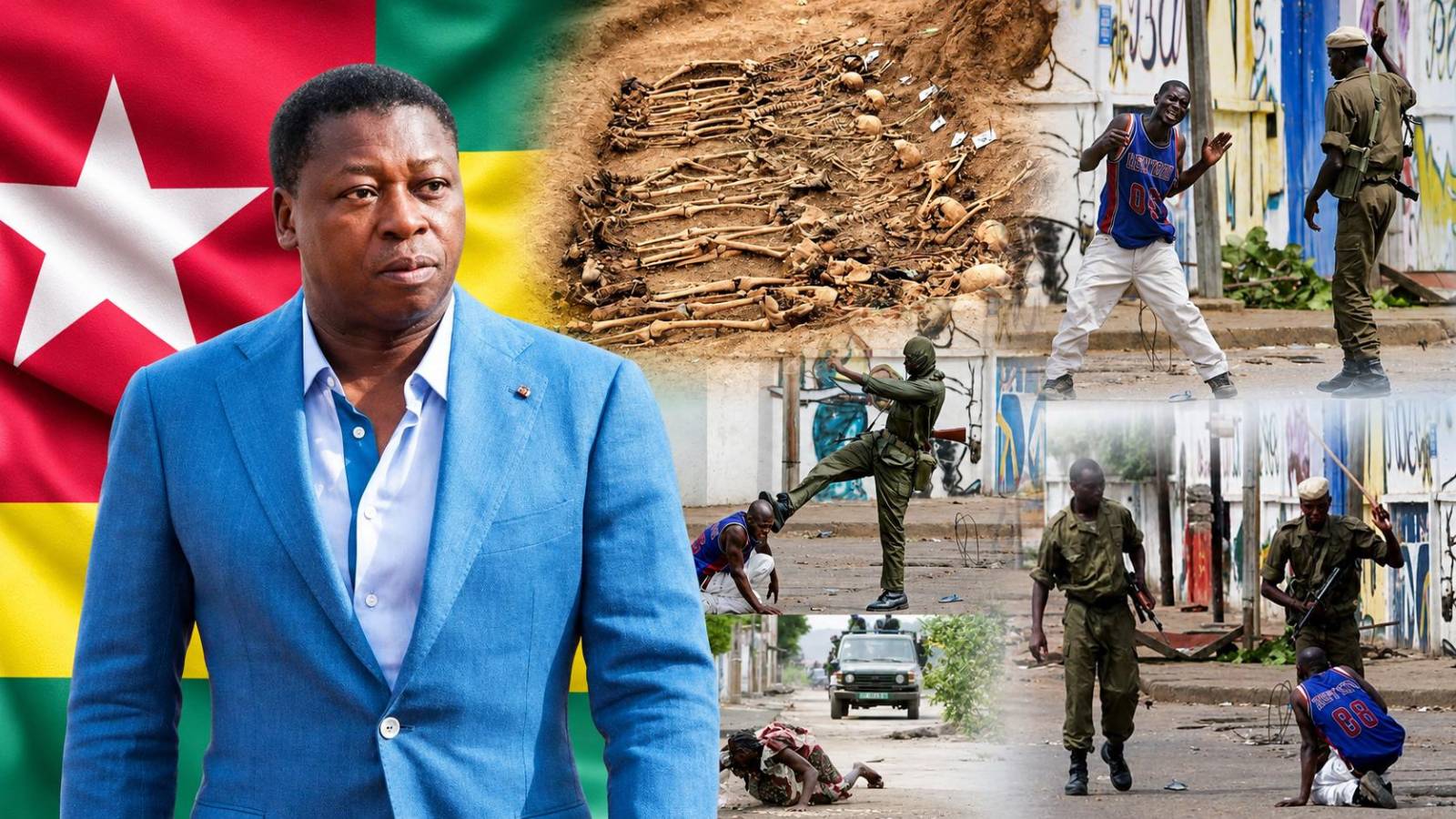
Official data and independent organizational tallies present discrepancies, yet the grim statistics remain appalling. Following the announcement of results declaring Faure Gnassingbé the victor with 60% of the vote, widespread unrest engulfed Togo.
- The United Nations report: An investigative commission mandated by the United Nations officially documented between 400 and 500 fatalities.
- Human rights advocacy groups: The Togolese League for Human Rights (LTDH), for its part, reported a figure exceeding 1,000 victims.
These acts of violence were not isolated incidents of misconduct. They primarily affected opposition strongholds in Lomé and southern cities such as Aného and Atakpamé, regions historically inhabited by the Ewé people.
Kabyè militias and the manipulation of ethnic identity
One of the most egregious dimensions of this crisis lies in the deployment of civilian paramilitary groups. Corroborated accounts, notably by Amnesty International, highlight the collaboration between military personnel and militiamen — frequently identified as originating from the Kabyè ethnic group (the ruling faction’s ethnicity) — to conduct punitive raids in the southern districts.
« The militiamen fired into crowds… individuals were fatally assaulted in the presence of their relatives. » — Amnesty International Report, July 2005.
The application of torture, the destruction of homes by fire, and extrajudicial killings compelled approximately 40,000 Togolese into displacement, seeking refuge in neighboring Bénin and Ghana, thereby creating an unparalleled humanitarian emergency within the sub-region.
Impunity as a cornerstone of authority
Since 2005, despite the establishment of a Truth, Justice and Reconciliation Commission (CVJR) in 2009, the issue of accountability persists unresolved. No senior military officials or militia commanders have been genuinely held accountable for the massacres of 2005.
Conclusion: an unaddressed trauma
Two decades later, Faure Gnassingbé’s assumption of power remains marred by this foundational transgression. While the current administration endeavors to project an image of stability and progress, the scars of 2005 are merely superficial. For numerous analysts, Togo cannot circumvent genuine justice for the victims of the South if it is ever to achieve authentic national reconciliation.