Behind the headlines: a photo that exposes Mali’s fragility
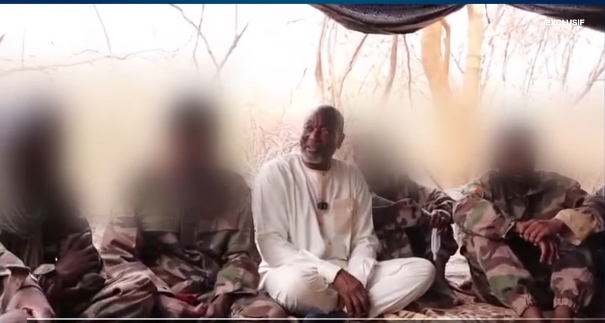
What began as a humanitarian breakthrough has morphed into a political earthquake. A single image—Oumar Mariko, the exiled opposition leader, standing beside fighters from the Group for the Support of Islam and Muslims (JNIM), an Al-Qaeda affiliate—circulated rapidly across Mali’s social media landscape. The scene captured the moment 17 hostages were freed, yet it also laid bare a stark truth: the Malian government was nowhere to be seen.
A crisis of authority in the capital
The presence of Mariko, a vocal critic now living abroad, negotiating with armed groups on national soil raises urgent questions about the reach and effectiveness of Bamako’s institutions. If a civilian figure outside the state’s control can secure such a high-stakes deal, what does that say about the state’s own capacity to protect its people and maintain sovereignty?
Observers warn that this episode is not an isolated incident but part of a pattern: in vast stretches of the country, especially rural areas, the reins of power have slipped from the hands of elected officials and security forces into those of informal brokers. These actors, whether armed groups or local strongmen, now fulfill roles traditionally reserved for the state—mediation, dispute resolution, and even security.
JNIM’s calculated image campaign
The terrorist organization’s role in the hostage release was far from altruistic. It was a deliberate public relations maneuver designed to serve two critical purposes. First, it sought to recast JNIM not as a ruthless extremist group, but as a pragmatic and responsible actor capable of dialogue. Second, it reinforced the group’s image as the only functional authority in regions where the Malian government has failed to deliver security or services.
By positioning itself as a provider of justice and protection—roles usually associated with the state—JNIM further erodes public trust in Bamako. The message is clear: if the government cannot protect its citizens, the group will. This narrative, repeated in villages and towns, chips away at the legitimacy of the Malian state.
« Sovereignty is not declared in speeches from Bamako; it is proven by the state’s ability to safeguard its citizens without intermediaries.
The hidden costs of shadow negotiations
While families celebrate the return of their loved ones, the long-term implications are troubling. Behind closed doors, such arrangements often involve financial transactions—ransoms—paid to armed groups. These payments, though unofficial, directly fund future operations against Malian and international forces, perpetuating the cycle of violence.
Moreover, engaging in negotiations with a designated terrorist organization legitimizes its control. It sends a signal to rural communities that cohabitation with armed groups is not only acceptable but necessary. This tacit acceptance bolsters the insurgents’ standing and undermines efforts to restore state authority.
Two Malis: one in name, two in reality
The country today is divided not just by geography, but by governance. In Bamako, the narrative remains one of military progress and imminent territorial recovery. Official statements speak of growing army strength and strategic advances.
Yet beyond the capital, in the countryside and remote regions, a different reality unfolds. Here, the state’s institutions are absent or ineffective. Communities, left to their own devices, adapt to survive. Survival often means negotiating with armed groups—not out of allegiance, but out of necessity. This dual existence weakens national cohesion and deepens the challenges of post-conflict recovery.
The road to restoring state power
The Mariko-mediated hostage release is more than a humanitarian milestone; it is a flashing warning light. It highlights the dangers of allowing private actors, whether opposition figures or armed groups, to fill the void left by a weakened state. The risk is not only of continued insecurity but of a fractured nation where different regions answer to different authorities.
For Bamako, the challenge has shifted from a military one to a political one. Restoring state sovereignty will require more than victories on the battlefield. It demands the restoration of trust, the delivery of tangible security, and the reassertion of government authority in every corner of the country—before the void is permanently filled by others.