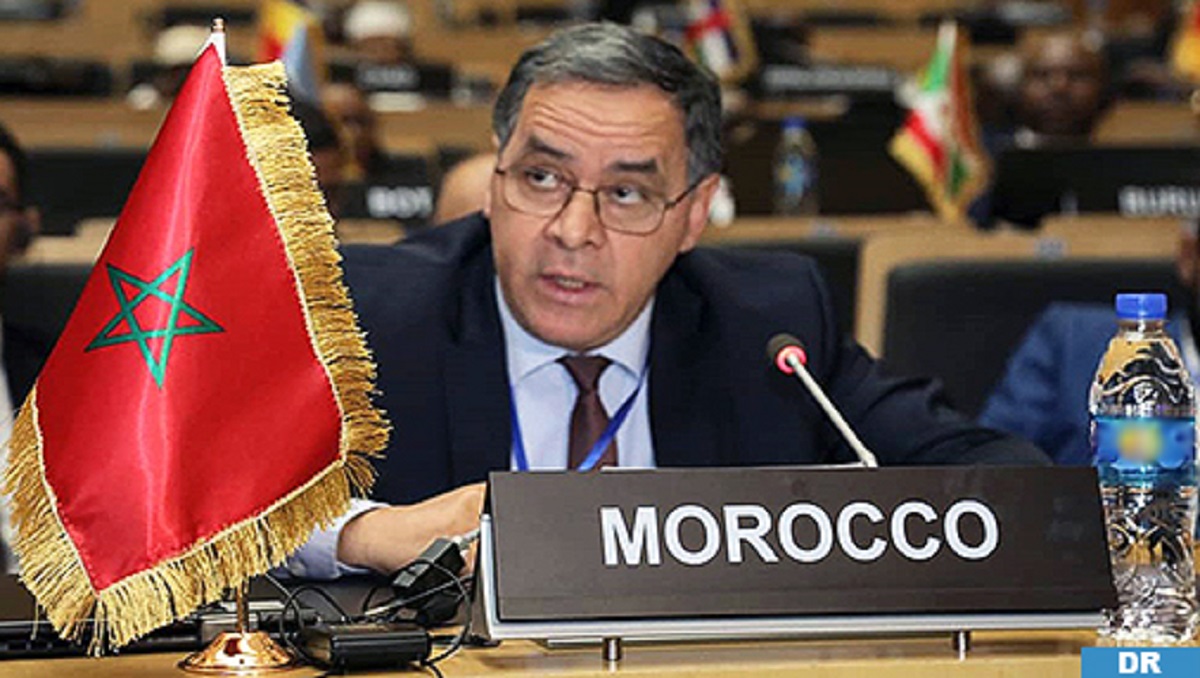
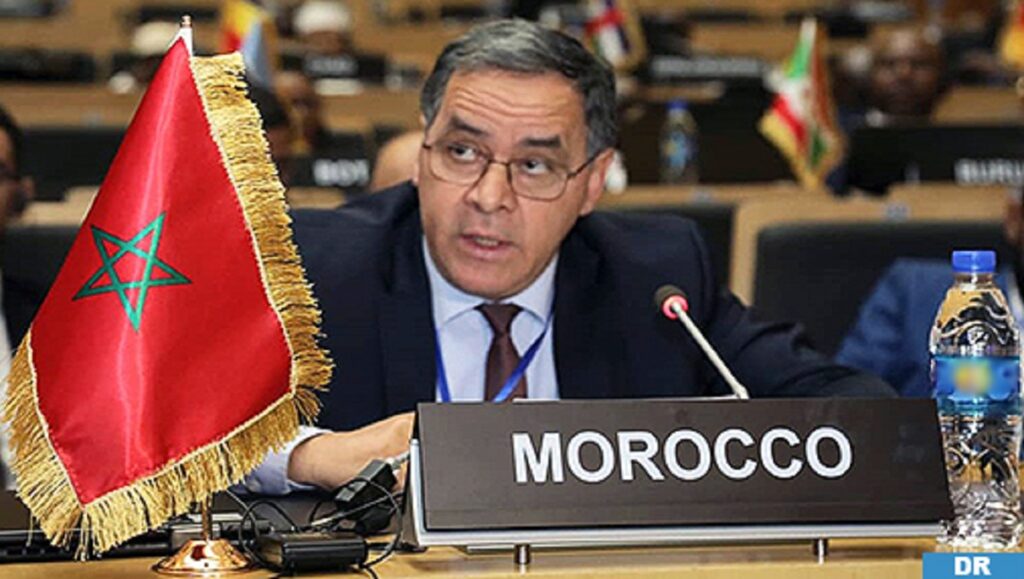
In a decisive address to the African Union’s Peace and Security Council, Morocco’s Ambassador to the AU and the UN Economic Commission for Africa, Mohamed Arrouchi, underscored the Kingdom’s unwavering commitment to fostering a sustainable political solution for Libya’s prolonged crisis.
During Tuesday’s session in Addis Ababa, Arrouchi highlighted Morocco’s extensive mediation efforts, spanning from the Bouznika talks to the recent dialogues between representatives of Libya’s Tripoli-based government and the eastern administration. He emphasized that the Skhirat Agreement, signed on December 17, 2015, under United Nations auspices, remains the cornerstone for achieving a lasting resolution.
Preserving Libya’s sovereignty and territorial integrity
Arrouchi reiterated Morocco’s strong stance on safeguarding Libya’s unity, sovereignty, and territorial integrity. He praised the African Union’s initiatives aimed at promoting peace and stability across the continent, particularly those targeting a political resolution for Libya. The Ambassador also commended the AU’s role in facilitating dialogue between Libya’s warring factions.
Diplomatic milestones in Libya’s reconciliation
He recalled the pivotal meetings held in Tripoli and Zenten, which culminated in the signing of a historic agreement on January 7, 2026, between representatives of Libya’s Government of National Unity and the eastern-based government. This accord marked a significant step toward national reconciliation and was hailed as a model of constructive engagement.
Arrouchi further stressed that Morocco’s diplomatic interventions in Libya align with international legality, the Skhirat Agreement, and the Bouznika understandings. The Kingdom continues to advocate for a political settlement over military solutions, reinforcing its position as a key player in the region’s stability efforts.
Morocco’s vision for a lasting solution
By positioning the Skhirat Agreement at the heart of Libya’s political process, Morocco is championing a framework that balances inclusivity with adherence to international norms. The Ambassador’s address served as a reminder of the importance of sustained dialogue, compromise, and respect for Libya’s institutional frameworks to overcome its deep-seated divisions.