The Dioura assault and the toll it left behind
On 10 September, armed fighters stormed the military camp at Dioura, in the Mopti region of central Mali, and around 80 Malian soldiers are believed to have been killed in the fighting. The scale of the loss places the assault among the deadliest episodes suffered by the country’s armed forces in recent memory.
Numbers alone, however, do not capture what followed. Several soldiers are still unaccounted for, and others are reported to have been captured during the attack, leaving their relatives without any certainty about their fate.
A claim of responsibility within hours
The Group for the Support of Islam and Muslims (JNIM), an organisation affiliated with Al-Qaïda, claimed the operation only a few hours after the assault began. According to the group, its fighters seized control of the camp before withdrawing from the position.
Why the loss of this position matters
That a military site regarded as strategically important could be overrun, held for a time and then abandoned by the attackers raises uncomfortable questions. Years of military operations against armed groups have not removed those groups’ capacity to strike hard and fast.
For the residents of Dioura and the neighbouring villages, the military balance sheet is not the only concern. Every assault of this kind pushes the violence a little closer to the places where people live, work and raise their children.
Civilians in central Mali bear the consequences
Communities across this part of central Mali have spent years living alongside clashes, displacement and the restrictions that insecurity imposes on everyday life. A military camp is supposed to act as a shield for the population around it.
When that camp falls into the hands of an armed group, even briefly, the message delivered to local people is deeply unsettling.
Uncertainty over missing and captured soldiers thickens the tension. Families wait for news that often does not come, while communities brace themselves for reprisals or fresh confrontations.
When insecurity turns into a social crisis
Daily routines suffer as well. Travel becomes risky, trade slows down and access to basic services grows more fragile. Over time, the effects of military insecurity spill over into a broader social crisis, with markets, schools and health facilities all feeling the strain.
A difficult moment for Mali’s ruling junta
The attack also landed in a politically delicate period for the Malian authorities. The junta in power has built much of its legitimacy around two promises: reclaiming national territory and restoring sovereignty. Officials have repeatedly pointed to a stronger Malian army and to greater independence in the fight against jihadist groups.
Dioura exposes the gap between that narrative and the situation on the ground.
Sovereignty, autonomy and results
How could a significant military position be held for hours by a jihadist force, when the authorities have promised for years to bring the territory back under control? The question is all the more awkward because Mali has gradually scaled back its cooperation with certain foreign partners while embracing a more autonomous security strategy.
That choice can be defended in the name of sovereignty. It must also be measured against what it delivers. For the people of Mopti, the results so far remain troubling: insecurity persists, and attacks on Malian forces can still inflict mass casualties.
The feeling of being left behind
In Dioura, as in other rural areas of central Mali, residents find themselves squeezed between armed groups, military operations and the economic fallout of instability.
That sense of abandonment can be as dangerous as fear itself. When people stop believing that the state is able to protect them, their confidence in public institutions erodes — and rebuilding it takes far more than political declarations.
Genuine security would mean protected roads, farmers able to return to their fields and dependable access to public services.
Beyond the battlefield
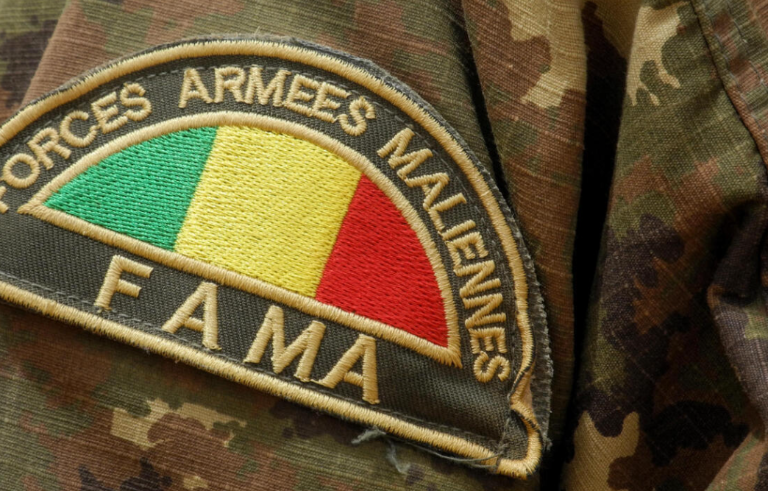
The tragedy at Dioura cannot be reduced to a single clash between the FAMa and the JNIM. Behind the military toll are grieving families, missing soldiers, relatives waiting for news and civilians facing a fresh wave of anxiety.
For the Malian junta, the assault stands as a serious warning. After years of security promises, the population now expects tangible results.
At Dioura, the real question is not who controlled a camp for a few hours. It is whether the Malian state is genuinely capable of protecting the people who live around those military positions. Until that question finds an answer, every new attack risks deepening the sense of insecurity and disillusionment.