In the Democratic Republic of the Congo, the security situation remains deeply troubling in Minembwe, a locality in South Kivu province. Despite the ongoing crisis, both the Congolese and Rwandan governments have reiterated their commitment to peace.
Meeting this Wednesday in London, the two sides agreed to implement the peace accord signed in June 2025, enforce the ceasefire, and reduce tensions in Minembwe.
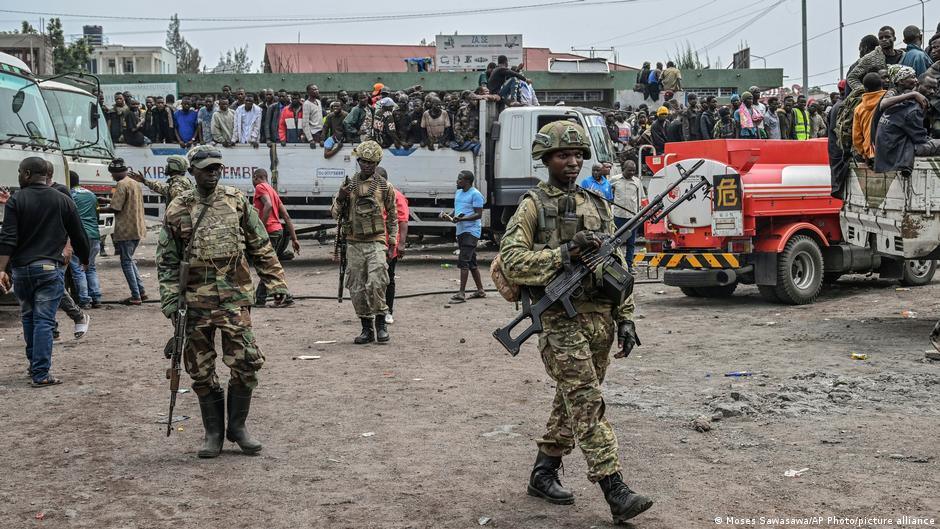
This strategic area is fiercely contested between the Congolese army and AFC-M23 rebels, each backed by allied militias—the Wazalendo and Twirwaneho groups.
A war that spares nothing, not even hospitals
Fighting persists in this administrative entity within the Fizi territory. Nearly every day brings new casualties and material destruction, as a Minembwe resident describes, pointing to drone bombardments. He says even the Minembwe general referral hospital and several health centres have been targeted: “The paediatric ward was bombed yesterday. The Ilundu health centre near the airstrip was also hit. War happens every day, and the drones terrorise the population. People have fled. The situation is dire. These drone attacks keep coming.”
Civilians trapped in an endless war
In recent weeks, the escalation of combat around Minembwe has forced many civilians to flee. The collective of civil society organisations in South Kivu demands that all signed agreements, starting with the ceasefire, be respected.
“We deplore that civilians continue to be preyed upon by belligerents everywhere,” says Hypocrate Marume, a member of the South Kivu civil society framework. “The population keeps moving. The crisis is intensifying, and it is us, the civilians, who are being killed. As South Kivu civil society, we reiterate our call for both sides to lay down their arms and talk for the sake of peace.”
The battle for a highly strategic zone
The clashes in Minembwe are part of a broader pattern of community tensions and rivalry over a zone of major military and symbolic importance.
Professor Philippe Doudou Kaganda, scientific director of the Centre for Research on Conflicts and Peace in the Great Lakes Region, explains: “Minembwe is a vast area that would allow the faction occupying it to launch counter-offensives against adversaries, both in the middle plateaus and in the Ruzizi plain. It is a crossroads that connects to Mwenga territory. Minembwe has also been a conflict zone for decades. When one faction captures it, it signals a certain victory in a territorial and ethnicised war.”
Peace therefore remains a distant dream for Minembwe’s inhabitants, who now live under the constant threat of drone bombings and almost continuous gunfire.