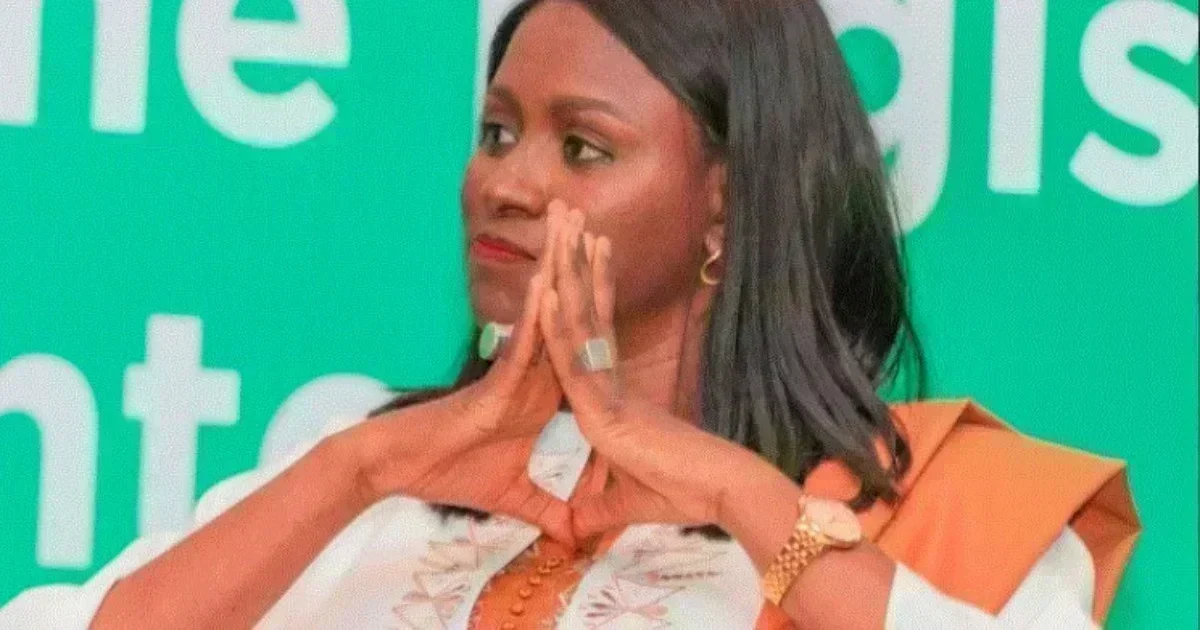
In a bold show of political alignment, Ndeye Rokhaya Thiam, the newly appointed Director-General of Senegal’s Conseil Sénégalais des Chargeurs (COSEC), has publicly reaffirmed her unwavering support for opposition leader Ousmane Sonko.
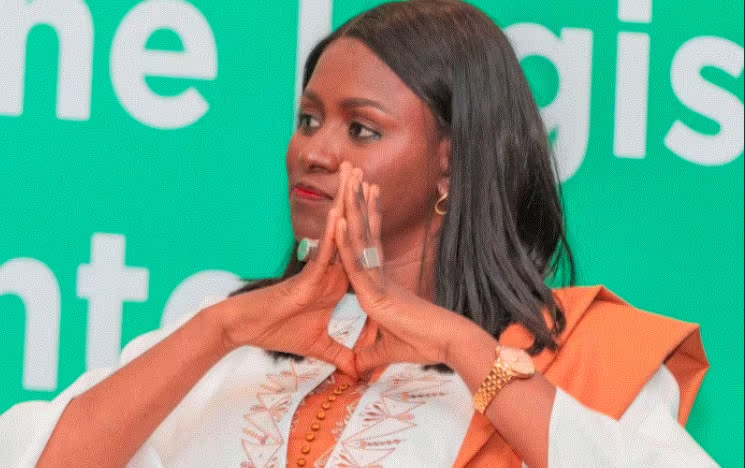
Her declaration comes at a critical juncture in Senegalese politics, where tensions between Sonko’s Pastef movement and President Bassirou Diomaye Faye’s administration continue to escalate. Thiam’s remarks have intensified discussions about institutional loyalty in a landscape where political alliances are increasingly scrutinized.
From advice to allegiance: A public embrace of Sonko
Ndeye Rokhaya Thiam, who took the helm at COSEC in May 2024—succeeding Abdoulaye Diop—recently shared a personal account on social media that sheds light on her decision. She revealed that before her appointment, an advisor urged her to remain steadfast in her support for Sonko, regardless of future political shifts.
In a Facebook post, she recounted the counsel: “Politics is unpredictable. Circumstances can change, even leading to fractures within movements. When that time comes, ensure you stand as Ousmane Sonko’s most loyal ally. He must always see you by his side.”
Thiam capped her message with words that resonated across political circles: “Dear brother, you’ll know who you are. Yes, Ousmane will see me.” The statement has since sparked widespread reactions, underscoring the high stakes of institutional loyalty in Senegal’s evolving political climate.
Institutional loyalties under the microscope
The timing of Thiam’s statement is particularly significant. As Senegal navigates a period of political upheaval, numerous public officials and institutional leaders have faced scrutiny over their allegiances. Her public stance adds another layer to the broader debate about where institutional duties end and personal political beliefs begin.