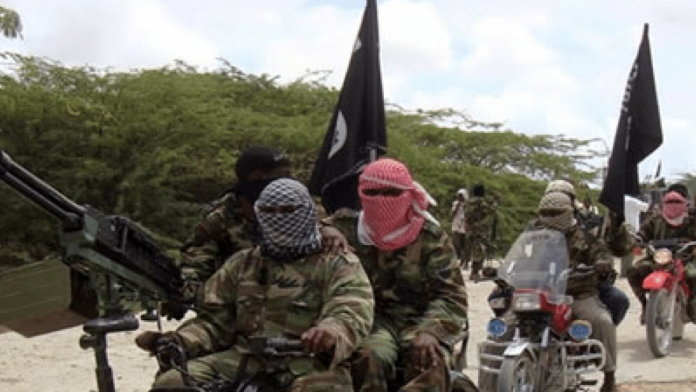
Nigerian military authorities have confirmed that the kidnapping of dozens of students and teachers in southern Nigeria’s Oyo State was carried out by Boko Haram fighters. The incident unfolded last Friday in Yawota and Esiele communities, where armed assailants stormed multiple educational institutions without warning.
A military spokesperson released a statement identifying the perpetrators as members of Jama’at Ahl al-Sunnah li-l-Da’awah wa al-Jihad, widely recognized as Boko Haram. According to defense officials, the attackers relocated southward after facing heavy resistance from intensified counterterrorism operations in the country’s northern regions.
Official reports vary on the number of victims. While state authorities from Oyo, including Governor Seyi Makinde, report 25 students and seven teachers were abducted, Christian leaders through the Christian Association of Nigeria claim 39 children and seven educators were taken. The youngest victims are between 2 and 16 years old, and all remain missing as security forces conduct urgent search operations.
This incident marks a troubling shift, as school kidnappings have become common in northern Nigeria but are rare in Oyo State. Ibadan, the state capital, is a major educational hub in the country, making the targeting of its schools particularly alarming for parents and officials alike.
In response to escalating violence, Nigeria’s armed forces, supported by allied partners, have escalated military campaigns in the north. Recent aerial bombardments in the northeast—Boko Haram’s historical stronghold—are reported to have eliminated 175 militants. Meanwhile, ground operations have pushed some insurgent cells toward southern territories, where weaker security presence may offer temporary refuge.
Over recent months, armed groups have escalated attacks on both civilian settlements and security personnel. Independent security analysts in Abuja estimate that Nigerian soldiers suffered over 300 fatalities during the first quarter of the year alone.