The Nigerian military has directly implicated the extremist group Boko Haram in a series of violent abductions targeting children in the southern regions of the country. According to official statements, the attacks have left deep scars on local communities, with dozens of families shattered by the loss of their young ones.
Military confirms Boko Haram’s involvement in child kidnappings
Security forces in Nigeria’s northeastern Yobe State reported that armed militants, believed to be affiliated with Boko Haram, stormed the Mafa district on a recent Sunday afternoon. Eyewitness accounts and preliminary investigations reveal that over 150 heavily armed insurgents descended on the area, arriving on more than 50 motorcycles. The assault, which unfolded around 4 PM, left at least 81 civilians dead, while an unknown number of children were forcibly taken from their homes.
The spokesperson for Yobe State Police, Abdulkarim Dungus, confirmed that the attackers were equipped with assault rifles and rocket launchers, underscoring the sophistication and brutality of the operation. “This was not a random act of violence,” Dungus stated. “It was a calculated strike designed to instill fear and destabilize the region.”
Impact on affected communities
The attack has sent shockwaves through nearby villages, where residents describe a climate of terror gripping the population. Schools have been temporarily shut down as parents keep their children at home, fearing further reprisals. Local leaders are calling for urgent government intervention, emphasizing the psychological toll on families who now live in constant dread of another strike.
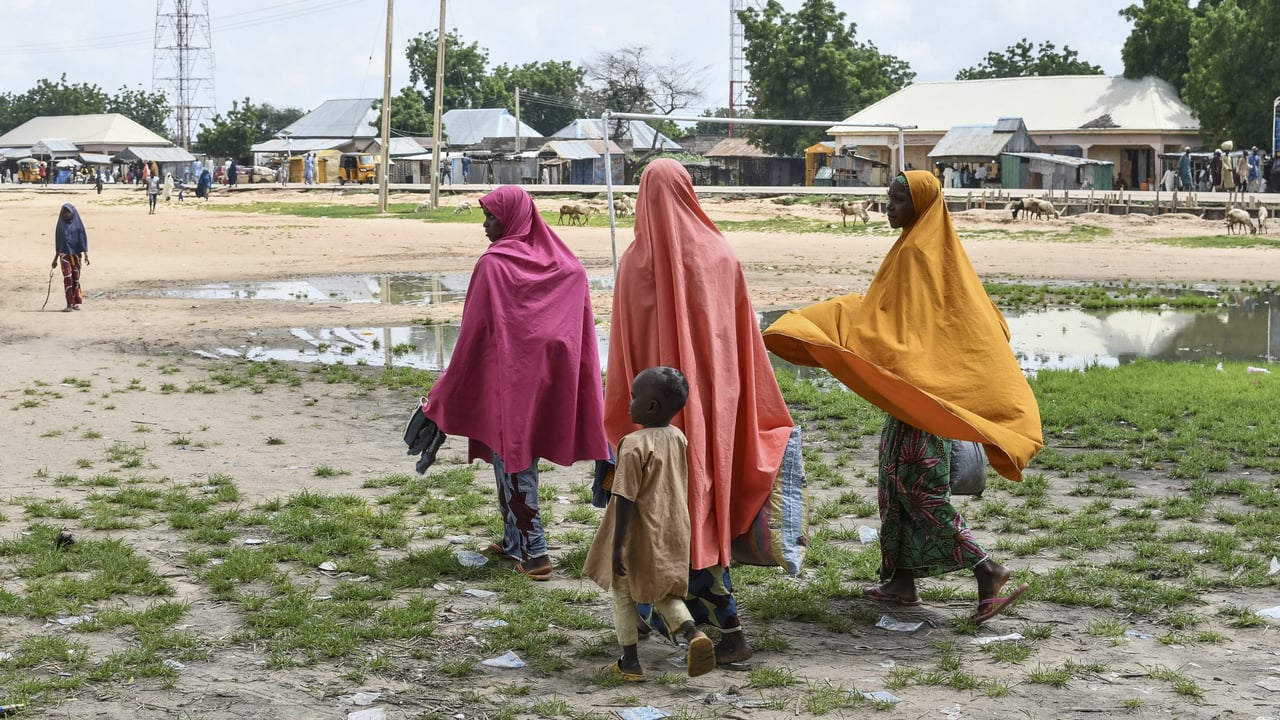
While the military continues its hunt for the perpetrators, communities in Yobe State are grappling with the aftermath of the violence. Relief efforts are underway, but the scars—both physical and emotional—run deep. “We are living in a nightmare,” shared a resident of Babban Gide, where survivors and grieving families have gathered in the wake of the tragedy.
Government response and ongoing security measures
In response to the crisis, Nigerian authorities have bolstered security presence in the region, deploying additional troops to patrol vulnerable areas. Military officials have assured the public that decisive action will be taken against those responsible, vowing to dismantle Boko Haram’s networks in the south.
Analysts warn, however, that the threat remains far from over. Boko Haram has a long history of targeting civilians, particularly children, to spread chaos and undermine state authority. The recent spate of abductions is seen as part of a broader strategy to weaken local governance and exploit societal vulnerabilities.
Call for regional cooperation
As the situation evolves, calls for enhanced regional collaboration have grown louder. Neighboring countries, including Niger, Cameroon, and Chad, have been urged to strengthen intelligence-sharing and joint military operations to curb the spread of insurgent activity. Regional stability, experts argue, depends on a unified front against terrorism.
The Nigerian military’s unequivocal stance on Boko Haram’s role in these kidnappings underscores the urgent need for both immediate relief and long-term solutions. For the families affected, the road to recovery will be long and arduous—but the fight for justice has only just begun.