West African diplomacy is witnessing a subtle yet significant shift as Benin’s President Romuald Wadagni undertakes a carefully orchestrated regional tour. His first stop, Niger, follows a tense period marked by closed borders and mutual accusations, while his next destination is Burkina Faso—a move analysts describe as both strategic and symbolic.
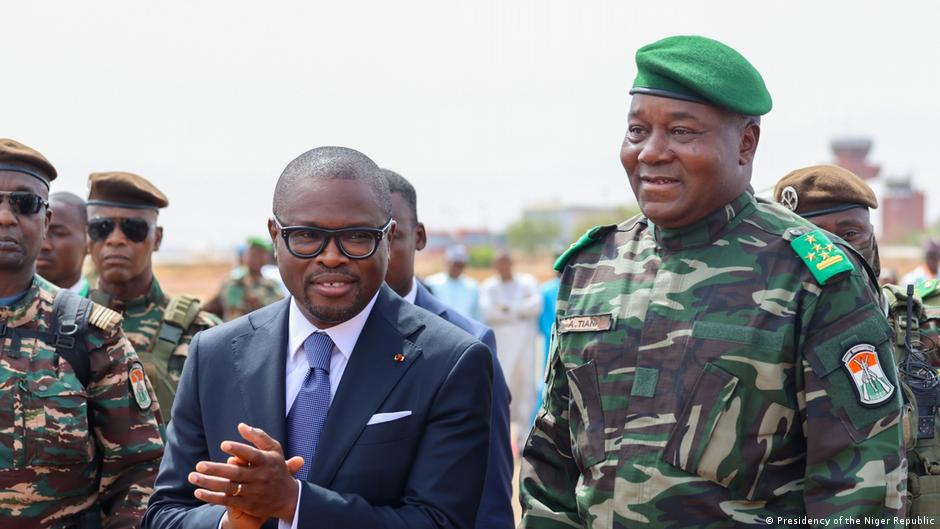
Upon arrival in Niamey, President Wadagni was greeted by Niger’s transitional leader, General Abdourahamane Tiani, at the airport. While the full details of their discussions remain undisclosed, the gesture signals an attempt to mend frayed relations between the two nations. The visit, officially framed as a goodwill and working trip, aims to address pressing security concerns, economic cooperation, and cross-border trade.
from confrontation to cautious cooperation
Relations between Benin and Niger have been strained since the July 2023 coup in Niamey. Niger has kept its border with Benin shut, accusing Cotonou of hosting a French military base—a claim firmly denied by Beninese authorities. Despite these tensions, the high-level meeting in Niamey suggests a thawing of diplomatic ice.
“This visit marks a step forward,” noted Abdoulaye Sounaye, a Sahel security expert based in Berlin. He pointed to subtle but meaningful changes in Niger’s tone toward Benin compared to previous years. “Under former leadership, the discourse was far more confrontational. Today, the language has shifted—an unmistakable sign of evolving relations.”
what’s next for Benin-Niger ties?
A joint communiqué issued after the meeting outlined a commitment to reopening the border, pending recommendations from a 15-day expert review. General Tiani may reciprocate the visit with an official trip to Benin, though no date has been set. Such developments could pave the way for the restoration of trade flows and enhanced regional stability.
The Beninese leader did not linger long in Niamey. After concluding talks, he departed for Ouagadougou, where he was received by Burkina Faso’s military head of state, Captain Ibrahim Traoré. A working session followed, focusing on shared security challenges and economic collaboration in the Sahel.
As realpolitik takes center stage, this diplomatic initiative underscores the delicate balance of power and pragmatism shaping West Africa’s geopolitical landscape today.