Supreme Court Upholds Sonko’s Legislative Leadership as UNIS Challenges Legality
The Union for Integrity and Sovereignty (UNIS) has sharply criticized a recent ruling by the Supreme Court’s emergency judge, which dismissed its petition to suspend Ousmane Sonko’s installation as President of the National Assembly. The political movement insists it will pursue its case on the merits and has requested that the full chambers of the high court review the jurisdictional dispute.
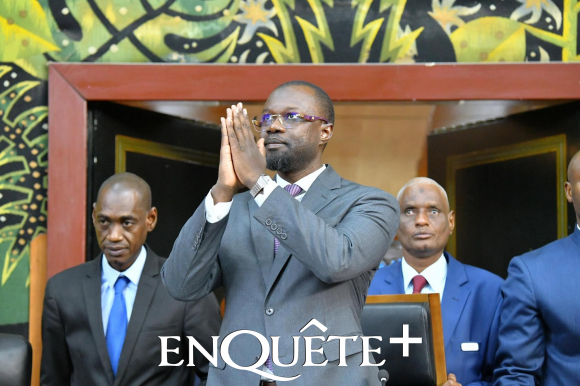
Legal Battle Over Legislative Authority
The controversy stems from an order issued on June 25, 2026, by the Supreme Court’s emergency judge regarding the administrative act confirming Ousmane Sonko’s presidency of the National Assembly. UNIS, in a statement signed by its president Amadou Gueye, condemned the decision as creating a “negative conflict of jurisdiction” and constituting a “denial of justice.”
The organization had filed two separate motions: one to annul the administrative act by the Assembly Bureau and another for an emergency suspension of its implementation. This dual approach followed a June 17, 2026 ruling by the Constitutional Council, which declared itself incompetent to review the matter, classifying the contested act as administrative rather than legislative.
Jurisdictional Dispute Raises Legal Concerns
UNIS argues that the Supreme Court’s rejection of the emergency petition is legally flawed. The movement contends that by labeling the Assembly Bureau’s act as an “administrative integration act,” the Constitutional Council implicitly designated the Supreme Court as the competent jurisdiction. This, according to UNIS, creates a legal vacuum where no court is willing to rule on the matter.
The organization further asserts that the principle of separation of powers cannot justify exempting legislative acts from judicial review when they raise legality issues. It points to recent Constitutional Council decisions that have struck down provisions of constitutional reforms, emphasizing that the judiciary maintains oversight authority over institutional acts when legal questions arise.
Call for Legal Clarity in Institutional Power Balance
UNIS warns that the court’s interpretation could lead to an “area of lawlessness” within the Assembly Bureau, allowing administrative acts to evade judicial scrutiny. Despite the emergency motion’s dismissal, the organization maintains its appeal for annulment on the merits before the Supreme Court. It has specifically requested that the full chambers convene to rule on jurisdiction and resolve what it describes as a threat to legal certainty.
The movement concludes by urging magistrates to fully exercise their constitutional role in this case, framing it as a critical moment for defining the boundaries between Senegal’s executive, legislative, and judicial branches.