Beninese women in politics: a historic appointment and the ongoing push for greater representation
Following his swearing-in, President Romuald Wadagni of Benin selected Captain Elvire Toupé as his aide-de-camp. This significant designation occurred after the inaugural meeting of the Council of Ministers on May 28.
Captain Toupé, previously an officer in the Republican Guard, now holds the distinction of being the first Beninese woman to serve in this capacity since Benin gained independence on August 1, 1960. Her appointment marks a pivotal moment in the nation’s political landscape.
Régis Hounkpè, an educator and analyst specializing in geopolitics and political governance, who also directs InterGlobe Conseils, expressed strong approval for this appointment.
“Because these were women, they naturally serve as role models. Young Beninese girls draw immense inspiration from them. In both the collective imagination and the reality of Benin, the Amazons have reclaimed an essential role, not only within the community but also in decision-making circles and the broader public sphere. The Amazons are a constant topic of discussion,” Hounkpè remarked.
Echoes of the Agodjié
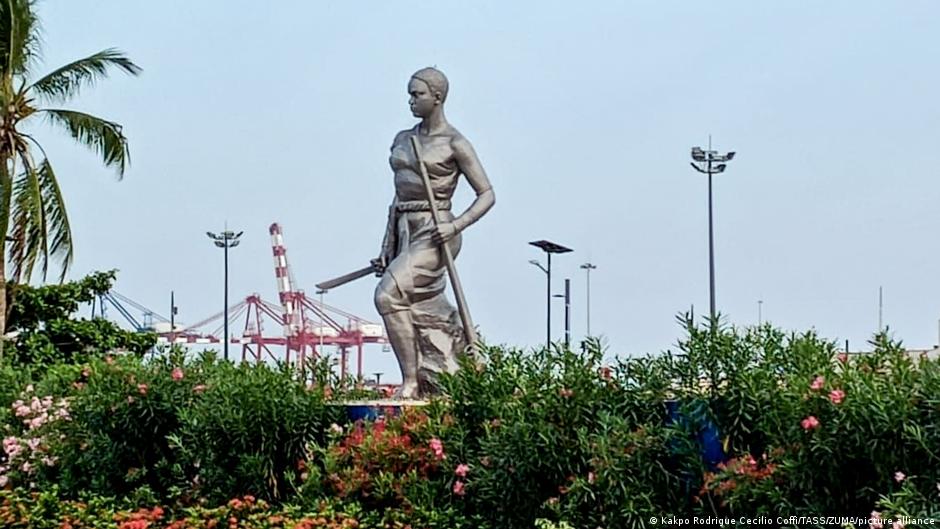
Journalist Wuldath Moussa Mama highlighted that Elvire Toupé’s appointment evokes memories of the Agodjié, the ancient Dahomey military regiment that European colonizers famously dubbed the Amazons, referencing the mythical Greek warrior women.
“This is a historical reminder of the military role women played alongside the sovereigns of Dahomey. Indeed, the renowned Amazons were an elite corps within Dahomey’s armed forces. The crucial question remains: is this an exception that proves the rule, or is it truly a momentum the president intends to create, perhaps to empower women and propel them forward? Perhaps this opens a door, one that will strongly encourage them to gain more ground,” Mama explained.
According to Régis Hounkpè, the Amazons of Dahomey embody courage, audacity, and resilience in the face of adversity. He reiterated, “Because they were women, they undeniably remain powerful symbols. Young Beninese girls draw significant inspiration from them. In both the cultural narrative and the contemporary reality of Benin, the Amazons have been re-established in a vital role, influencing community life, decision-making bodies, and the public sphere. The legacy of the Amazons is widely celebrated.”
Persistent Gaps in Women’s Political Representation
While Captain Toupé’s appointment is a step forward, the broader picture reveals insufficient female representation in political functions. President Romuald Wadagni’s initial government includes six women, holding portfolios such as Foreign Affairs, Higher Education, Family and Social Action, Internal Trade, Employment and Professional Training, and Communication and Media.
This number represents a slight increase from former President Patrice Talon’s last government, which comprised five women out of 23 members. Wuldath Moussa Mama expressed her hope for even greater participation of Beninese women in the country’s public administration.
Mama observed that “it’s challenging to discuss gender inclusivity and women’s presence in the national political arena without acknowledging the vice-presidency, which a woman has occupied since 2021. While certainly a symbol, one must ask if it remains merely a symbol. This is because, ultimately, the vice-president’s role, as defined by the Beninese Constitution, is primarily ceremonial.”
Benin’s tenth legislature, established in February 2026, includes 28 women deputies, all from the presidential majority, out of a total of 109 seats. This constitutes 25.7% of the total parliamentary body, a figure consistent with the previous legislature.
Thanks to an electoral code provision that mandates one seat per electoral constituency for women, 24 female deputies were elected, with an additional four securing positions outside this quota.
However, Wuldath Moussa Mama concluded, “This landscape still falls short and highlights the ongoing work required within political parties, both in terms of training for activism and the fundamental space afforded to women within their structures.”
Related Posts