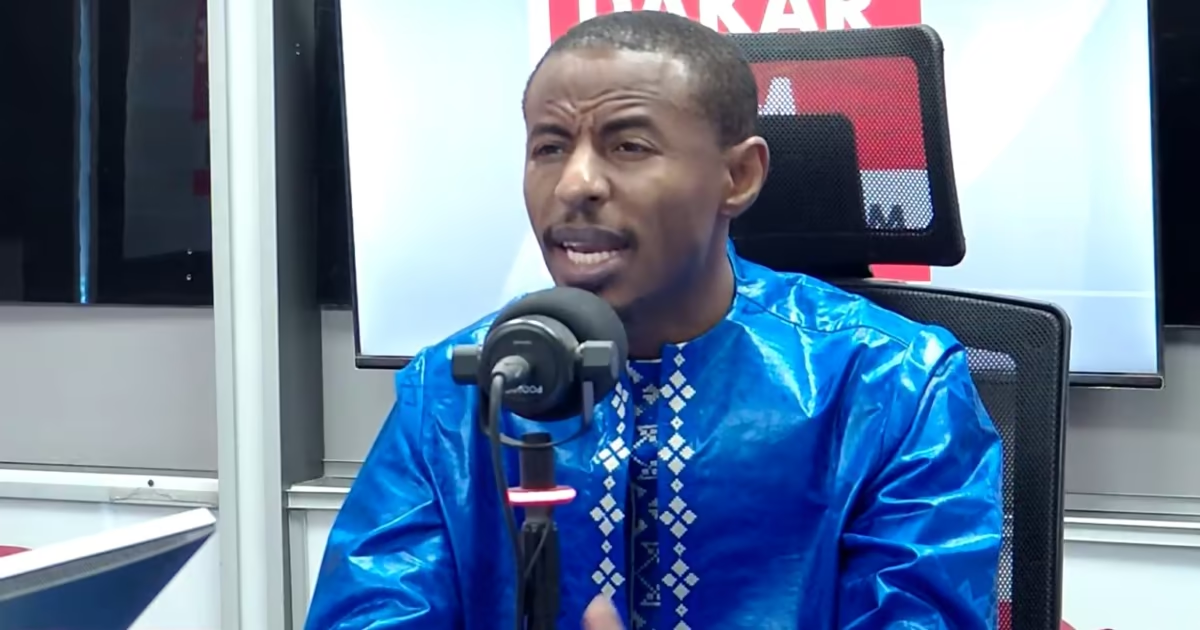
Senegal secures fresh funding as Aldiouma Sow criticises Sonko’s opposition tactics
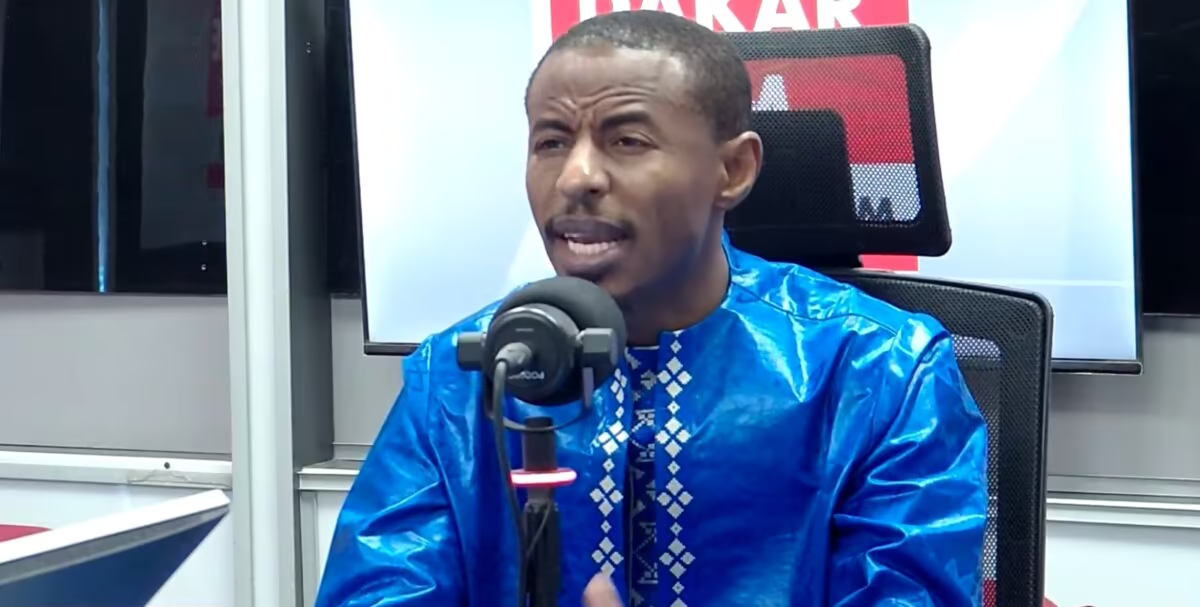
Aldiouma Sow, senior advisor to the President, highlights the significance of 340 billion FCFA from the World Bank and 20 billion FCFA from the African Development Bank, signaling a renewed confidence from international lenders in Senegal’s economic recovery.
The announcement of two major financing packages for Senegal has triggered a sharp response from Aldiouma Sow, senior advisor to President Bassirou Diomaye Faye.
Sow emphasizes that these funds mark a turning point: « Actions now replace empty rhetoric; pragmatism has triumphed over confrontation. For two years, Senegal endured a cycle of perpetual confrontation and divisive discourse that stifled progress and eroded trust among international partners. The evidence is undeniable—what truly hindered the country’s advancement was not external pressures but internal policy paralysis and systematic efforts to undermine the presidential mandate, orchestrated by the so-called ‘Messiah’ and his circle, now active within the National Assembly. »
He adds, « A new era of stability is emerging, and the results speak for themselves. » Sow explains further: « The swift restoration of financial confidence, evidenced by the World Bank’s 340 billion FCFA commitment and the African Development Bank’s 20 billion FCFA allocation, proves that past failures were not due to external factors but stemmed from a leadership obsessed with tension rather than collaboration. »
Sow underscores that these funds symbolize restored credibility among lenders, who prioritize tangible projects over inflammatory rhetoric. He states, « These investments reflect a commitment to stability and republican values championed by President Bassirou Diomaye Faye and his administration. » In conclusion, Sow asserts that Senegal’s path forward requires « pragmatism, dialogue, and collaboration—not perpetual institutional crises. »
