Senegal’s December 2 window: the structural fault lines behind a possible assembly dissolution
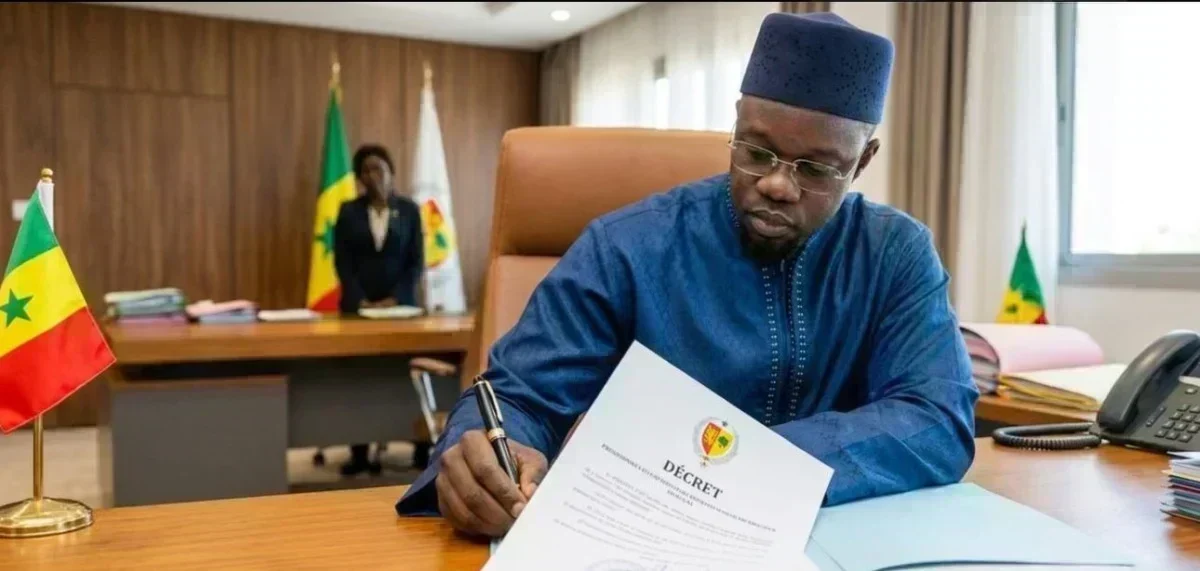
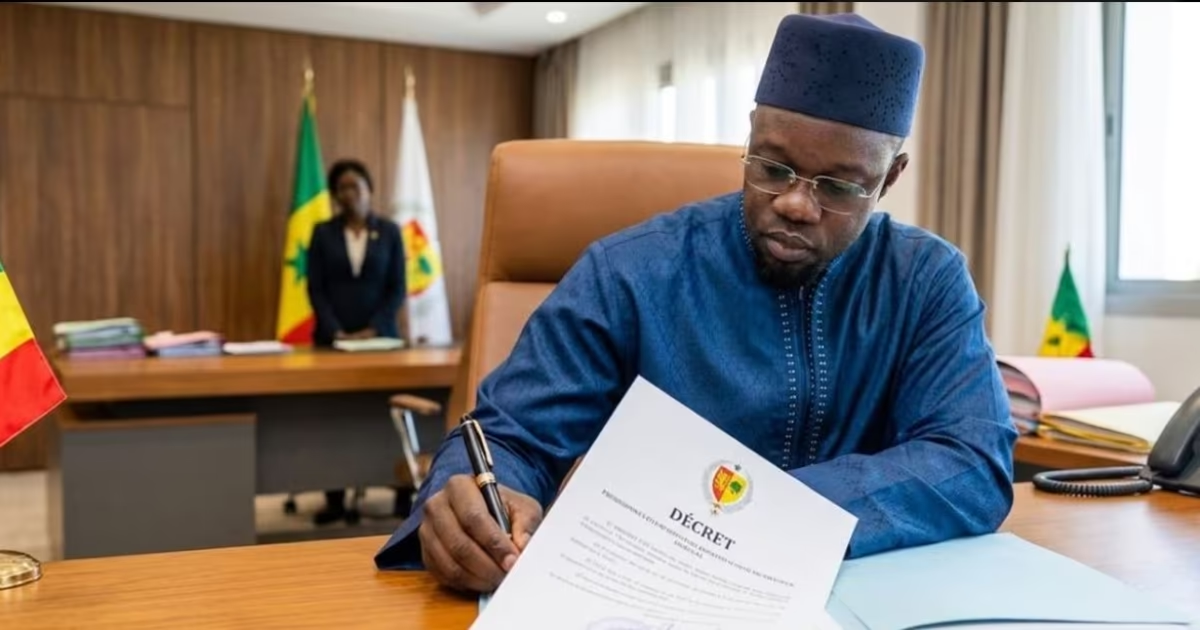
On December 2, 2026, Senegal’s president will cross a constitutional threshold: the legal ability to dissolve the National Assembly. But the real story isn’t the date itself—it’s the slow-burning rupture inside the ruling coalition that made this moment inevitable. A parliament still dominated by Pastef, an executive now anchored to a brand-new party, and a constitution that quietly set the trap two years ago. Here’s the anatomy of a political impasse.
The countdown is not accidental. Article 87 of Senegal’s constitution bars the head of state from dissolving the National Assembly until two full years of the legislature have elapsed. The current assembly, swept in by Pastef’s landslide in November 2024, installed its bureau on December 2 of that year. That makes December 2, 2026, the first day the dissolution weapon becomes legally available. It is a deadline written into the republic’s founding text—and one that now hangs over every parliamentary debate.
What changed since that installation is nothing short of a political earthquake. On May 22, 2026, the president’s alliance with Ousmane Sonko’s Pastef collapsed. The former prime minister took control of the parliamentary chamber; the president formed a fresh government and launched his own movement, Kiiraay. Senegal now lives an unprecedented form of cohabitation: president and parliamentary majority hail from the same original movement, yet no longer share a political line. The 2024 election gave Pastef 130 of 165 seats. Today, that same bloc sits across the aisle from the man it helped elect.
The president’s silence and his allies’ loud hints
Officially, no decision has been made. Asked about the speculation during a visit to New York, Bassirou Diomaye Faye poured cold water on the idea, noting that “we are not yet at December 2” and that no date had been set for a dissolution or elections. He has, however, never ruled it out. The ambiguity is deliberate.
His inner circle is far less guarded. By mid-August, Trade Minister Serigne Guèye Diop was already predicting that Senegal was heading toward snap legislative elections, accusing the parliamentary majority of “sabotaging” the president’s agenda. He singled out Pastef lawmakers for systematically rejecting initiatives from the presidential palace. Between the president’s caution and his ministers’ eagerness, the suspense is carefully maintained—and it serves a strategic purpose: the mere threat of dissolution weighs on parliamentary negotiations long before any decree is signed.
If the president signs the dissolution decree in early December, the country would embark on a sprint campaign. The constitution requires a new legislative election within sixty to ninety days of dissolution—placing the vote between late January and early March 2027. The 2024 precedent offers a useful yardstick: the assembly was dissolved on September 12 and a new one elected by November 17. That is roughly nine weeks from decree to ballot box.
But that timeline collides with another fixed date. Prime Minister Ahmadou Al Aminou Lo has announced that territorial elections will be held on January 17, 2027. Two national votes just weeks apart would pose a serious logistical and political problem. A possible “coupling” of the two elections, floated by some officials, runs into legal deadlines. A dissolution could therefore trigger a cascading reshuffle of the local election calendar—a prospect civil society groups are already watching closely.
The status quo scenario: cohabitation as a war of attrition
The alternative is to do nothing, at least for now. Dissolution is a right, not an obligation, and the president could let the legislature run its course. But that status quo carries a price: governing with an assembly that is no longer an ally. The first test is already on the table. The revised finance law tied to the IMF agreement reached the National Assembly on September 18, and Ousmane Sonko has publicly demanded clarifications on the deal’s content and on debt treatment. The 2027 budget will follow.
In this scenario, every major piece of legislation becomes a tug-of-war. The president has already framed the debate by calling on each side to assume its responsibilities and insisting that the people are the ultimate arbiter. The status quo would not be peace—it would be a war of position, with the January territorial elections serving as the first verdict.
The financial dimension is no minor detail in a country negotiating with lenders and trying to contain its debt. The 2024 precedent provides a reliable baseline. During the vote on that year’s revised finance law, the finance minister estimated the cost of organizing the snap legislative elections of November 17, 2024, at 20 billion CFA francs. Electoral materials alone were a heavy line item: with 41 competing lists, the interior ministry spent more than 11 billion CFA francs on printing ballots and campaign documents. For comparison, the total cost of the March 2024 presidential election was around 14 billion CFA francs.
A new dissolution would therefore require at least 20 billion CFA francs, on top of the cost of the territorial elections. The debate has already begun within the presidential camp itself, where a Kiiraay departmental official in Kaolack has come out against holding the local vote immediately, calling the public expense irresponsible given pressing social needs.
What Diomaye Faye and Kiiraay stand to gain—or lose
For the head of state, a successful dissolution would be the only way to regain a majority and govern unimpeded until the end of his term. That is the whole point of Kiiraay, launched in July to durably structure his majority and prepare for upcoming electoral contests, especially the local elections planned for 2027.
The risk, however, is considerable. The party is barely two months old and has never faced voters. A defeat in the legislative elections would leave the president facing an assembly re-legitimized by the ballot box—and therefore even more hostile—for the remainder of his mandate. That is what makes the January territorial elections so strategic: they can serve as a barometer before playing the dissolution card, or conversely reveal a weakness that would make it suicidal.
Pastef starts from a dominant position, with 130 of 165 seats won in 2024. In a snap election, the party has almost nothing to gain in seats and much to lose. But the stakes lie elsewhere. A clear victory after the rupture would validate the thesis of its activists, who accuse the president of betraying the original project, and would make Ousmane Sonko the true political center of gravity in the country.
Sonko’s party is not fooled. At the very moment the president was launching Kiiraay, the National Assembly president was leading a national tour dedicated to the membership card sales campaign for PASTEF. Each camp is preparing for an electoral battle, whether the date is set for January or later.
For the formations crushed in 2024, a recomposition would be a windfall. The division of the former majority opens an unprecedented space, and a snap election would offer the opposition a chance to regain parliamentary representation worthy of the name. It will nevertheless have to choose its positioning vis-à-vis two blocs that both claim the legacy of the 2024 rupture. A tactical alliance with one camp or the other could become the key to the next election.
Ultimately, December 2 does not mark the day of a decision, but the moment when all options become possible. The president can dissolve from that day, wait for the territorial election verdict, or keep the threat in reserve as leverage over lawmakers. Until then, the examination of the revised finance law and the 2027 budget will say much about the climate between the two heads of the former tandem. One thing appears certain: 2027 will open under the sign of the ballot box, and that is perhaps where the true arbitration between Diomaye Faye and Ousmane Sonko will be settled.
- Libération
- La Voix +
- L’As
- Dakar Times
- Le Quotidien
- Source A