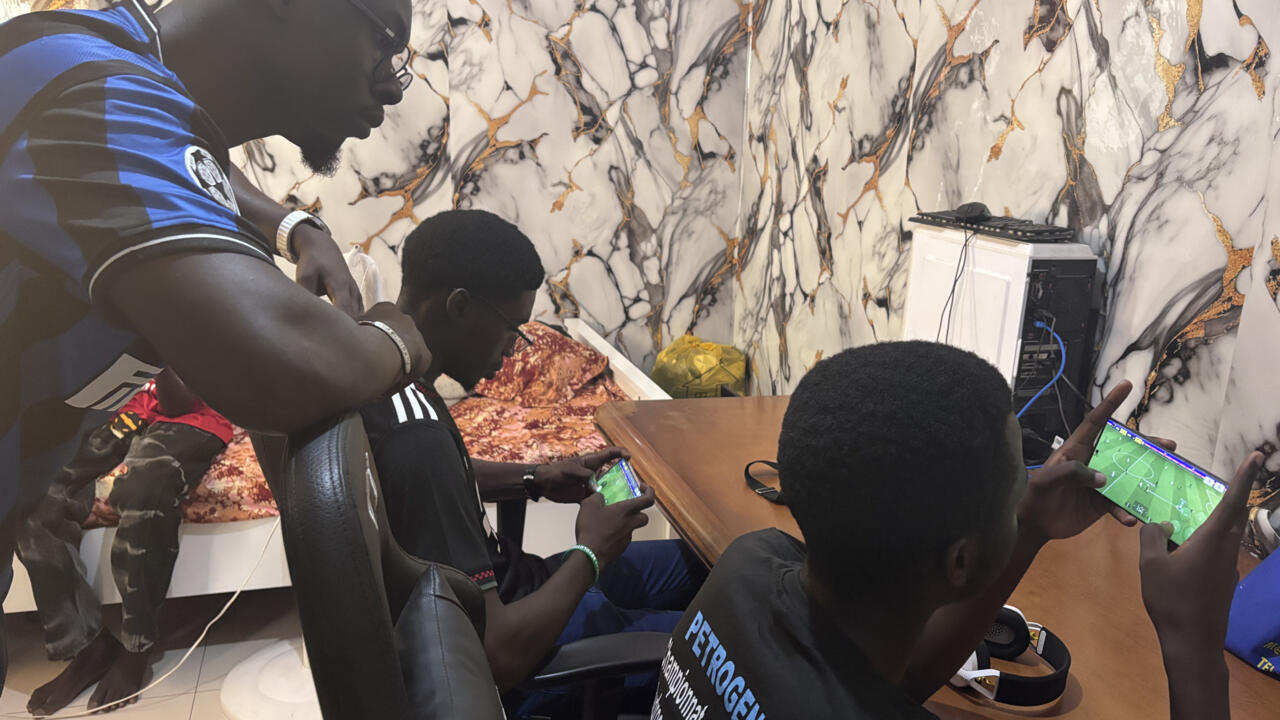
Across West Africa, and particularly in Senegal where football is a national obsession, a new phenomenon is taking hold: eFootball, the mobile football game from Japanese studio Konami. Players are spending hours daily training on their phones, as this accessible platform now surpasses the popularity of console games. Highly organized teams across the country are striving for professional status and championship titles. In Dakar, several dedicated players are diligently preparing for the upcoming eFootball World Cup qualifiers.
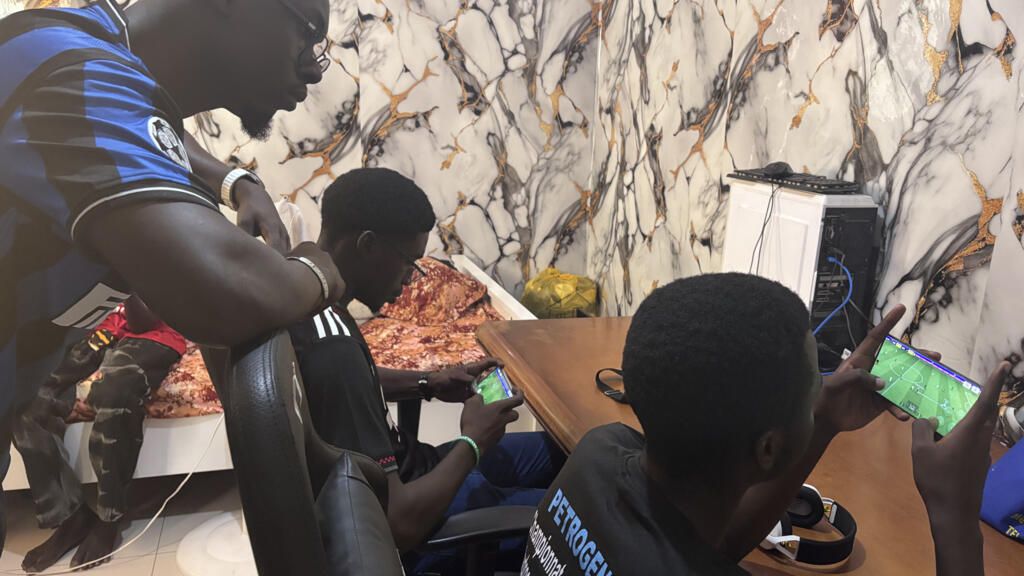
With phones clutched firmly in hand, players are intensely focused. They are mere hours away from competing in the qualifiers for the eFootball World Cup, scheduled for November in Riyad. Ibrahima Diop, widely known as Ibzo, the national team’s coach, delivers his final instructions to the squad.
Ibzo has assembled the finest players from across the nation; his team achieved the top position in the African rankings for the first time just last March. The free-to-play mobile game now eclipses console versions in popularity. Mohamed, a 17-year-old player from Saint-Louis, known as Medzo, expresses his enthusiasm: “It’s a lot of fun, and there’s strong competition. We push each other, saying things like, ‘You won’t beat me!’ It’s also very easy to play. You don’t even need an expensive phone – a small one with 3GB RAM is enough. Senegalese players are skilled, numerous, and incredibly dedicated to the game.”
Mohamed harbors professional aspirations, a dream shared by law student Pape Mouhamed Saloum Sow. “I want to reach the highest level,” Sow states. “eFootball has become more than just a game for us. We started as strangers, and now we’re like a family.”
Overcoming server challenges in Senegal
Despite their talent and dedication, these Senegalese players face significant hurdles. Firstly, content monetization on TikTok, where they share analyses and tips, is not yet available in Africa, unlike in Europe or the United States. More critically, persistent connection issues put them at a disadvantage against international opponents. Ibzo explains, “Here in Senegal, we constantly struggle with server problems. Africa only has one eFootball server, and it’s located in South Africa. This causes severe latency; you make a pass, and it can take two minutes for it to register in the game.”
To help professionalize and structure the burgeoning esports scene, Ibzo established his own club. He also benefits from the support of the Fesseda, the national electronic sports federation, which was founded two years ago. El Hadji Mansour Jacques Sagna, Fesseda’s president, highlights a key initiative: “We’ve signed an agreement to implement what we call ‘e-navétanes’ – electronic versions of traditional local competitions. This will allow a vast number of young people to participate in organized tournaments nationwide.”
The federation also announced plans for an upcoming e-sport analysis and performance center. This facility, to be located at the Léopold-Sédar-Senghor stadium, will provide essential support for the professional development of the discipline in Senegal.