Key points
- Report: A major international outlet documents the deepening political divide in Senegal
- Constitutional reform: Parliament passed a controversial bill in late June, later struck down by the Constitutional Council
- Leadership split: President Bassirou Diomaye Faye and Prime Minister Ousmane Sonko, once united in victory, now face off
- Parliamentary majority: The PASTEF party holds 130 of 165 National Assembly seats
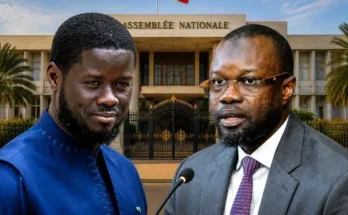
Senegal is once again making headlines internationally as a high-profile report captures the escalating rift between two of the country’s most influential leaders. The in-depth coverage, released recently by a global broadcaster, shines a spotlight on the growing tension between President Bassirou Diomaye Faye and Prime Minister Ousmane Sonko—former allies who rose to power together in 2024 under the PASTEF banner.
The timing of this international attention is significant: it follows the Constitutional Council’s decision to invalidate a sweeping constitutional amendment passed by Parliament just days earlier. This legal setback has deepened the divide between the two leaders and reshaped Senegal’s political landscape with the 2029 presidential election on the horizon.
The fallout from a once-united front
Bassirou Diomaye Faye and Ousmane Sonko secured a historic victory in the 2024 presidential election, running on a shared platform as members of the PASTEF. Their party now commands a commanding majority in the National Assembly—130 out of 165 seats—levels of support that should, in theory, ease governance. Yet, as the report highlights, ideological and strategic differences have rapidly surfaced.
Analysts point to fundamental disagreements over economic policy and Senegal’s relationship with international financial institutions like the IMF. What was once a partnership built on shared ambition now appears to be devolving into a bitter power struggle, with each leader advocating for a distinctly different vision of governance.
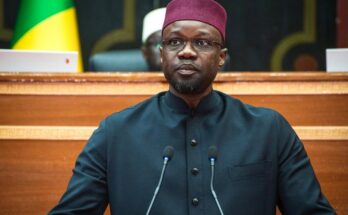
The arrangement is further complicated by Sonko’s dual role as both Prime Minister and President of the National Assembly. This unprecedented concentration of executive and legislative authority has intensified friction with the presidency, creating a fragile balance of power that the report examines closely.
The constitutional amendment that ignited the conflict
On June 29, 2026, Parliament approved a constitutional amendment designed to expand the powers of the legislature and the Prime Minister’s office. The proposed changes included prohibiting the President from leading a political party and replacing the Constitutional Council with a nine-member Constitutional Court. However, President Faye challenged the amendment’s legitimacy, filing an appeal with the Council on July 7.
The Council ruled on July 10, invalidating the reform on procedural grounds and citing the absence of a budget allocation for the proposed court. While the decision was final, its implications continue to reverberate across Senegal’s political spectrum.
The Prime Minister responded by stating that the ruling “applies to all,” a statement that did little to ease concerns about the ongoing institutional standoff. The impasse underscores the depth of the divide and leaves observers questioning whether the two leaders can find common ground—or if this marks the beginning of a protracted battle for control.
An international lens on a domestic crisis
The global coverage of this political turmoil reflects the heightened international interest in Senegal’s stability. Often regarded as a model of democratic resilience in West Africa, the country remains a key economic and diplomatic partner for Western nations.
Local media outlets have closely followed the fallout from the constitutional ruling, emphasizing the severity of the rift at the highest levels of government. Some observers have framed the conflict as a “high-stakes showdown,” a characterization that has gained traction in public discourse.
For international audiences, the situation in Senegal serves as a reminder that even long-standing democracies are not immune to institutional tensions. With a population of nearly 19 million, the country’s stability carries significant regional implications.
Understanding Senegal’s political tradition
Senegal operates as a presidential republic, where the head of state traditionally wields substantial authority. The election of Bassirou Diomaye Faye in 2024 represented a pivotal moment, driven by the momentum of the PASTEF and the widespread appeal of Ousmane Sonko.
The current configuration—a Prime Minister who also serves as Assembly President—is unusual and has concentrated legislative and executive power in a single figure. This structural anomaly has fueled the President’s decision to challenge the constitutional reform, which he views as an attempt to diminish the authority of the presidency.
Beyond political power plays, Senegal faces pressing economic challenges, including public debt management and negotiations with international lenders. The growing rift between Faye and Sonko on these issues reflects broader strategic disagreements that extend beyond mere political rivalry.
What’s next for Senegal’s political future?
The 2027 local elections and the 2029 presidential race loom large on the horizon. Political analysts warn that the Faye-Sonko divide will shape the next electoral cycle, raising the possibility of a fractured PASTEF or a realignment of alliances within the party.
The party’s overwhelming parliamentary majority complicates matters: neither leader can govern effectively without the other, and any attempt to sideline one risks paralyzing the government. The battle for control over the PASTEF’s machinery is now a defining issue.
The international report frames this crisis not as a passing storm, but as the opening act of a prolonged struggle for dominance in Senegalese politics. The coming months will reveal whether the two leaders can find a way to coexist—or if their partnership collapses entirely. While the Council’s ruling provided a temporary reprieve for President Faye, it did little to resolve the underlying tensions. Senegal’s political scene is entering uncharted territory, watched closely by regional and global stakeholders alike.