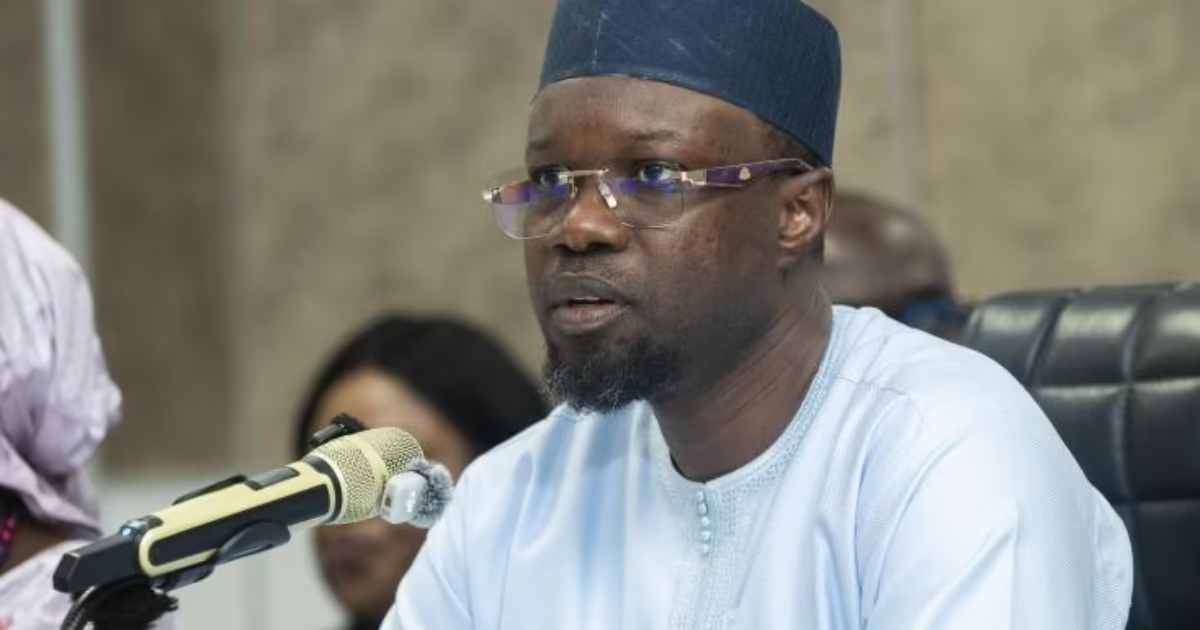
During a recent rally in Dahra Djoloff, Ousmane Sonko delivered a powerful speech highlighting what he describes as the resurgence of the old regime’s power structures within Senegal’s presidency. The National Assembly president condemned what he sees as a betrayal of the movement’s core values.
Sonko’s accusations: a betrayal of the movement’s founding principles
Speaking to a packed crowd of Pastef supporters, Sonko expressed deep disappointment in the actions of some long-time allies who, he claims, have abandoned the movement’s original commitments to the Senegalese people. His remarks centered on the failure to uphold the movement’s foundational pillars: transparency, good governance, accountability, judicial integrity, and renegotiation of resource management.
« This isn’t about individuals—it’s about honoring our promises and the principles outlined in our manifesto. The people of Senegal deserve better than the return of the same corrupt practices we vowed to eliminate, » Sonko declared, emphasizing the movement’s initial pledge to break from the past.
The president’s growing concern over institutional control
Sonko’s most striking claim revolved around what he termed the « reorganization of the system » at the presidential palace. He argued that despite promises of change, the old power dynamics have re-emerged, now operating under new guises. « The same system that we fought against has reorganized itself to sabotage our vision, » he asserted, pointing to what he describes as a return to entrenched political habits.
He particularly criticized the creation of a party without a popular mandate, despite control over state institutions. « In a true democracy, sovereignty belongs to the people—not to unelected institutions. Yet today, we see a leadership that, lacking grassroots support, is compensating by relying on state apparatus, » Sonko warned.
Judicial independence under threat?
The National Assembly president also raised alarms about attempts to influence the judiciary. He alleged that maneuvers are underway to bring the Supreme Court and Constitutional Council under political control—actions he framed as further evidence of the « palace’s system reorganization. » These developments, he argued, contradict the six-year-old promise of meaningful change.
Sonko’s speech underscores a growing rift within the political landscape, as supporters and critics alike weigh the implications of his claims. The coming months will reveal whether these accusations gain traction or fade amidst the political noise.