Government urged to prioritize project finalization and operationalization
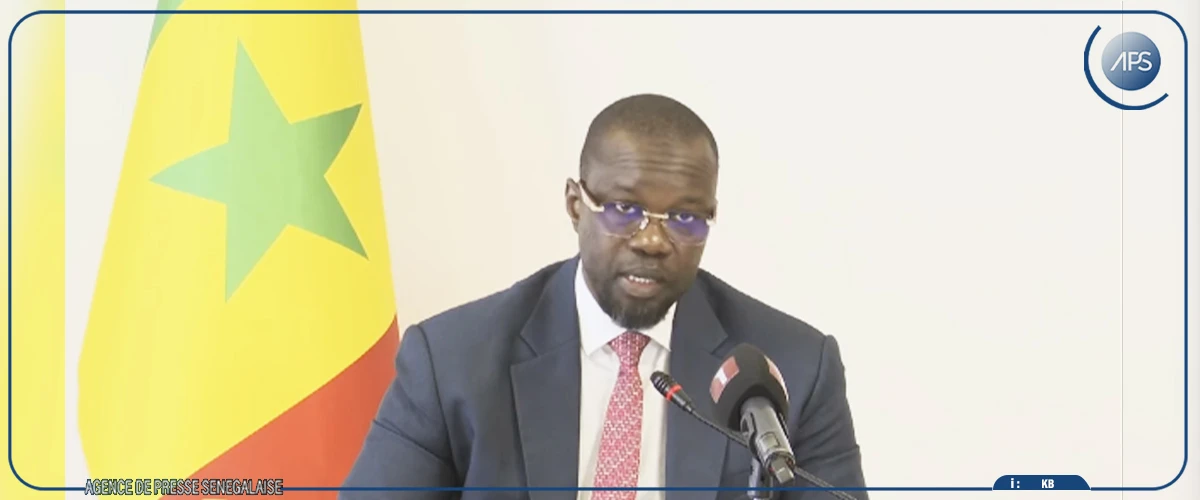
Dakar’s latest interministerial infrastructure meeting concluded with a resounding call from the Prime Minister for accelerated progress on ongoing projects across critical sectors. Addressing cabinet members in the capital, he emphasized the urgent need to expedite the completion and commissioning of unfinished infrastructure within each ministry’s purview.
Maritime and port infrastructure take center stage
Ousmane Sonko specifically highlighted several maritime and port projects requiring immediate attention. These include the Foundiougne-Ndakhonga port, the Ndangane Sambou fishing quay (central region), the upgraded Soumbédioune landing site, and the processing facilities in Rufisque (western region). Additionally, the aging dredgers operated by the National Maritime Affairs Agency in Kaolack and Fatick regions must be brought back into active service.
62 ‘blocked’ projects identified for resolution
During the session, 62 infrastructure projects were flagged as stalled, including the El Hâdj Ibrahima Niass University of Sine-Saloum, digital open spaces, regional airports in Saint-Louis, Matam (north), and Kolda (south), the Nadayane container terminal (west), cold storage units, and the Le Joola memorial. The stalled reconstruction of Dakar’s Aristide Le Dantec Hospital was also singled out for renewed focus.
Emphasis on quality and cost efficiency
A dedicated committee will be established to oversee these projects, ensuring all financial, administrative, and legal measures are implemented to resolve blockages. Sonko underscored the critical importance of adhering to strict quality and cost benchmarks throughout the completion process.
Technical infrastructure challenges addressed
The Prime Minister raised concerns about the technical readiness of water, electricity, and telecommunication networks supporting these projects. He instructed ministers to incorporate robust technical planning from the outset, ensuring adequate equipment, sustainable operational models, and long-term maintenance strategies. This applies to all ongoing and future infrastructure developments.
Youth and citizenship centers face 2026 deadline
Construction of youth and citizenship centers in Tivaouane, Mbour (west), Linguère, Ranérou (north), Bambey, Diourbel, Kaolack (central), and Tambacounda (east) was also scrutinized. The Prime Minister set a firm deadline of November 30, 2026, for their full equipment and operationalization, assigning responsibility to the Ministries of Youth, Finance and Budget, and Local Government.
Agricultural and agro-industrial projects gain momentum
The meeting addressed progress on 11 Naatangué village farms across Fatick, Kaolack (central), Louga (northwest), Thiès (west), and Tambacounda (east) regions. Agro-parks in Mpal (north), Adéane, Dioulacolon (south), and Mbellacadiao (south) were also discussed, with calls for sustainable public-private partnerships to accelerate their deployment.
Exploring innovative funding models
Sonko urged ministers overseeing youth centers, digital spaces, women’s facilities, and agro-parks to explore diverse valorization options. These could include long-term leases, concessions, rehabilitation, administrative assignments, or other public-private partnerships designed to unlock new investment streams while aligning with community needs.
Sports and national stadiums next on the agenda
The Prime Minister recommended leveraging public-private partnerships where feasible to ensure the timely and efficient commissioning of national stadiums and other sports infrastructure.
Environmental and diplomatic assets under review
In a broader push for asset optimization, Sonko called for a strategic review of national parks (Niokolo-Koba, Hann, Saloum Delta, and Djoudj), urban reserves (Technopole and Lake Rose), natural sites, and Senegal’s diplomatic real estate abroad. For the latter, he tasked the Minister of African Integration, Foreign Affairs, and Senegalese Abroad with proposing valorization or recycling mechanisms that respect both national interests and host countries’ laws.
Public and defense assets targeted for recycling
The government also examined opportunities to revitalize assets held by La Poste, railway and airport authorities, highways, public universities, hospitals, and military properties. Sonko emphasized the need for innovative management approaches, including private sector involvement, to maximize the utility of these holdings.