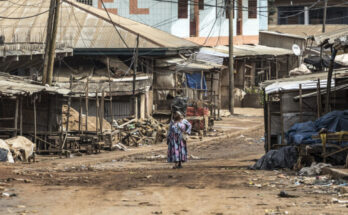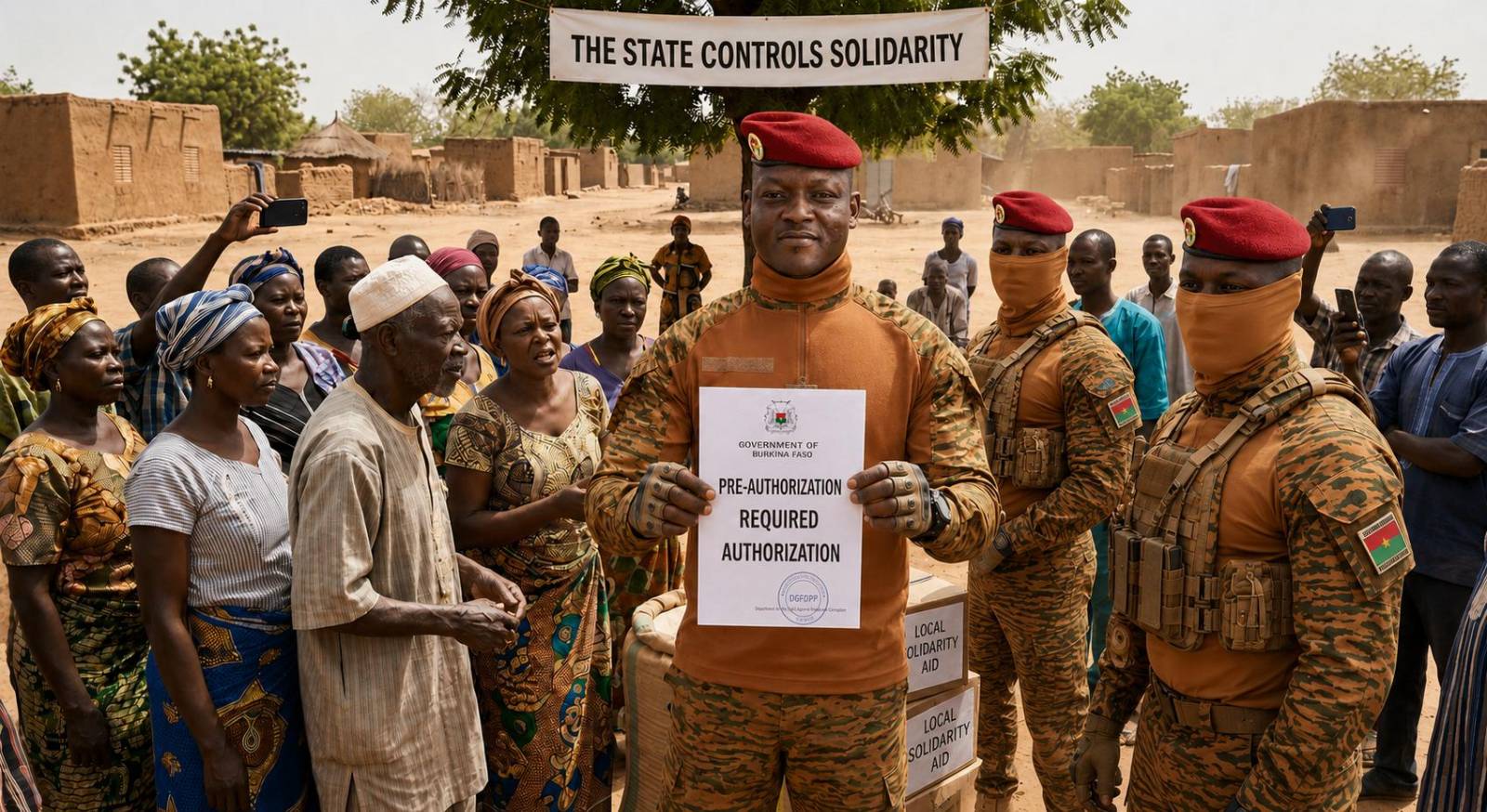
The era of unregulated charity appeals on social media has come to an end in Burkina Faso. The Ministry of Solidarity has introduced sweeping measures requiring prior authorization for all charitable initiatives, with severe penalties for non-compliance. While authorities cite the protection of human dignity and prevention of digital voyeurism as justification, the policy raises a troubling question: When acts of kindness become potential crimes, what remains of individual freedom?
From goodwill to bureaucratic hurdles
At first glance, regulating charitable practices may appear justified. The unchecked spread of human suffering online—sometimes exploited for visibility or financial gain—demands oversight. Yet the government’s blanket approach risks criminalizing spontaneous generosity. By demanding administrative approval for every act of solidarity, authorities transform what should be a natural human impulse into a suspicious activity requiring state validation.
This shift sends a chilling signal: in Burkina Faso, even the act of helping another now requires government permission. Such a policy reflects a worrying erosion of personal liberties, as if those in power view all forms of social engagement with suspicion, as though altruism itself were a subversive act.
A threat to civil society’s lifeline
In times of crisis, it is often citizens, local associations, religious groups, and the diaspora who respond first—long before state structures can mobilize. Their speed and adaptability stem from autonomy, a quality now under threat. Imposing mandatory authorization transforms humanitarian responsiveness from an organic reflex into a bureaucratic obstacle course. The result? A humanitarian response that moves at the pace of government paperwork, not human need.
This bureaucratic overreach reveals a deeper issue: a government that increasingly perceives autonomous civic action as a challenge to its authority. Every independent act of solidarity is framed not as a contribution to national resilience, but as a potential act of defiance. Such an approach fosters distrust between institutions and the people they are meant to serve, undermining the very social fabric the state claims to protect.
The illusion of dignity and the cost of control
Officials argue that regulating charitable appeals preserves the dignity of vulnerable populations by preventing the “poverty porn” spectacle on social media. But is true dignity achieved by silencing those in need behind layers of administrative red tape? Dignity is not served by making suffering invisible—it is served by ensuring timely, dignified access to assistance when it is most needed.
There exists a middle ground: ethical fundraising, consent-based appeals, and transparent accountability. Yet Burkina Faso’s new policy ignores this balance, opting instead for blanket restrictions that prioritize control over compassion. The consequences are dire. Thousands of families—already grappling with displacement, economic hardship, and insecurity—now face the risk of being abandoned not by neglect, but by regulation.
The government’s inability to match the scale of need with timely, effective public assistance only compounds the problem. While state agencies struggle with limited resources and slow procedures, the decree cuts off the spontaneous aid networks that have sustained communities for years. The “solidarity of the bush”—the direct, unfiltered connection between urban centers, villages, and the diaspora—is being dismantled in the name of oversight.
A policy that punishes rather than protects
This approach is not merely ineffective—it is actively harmful. By criminalizing unapproved charity, authorities discourage the very behavior they claim to want: widespread, compassionate support. Fear of sanctions or complex procedures may lead individuals to refrain from helping altogether. A society where generosity is stifled by bureaucracy is one where social bonds fray, and resilience weakens.
History shows that the most resilient societies are those where the state and citizens act in partnership, not in opposition. But by positioning itself as the sole gatekeeper of humanitarian action, the government risks suffocating the very solidarity it purports to regulate. The result is not greater dignity or efficiency, but a vacuum in care that no administrative decree can fill.
In the end, this policy does not protect the vulnerable—it abandons them. It does not uphold dignity—it erases it behind procedural walls. And it does not strengthen the state—it hollows out the human connections that have long been Burkina Faso’s strongest defense against adversity. When the state becomes the sole arbiter of kindness, humanity itself becomes a bureaucratic procedure—and the cost is paid in human lives.