Mali’s escalating insurgency chokes vital trade arteries in West Africa
Recent waves of coordinated violence in Mali have not only claimed lives but are now strangling the arteries of commerce that connect the Sahel’s landlocked nations to the bustling ports of coastal West Africa. The assaults, spearheaded by the Jama’at Nusrat al-Islam wal Muslimin (JNIM) and the Front de Libération de l’Azawad (FLA), struck key urban centers including Kati, Mopti, Sévaré, Gao, and Bamako itself on April 25, leaving a trail of destruction and claiming the life of Mali’s Defense Minister, Sadio Camara.
In the wake of these strikes, Malian security forces launched a sweeping counteroffensive targeting militant strongholds. Military prosecutors in Bamako confirmed multiple arrests, including active-duty soldiers, former military personnel, and civilians suspected of aiding insurgent networks.
Commercial lifelines under siege
Within five days of the initial attacks, the JNIM instituted a draconian blockade centered on Bamako, particularly along the western transit corridors. The closure of the Kita-Bamako highway has ensnared hundreds of travelers, cutting off critical supplies of food and potable water. The blockade’s ripple effects extend further, severing the Kayes-Bamako trade route and now threatening the historically safer Conakry-Bamako corridor, where transport convoys have become prime targets.
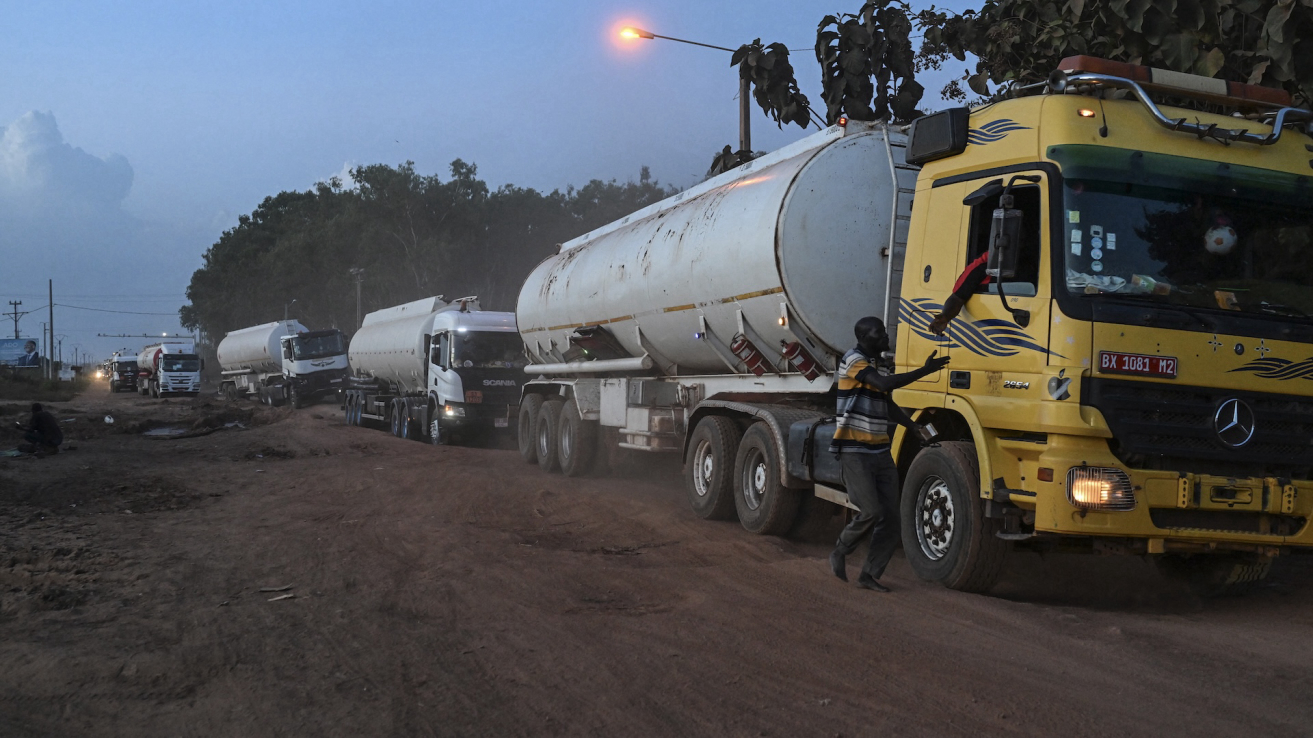
The insurgents have escalated their campaign since September 2025, systematically targeting fuel convoys along western and southern Mali’s supply arteries. These assaults are eroding regional economic stability, with far-reaching implications for West Africa’s interconnected trade networks.
Strategic corridors bear the brunt of insecurity
West African trade hinges on a fragile web of overland routes linking coastal ports to Sahelian capitals. These corridors function as economic umbilical cords, and most now traverse zones under JNIM control. The Dakar-Bamako route, a vital artery between Senegal and Mali, has borne the brunt of the escalating insecurity in western Mali.
The economic fallout is stark. In 2024, Mali absorbed 26.5% of Senegal’s total exports—a staggering 802.8 billion FCFA (approximately $1.42 billion). By September–November 2025, however, the Dakar port recorded daily blockages of roughly 120 containers bound for Mali, costing Senegal an estimated 15 billion FCFA ($26.54 million) per month. By late November 2025, over 2,000 containers were stranded in Dakar, and by February 2026, around 4,000 empty containers remained trapped in Bamako, as truckers hesitated to risk the return journey.
This paralysis has crippled Mali’s access to essential goods, including refined petroleum products, cement, and foodstuffs. It has also devastated the livelihoods of drivers, traders, and logistics operators. Other critical corridors—such as those linking Côte d’Ivoire, Ghana, Togo, and Bénin to the Sahel—face similar peril.
The Abidjan-Bamako corridor, Mali’s primary supply route within the West African Economic and Monetary Union (UEMOA), has been repeatedly targeted in the Sikasso region. In 2025, Mali remained Côte d’Ivoire’s top client, with 1.47 million tons of goods transiting this route by year-end.
Côte d’Ivoire also serves as Burkina Faso’s leading African supplier, providing critical volumes of petroleum, electricity, and fertilizers. Imports to Burkina Faso transit through Côte d’Ivoire, Ghana, and Senegal. Recent attacks, including the fatal ambush of seven Ghanaian tomato traders near Titao in northern Burkina Faso on February 14, underscore the pervasive security risks along this vital link.
Government responds with emergency measures
Facing mounting pressure, Malian authorities have rolled out a series of countermeasures. Since November 2025, military escorts have accompanied fuel convoys, ensuring the weekly entry of 200 to 300 tanker trucks—down from nearly 1,200 before the insurgency escalated. A customs facilitation agreement with domestic petroleum groups aims to streamline border procedures, while fuel rationing seeks to curb black-market profiteering.
Efforts are also underway to diversify trade flows away from overstretched ports in Dakar and Abidjan, redirecting shipments to alternative coastal infrastructures. Reports of a reported truce between Bamako and jihadist factions ahead of Eid al-Adha were swiftly denied by Malian officials, and attacks have continued unabated.
Regional cooperation as the only path forward
The April 25 offensive laid bare the limitations of Mali’s military-first approach to counterterrorism. While militant factions have demonstrated an ability to unite against a common enemy, regional governments have struggled to forge cohesive alliances. The JNIM’s blockade underscores a pressing need for joint protection of transnational trade corridors.
Regional bodies—including the Economic Community of West African States (ECOWAS), the Alliance of Sahel States (AES), the Entente Council, the Mano River Union, and UEMOA—must coordinate to prevent the insurgency from spreading to other critical routes. Counterterrorism efforts may yet serve as the catalyst for reviving indispensable regional cooperation between Sahelian and coastal West African states.