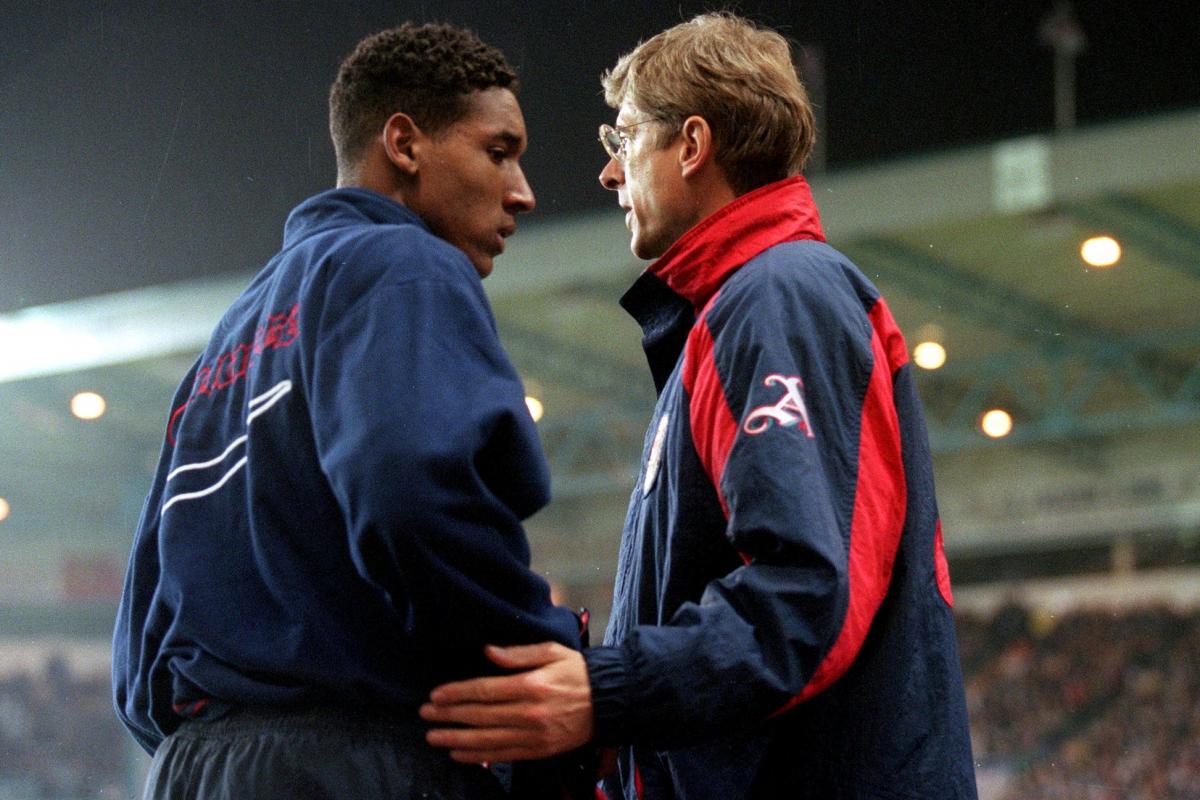
A defiant departure: how Nicolas Anelka’s 1997 transfer from PSG to Arsenal reshaped football
In February 1997, a 17-year-old Nicolas Anelka made headlines by leaving Paris Saint-Germain for Arsenal, sparking a legal storm that exposed the cracks in football’s transfer system.
The transfer saga began when Anelka, a rising star trained at France’s prestigious Clairefontaine academy, decided against signing a six-year professional contract with PSG. Instead, he set his sights on Arsenal under the guidance of Arsène Wenger, who had identified the young forward as a future talent. The Gunners moved swiftly, engaging with Anelka’s father in London on January 14, 1997, to finalize a six-year deal set to commence on July 1. The move was a direct challenge to PSG’s authority—and to French football’s regulatory norms.
PSG responded with fury. Anelka was immediately excluded from the first-team squad ahead of the Super Cup clash against Juventus, a decision Michel Denisot, the club’s deputy president at the time, defended as necessary. “Anelka’s attitude was one of rare rudeness,” Denisot declared, stripping the teenager of his professional status and threatening to loan him to Servette FC until the end of the season. The club also petitioned the French Football Federation (FFF) to block Anelka’s transfer, citing internal regulations that required academy graduates to sign their first professional contract with their training club.
“You wanted a joker? You’ve got one.”
Ricardo, PSG manager, September 1996
Anelka, however, saw the situation differently. Frustrated by limited playing time—he had made just eight substitute appearances in Ligue 1 during the first half of the 1996-97 season—he viewed the arrival of striker Cyrille Pouget on loan from Servette as a sign of distrust. “PSG doesn’t trust young players,” Anelka argued. “Very few have broken through, and even those who did, like Pascal Nouma or Francis Llacer, were still substitutes at 24.”
A legal battle that changed football
The dispute escalated when the Ligue Nationale de Football (LNF) took the case to FIFA, while Arsenal’s Wenger argued that French regulations were incompatible with European law. “European laws give me peace of mind,” Wenger stated. “The Bosman ruling of December 1995 made it clear: once a player’s contract expires, they are free to move without compensation. Anelka’s contract was ending in June, and he could join Arsenal without restriction.”
“The laws of Europe reassure me.”
Arsène Wenger, Arsenal manager
FIFA’s stance further complicated matters. Sepp Blatter, then FIFA’s general secretary, criticized France’s resistance to Anelka’s move, noting that the country often allowed young African and South American talents to leave for European clubs without similar outcry. “It’s good that players aged 16 and older have the chance to prove themselves in top teams,” Blatter remarked.
Faced with an uncertain legal outcome, PSG and Arsenal reached a settlement within 48 hours of FIFA’s review. The deal saw PSG receive 5 million francs (approximately €1.19 million today) in compensation, while Anelka’s salary skyrocketed from 3,800 francs (€901) to 500,000 francs (€119,000) per month. Michel Denisot later admitted, “There was a gap in our approach. It wasn’t a pleasant moment for either club. Everyone had the right to act as they did—it was just a very high-profile case because a future superstar was leaving on a free transfer.”
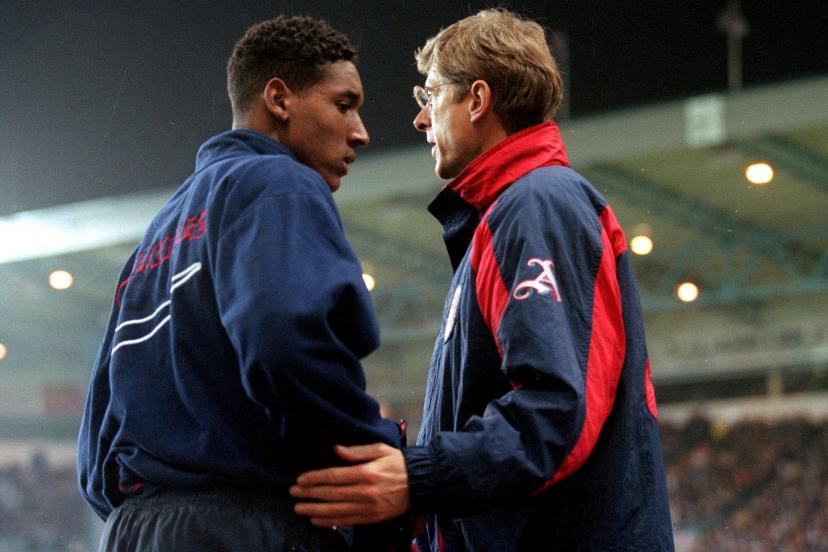
For Arsenal, the gamble paid off. Though Anelka made just four Premier League appearances in the 1996-97 season—barred by established stars Dennis Bergkamp and Ian Wright—he blossomed in the following years. In 1998-99, he became the first non-British player to win the Premier League Young Player of the Year award, cementing his reputation as a prodigious talent. Yet the fairy tale was short-lived. By the summer of 1999, Anelka’s relationship with Arsenal had soured, leading to another high-profile transfer, this time to Real Madrid for a fee of 220 million francs (€50.77 million).
Reflecting on the episode years later, Denisot revealed no lasting resentment. “I got on well with Arsène Wenger,” he said. “Years later, when I was president of La Berrichonne de Châteauroux, I handled Gilles Sunu’s transfer to Arsenal smoothly. As a footnote, I even arranged an internship at Canal+ for David Dein’s son when I was head of sports there.”