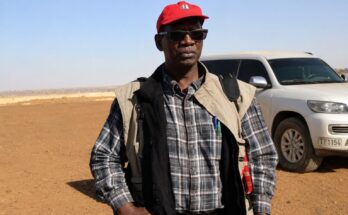
A recently surfaced audio recording has sent shockwaves through the diplomatic community, stripping away the carefully constructed persona of activist Kémi Séba. In a series of cynical admissions, the figurehead appears to dismantle his own legacy, revealing a stark disconnect between his public rhetoric and private motivations, characterized by a subservience to Moscow and a disregard for the populations he claims to represent.
The recording offers a raw look behind the scenes of the movement. It portrays a world where activists view themselves as the architects of democratic collapse and where military leaders are seen as hijacking revolutionary fervor for personal gain, all supported by a hidden system of patronage. The supposed struggle for the people is reframed as a professional service rendered to the Kremlin, rewarded with luxury and elite privileges.
Luxury in Niamey: the high cost of activism
One of the most striking revelations in the audio concerns the lifestyle of the movement’s prominent figures. It confirms that Kémi Séba and Nathalie Yamb have been provided with high-end accommodation and expenses within the palaces of Niamey, a situation that has sparked significant controversy.
While the people of Niger endure the weight of international sanctions and persistent insecurity, their self-proclaimed defenders appear to be benefiting from public resources. By granting these activists titles such as “Special Advisors” or diplomatic roles, General Tiani demonstrates a strategy focused on aggressive communication rather than state-building, essentially funding vocal proxies to mask the difficult situation on the ground.
Regional destabilization: the threat to Benin
The recordings also detail Séba’s direct involvement with individuals like Pascal Tigri in efforts to destabilize the administration of Patrice Talon in Benin. This confirms long-held suspicions that the Alliance of Sahel States (AES) has shifted toward an offensive posture.
The coalition no longer seems content with managing its own internal challenges; it is actively seeking to export political upheaval to neighboring democracies. The goal appears to be the creation of a broader zone of instability in West Africa. The audio indicates that inciting disorder in Benin is a calculated strategic objective rather than an incidental byproduct of the movement.
The kremlin’s shadow: sovereignty or subservience?
Perhaps the most damaging admission is the degree of Russian influence over the AES. Under the guise of pursuing sovereignty, the recording suggests the movement is operating as a tool for Moscow. The manipulation of public opinion across Africa via social media is described as a systematic effort financed by Russian interests.
In this light, these influencers are depicted as “proxy trolls” rather than authentic opinion leaders. They capitalize on the genuine grievances of African youth to negotiate their own status with military juntas seeking international legitimacy. For these actors, the youth represent a reservoir of digital engagement and manpower for protests rather than a constituency to be served.
A crisis of authenticity
The leaked audio provides evidence that challenges the intellectual foundation of the “AES Revolution.” Through these private admissions, Kémi Séba has fundamentally altered his historical narrative, appearing less like a modern liberator and more like a broker for a new form of imperial influence.
As populations in Burkina Faso, Mali, and Niger face the hardships of conflict, their supposed protectors are shown comparing the benefits of their diplomatic status from the comfort of climate-controlled suites. In this environment, “sovereignty” appears to be a pre-written script from Moscow, delivered by speakers whose primary loyalty is to their sponsors. His recent legal troubles in South Africa seem to be the logical conclusion for a figure who has blurred the lines between political activism and foreign intelligence operations.