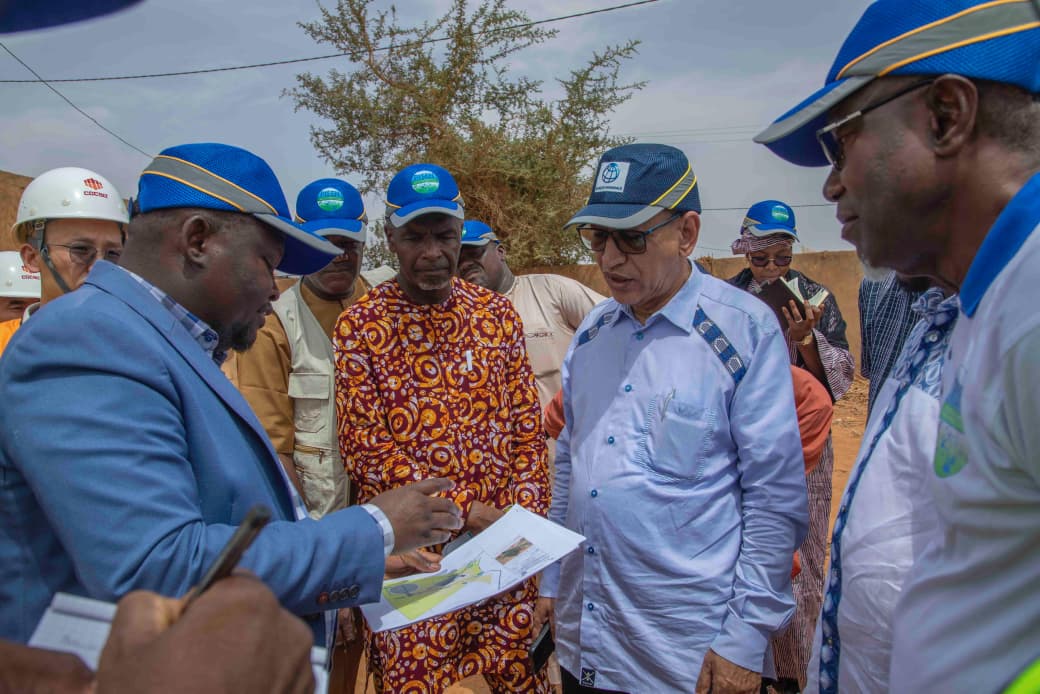
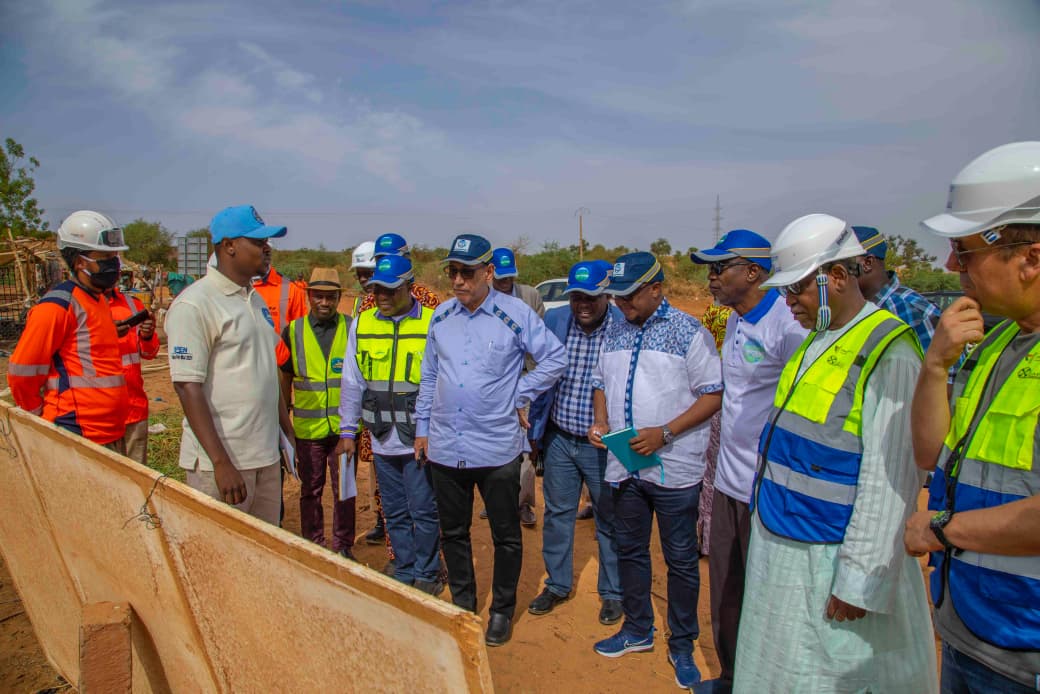
A high-level delegation, including Zibo Zakara, National Coordinator of the Integrated Water Security Platform in Niger (PISEN), Mohamed Nanzoul, World Bank Project Officer, and officials from Niger’s Water Heritage Society (SPEN), inspected key construction sites on June 2, 2026. The visit covered critical infrastructure for Niamey’s third drinking water treatment and production plant, including the water intake site, the plant itself, and the reservoir location on Yawari Plateau.
Expanding Niamey’s water supply with phased capacity
The project stems from SPEN’s 2017 Urban and Semi-Urban Hydraulics Master Plan, which called for the construction of a 250,000 m³/day water treatment facility in three phases: 100,000 m³/day initially, followed by two 75,000 m³/day expansions. The goal is to improve potable water access in Niamey’s urban and peripheral zones. PISEN oversees coordination, with support from the World Bank, while SPEN serves as the project owner.
From river intake to urban distribution
Technicians confirmed that raw water from the Niger River will be pumped to the treatment plant under construction on the plateau. Two 2,500 m³ reservoirs on Yawari Plateau will store treated water for distribution to outlying neighborhoods. The delegation also observed progress on the intake structure and reservoir sites, with heavy machinery and local labor mobilized for excavation and construction.
Phased progress and long-term impact
Zibo Zakara noted that the first phase—100,000 m³/day—will secure Niamey’s water supply through 2035. The project includes 10 work packages, with extensions planned for the river water treatment facility. He highlighted renewed momentum after earlier delays, emphasizing local job creation through subcontracting and direct employment.
World Bank representative Mohamed Nanzoul praised the project’s progress, reaffirming continued support to enhance public welfare. Haladou Laouali Amani, lead construction engineer, emphasized the project’s scale, including approximately 45,000 social connections, calling it a transformative infrastructure initiative for Niamey’s water network.