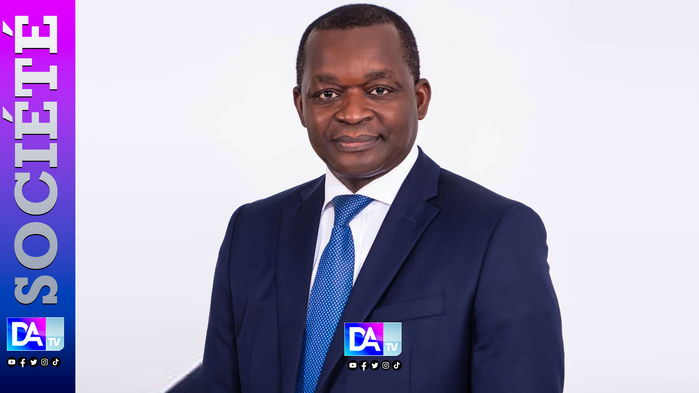
From Paris to Massy and on to Creil, the leader of the Alliance for Senegal (APS/Andando Ngir Senegaal), Mr. Alioune Sarr, engaged the Senegalese diaspora around a renewed compact between the country’s regions, its citizens abroad, and national sovereignty.
During his European outreach, Mr. Sarr met Senegalese residents in France to present his vision for Senegal’s future and to strengthen ties between the diaspora and the country’s territories. He personally visited families and community homes, including the Foyer Les Mûriers in Paris’s 20th arrondissement and Massy in Essonne. These discussions focused on Senegal’s challenges, diaspora expectations, and the development opportunities that the territories offer.
The tour allowed Mr. Sarr to hear directly the concerns of Senegalese living in France and to gather their ideas for contributing more effectively to Senegal’s economic, social, and territorial development.
Strong showing in Creil
The tour continued in Creil, in the Oise department of Hauts-de-France, where local Senegalese turned out in large numbers to support the Alliance for Senegal’s vision. The event was chaired by Ms. Amy Faye, the party’s political leader in France, who gathered Senegalese from Creil and surrounding areas around the orientations set by Mr. Sarr and the party’s political project.
Ms. Faye praised Mr. Sarr’s commitment to the diaspora and stressed the importance of Senegalese abroad playing an active role in building Senegal’s future. The audience—including community leaders, workers, students, entrepreneurs, and families—showed keen interest in proposals on territorial development, productive investment, and economic sovereignty.
A strong message to the political class
Through the exchanges during this tour, Alioune Sarr reaffirmed his belief that Senegal needs a new governance model based on dialogue, responsibility, and collective construction. For him, national development challenges go beyond partisan divides and require the mobilization of all the nation’s forces.
“We may be political adversaries, but we must never be enemies of the Republic,” he said. He called on all political actors to prioritize solutions, national interest, and economic development over positioning disputes.
The limits of a centralized model
A key takeaway from the tour was the urgent need to rethink public policies from the reality of the territories. According to Mr. Sarr, decades of overly centralized development have shown their limits, concentrating investments and opportunities in a few major urban centers.
“When everything is decided at the center, the territories wait. When the territories decide and act, the country advances,” he argued. Senegal must now rely more on its local authorities to foster a more balanced and inclusive growth.
Dakar and the territories: a single national ambition
Rejecting any opposition between Dakar and the rest of the country, Alioune Sarr advocated a vision of complementarity. “Dakar is the heart of Senegal, but the territories are its lungs. No country can breathe fully with only one lung. Together, in the complementarity of all our territories, we will build a sovereign, prosperous, and balanced Senegal.” He stressed that sustainable development requires each territory to be able to value its resources, create jobs, and attract investment.
“When Dakar beats stronger and the territories breathe better, all of Senegal grows.”
Notto Diobasse Smart City: a model for the territories
Citing the Notto Diobasse Smart City initiative as a concrete example, Mr. Sarr presented it as a demonstration of the transformative potential of the territories. He argued that Senegal’s development will come through the creation of territorial hubs for production, innovation, training, industrialization, and services.
“Senegal will not develop from Dakar outward to the territories. It will develop from the territories toward Dakar.” Each territory must become an engine of national development and contribute to collective wealth creation.
Land as a development asset
During the discussions, Mr. Sarr also emphasized the need to change perspectives on land. He considers land a strategic asset that must be valued for present and future generations.
“A hectare has value not because it is sold, but because it is developed.” Comparing the sale of undeveloped land to exporting raw materials, he argued for a logic of transformation that creates jobs and wealth. “Rich nations do not sell their resources; they transform them.”
“Selling land is consuming the future. Developing land is building the future.”
Diaspora as a strategic development partner
Throughout the tour, Mr. Sarr stressed the central role the diaspora must play in Senegal’s development. He called on Senegalese abroad to become investors, builders, and partners in territorial development. “The diaspora is not an ATM. The diaspora is an open-air development ministry.”
He believes Senegal’s future rests on a strong alliance between territories, the diaspora, youth, women, entrepreneurs, and local authorities.
A new national pact
At the end of the tour, Mr. Sarr called for building a new national pact based on three pillars: strong territories, a mobilized diaspora, and economic sovereignty. The turnout in Paris, Massy, and Creil confirms the growing interest of Senegalese abroad in territorial development and their desire to actively participate in Senegal’s transformation.
He concluded: “We have not come to manage the future. We have come to build it.”