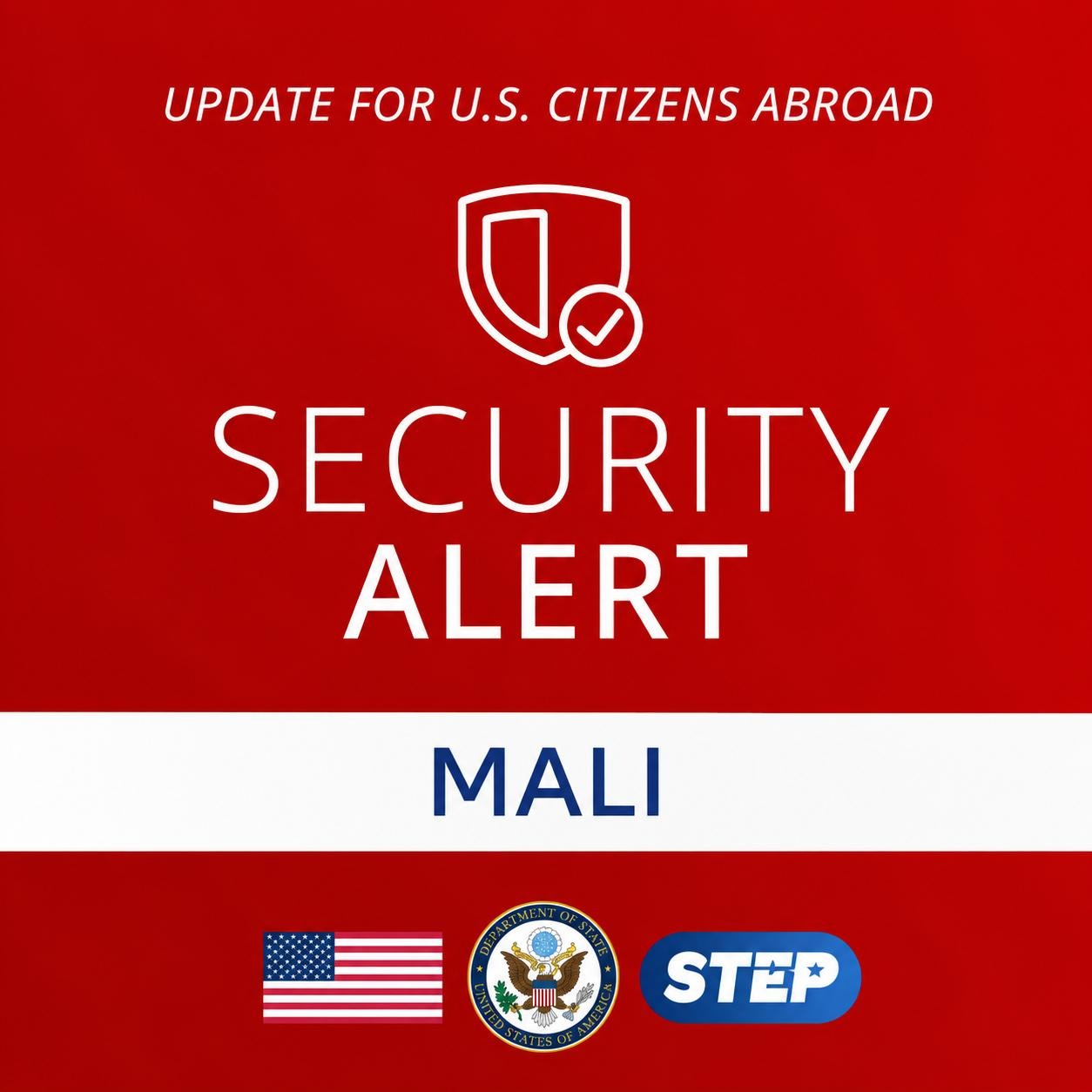
This weekend, the United States embassy in Mali has issued a stringent security alert, urging its citizens in Bamako to avoid all non-essential travel. The warning, effective from Saturday, May 30, 2026, reflects a sharply elevated risk environment, driven by deteriorating security conditions and persistent terrorist threats across the region.
A stark reminder of Bamako’s fragile calm
The alert arrives without warning, as is customary with high-level diplomatic advisories. American nationals in the Malian capital are advised to minimize public appearances, exercise extreme caution in areas frequented by expatriates, and postpone any unnecessary journeys within the city. For those monitoring the Sahel’s security landscape, such announcements are never issued lightly. When Washington restricts movement for its personnel and citizens over a specific period, it signals that intelligence services have detected credible, actionable threats—whether thwarted attack plots, suspicious movements, or operational indicators.
This precautionary stance casts a shadow over the capital, underscoring how fragile the recent relative calm truly is. After months of relative stability, the situation remains precarious, with the specter of violence never far from the surface.
The looming threat of JNIM and allied factions
The embassy’s alert is not isolated. It reflects a broader, increasingly volatile security landscape in Mali, where Bamako is no longer immune to attacks. The Group for the Support of Islam and Muslims (JNIM), the dominant Al-Qaeda-affiliated coalition in the Sahel, has repeatedly demonstrated its ability to strike deep into urban centers and critical infrastructure. Recent attacks on military installations and key peripheral sites serve as stark reminders of this persistent danger.
Meanwhile, the deteriorating situation in northern and central Mali—exacerbated by the shifting alliances and actions of groups like the Permanent Strategic Framework and the Front for the Liberation of Azawad (FLA)—keeps the Malian Armed Forces (FAMa) under constant pressure. The presence of sleeper cells and improvised explosive devices (IEDs) adds another layer of unpredictability, forcing security services to operate in a state of near-constant vigilance. The US embassy’s warning thus highlights the enduring asymmetric threat posed by these groups.
Economic strangulation: when roads become battlegrounds
Beyond direct attacks, a deliberate strategy of economic suffocation is unfolding. Armed factions have escalated their blockade tactics on major transit routes, targeting fuel tankers and supply convoys bound for Bamako. These road closures are not merely about disrupting commerce; they aim to instill fear, sever the capital’s ties with economic lifelines, and expose the state’s inability to secure vital corridors.
The embassy’s decision to restrict movement is, in part, a response to this vulnerability. With supply lines under siege, the risk of high-profile incidents near the city’s outskirts grows. The deliberate targeting of critical infrastructure—such as fuel and food shipments—has created a ripple effect, straining both the economy and public morale.
Diplomatic caution in an unpredictable landscape
While Malian transitional authorities seek to project control—ramping up patrols and checkpoints at city entrances—the West’s diplomatic missions are adopting a more cautious approach. This divergence in perception reveals the tension between political reassurance and intelligence-driven risk assessment. Western chancelleries, equipped with advanced monitoring capabilities, prioritize data over rhetoric when evaluating threats.
As the weekend approaches, security measures in Bamako have already intensified. Identity checks and vehicle inspections are being enforced across strategic districts, with security forces on high alert for any signs of trouble.
A weekend under scrutiny
The US embassy’s alert serves as a sobering reminder of Mali’s ongoing crisis management reality. Between the JNIM’s asymmetric tactics and the crippling impact of road blockades, Bamako remains trapped in a cycle of heightened security. As the weekend begins, caution is the watchword—for both locals and expatriates—amid fears that this alert may foreshadow something far worse.