In the face of persistent energy insecurity from external suppliers, Benin and Togo are deepening their political and economic collaboration. Both nations are pooling resources to build a shared energy infrastructure, ensuring a stable electricity supply for their growing industrial zones.
The April 23 fire at Ghana’s Akosombo substation, which disrupted 1,000 megawatts of regional power, sent immediate shockwaves through Togo and Benin’s grids. The incident exposed a harsh truth: during crises, regional suppliers prioritize domestic needs, leaving neighbors vulnerable. This recurring pattern has forced both countries to rethink their energy strategies.
Earlier in 2024, disruptions in the West African Gas Pipeline forced Togo to allocate 31 billion FCFA in emergency funds to offset shortages of Nigerian gas. These repeated vulnerabilities highlight the limitations of the Benin Electricity Community (CEB), established in 1968, which has long operated as a mere transit network without its own production capacity.
Adjarala Dam: a game-changing energy project
The urgency has shifted from technical debates to high-stakes political action. The Adjarala Dam project on the Mono River stands as a bold solution, with a budget of 266 billion FCFA and a capacity of 147 megawatts. Beyond electricity, the dam will irrigate 14,700 hectares of farmland in Togo, reinforcing agricultural productivity. For Benin, this project is critical to sustaining its industrial ambitions, particularly in the Glo-Djigbé Special Economic Zone, where over $1 billion is invested in local processing of cotton and cashew nuts. Similarly, Togo’s Adétikopé platform requires a reliable energy backbone to attract investors and scale operations.
Local savings as a driver for energy independence
With international lenders increasingly withdrawing from fossil fuel financing, Benin and Togo are turning inward. Their strategy involves tapping into long-term local savings by engaging National Social Security Funds (CNSS) and insurance companies, which hold substantial reserves currently locked in short-term public bonds. By issuing jointly guaranteed energy bonds, experts believe these institutions can unlock significant capital for regional infrastructure development.
A historic political alignment
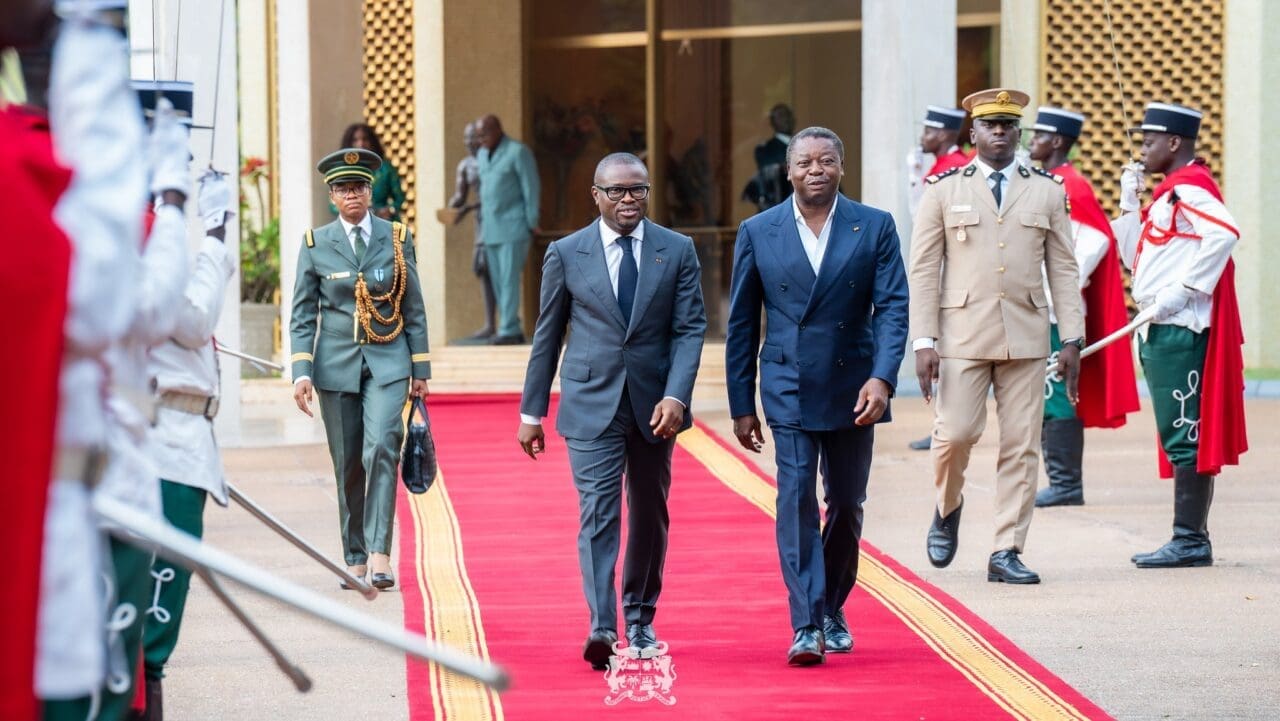
President Romuald Wadagni of Benin’s official visit to Lomé on June 3, 2026, marks a pivotal moment in this energy partnership. The joint statement outlines a roadmap for stronger economic integration and interconnected infrastructure. Both leaders have set ambitious targets: Benin plans to inject 100 megawatts into the grid every two years, while Togo aims for universal electricity access by 2030. This political alignment presents a rare opportunity to finally achieve shared energy autonomy.