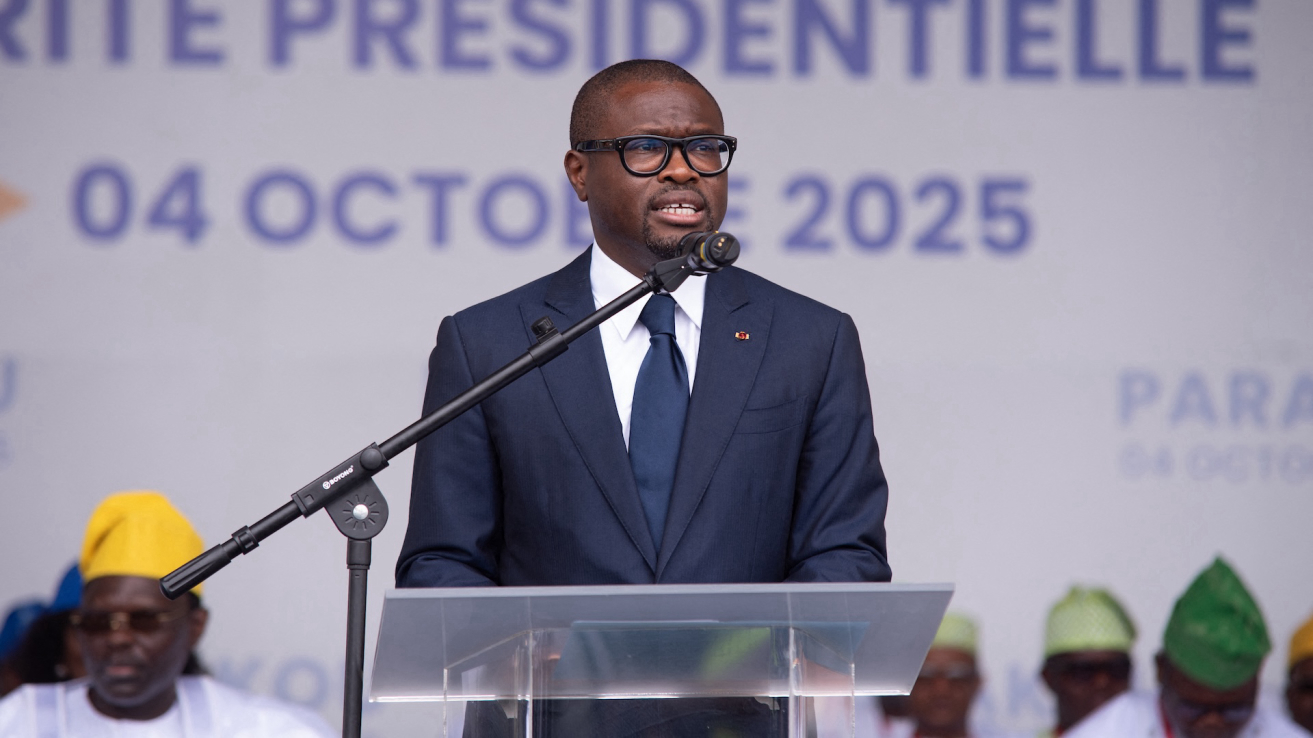
Romuald Wadagni has secured a decisive victory in Bénin’s presidential election, claiming 94.27% of the vote against challenger Paul Hounkpè, who conceded defeat and urged national unity. The Constitutional Court later confirmed a 63.57% voter turnout, a significant increase from the 50.17% recorded in 2021.
Democratic continuity amid regional tensions
This election marks Bénin’s fifth peaceful democratic transition since the 1990 National Conference. In a region where constitutional term limits are often disregarded, outgoing President Patrice Talon’s adherence to the two-term cap has bolstered the country’s institutional stability. The vote proceeded without major disruptions, though isolated irregularities—including ballot stuffing allegations—were reported. Electoral authorities and observers concluded these incidents did not undermine the election’s legitimacy, with the Constitutional Court invalidating 34,596 votes nationwide due to irregularities.
Economic architect inherits leadership challenge
As Finance Minister for a decade, Wadagni played a pivotal role in driving Bénin’s economic surge, transforming annual GDP growth from 1.8% in 2015 to roughly 8% by 2025. Yet despite this progress, over 40% of Béninois still live below the poverty line, underscoring the urgency of his 2026–2033 agenda. His administration’s top priorities include fostering inclusive growth, diversifying the economy, and strengthening national cohesion and security.
Political pluralism in question
The electoral landscape remains dominated by pro-government figures, with opposition parties struggling to gain traction. Reforms introduced in 2024, including a 15% sponsorship requirement for presidential candidates, have effectively sidelined major opposition groups like Les Démocrates. Internal divisions within the opposition—exacerbated by former President Boni Yayi’s 2026 departure—threaten to keep them out of the electoral process until at least 2040 unless rules are revised.
The 2025 Constitution introduced a Republican Responsibility Pact, allowing government-opposition collaboration under Senate oversight. However, concerns persist that these mechanisms could be used to stifle dissent rather than foster constructive dialogue. Wadagni has pledged to institutionalize citizen participation and public accountability tours, but meaningful reforms will require swift, inclusive national discussions to address contested changes and restore public trust.
Security and regional diplomacy: critical priorities
The December 2025 coup attempt highlighted Bénin’s vulnerability to regional instability. Terrorist threats persist in the north, while relations with Burkina Faso and Niger remain strained. Though ties with Nigeria have improved, cooperation across the W-Arly-Pendjari complex—a critical ecosystem spanning three countries—remains elusive. Wadagni has signaled a willingness to rebuild diplomatic bridges, but progress hinges on political will from neighboring governments. Without coordinated action, the resulting security vacuum risks emboldening militant groups.
Wadagni’s tenure will test whether Bénin can balance economic ambition with social equity, institutional resilience with political openness, and national security with regional cooperation. The stakes could not be higher.