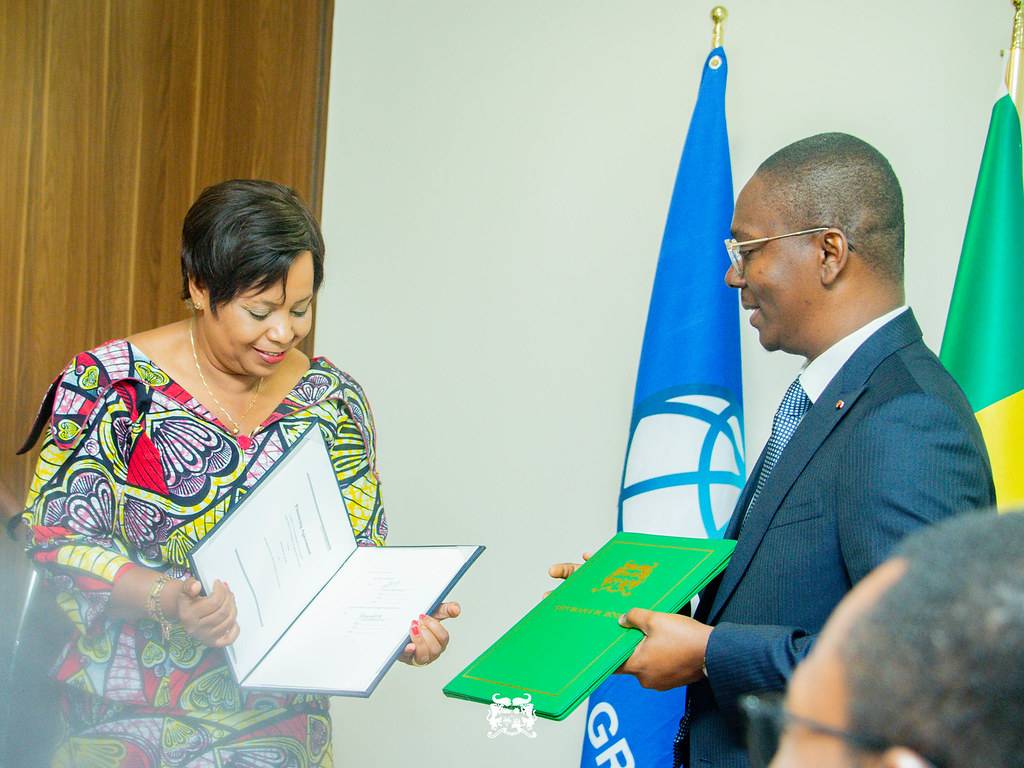
Cotonou is accelerating its structural transformation with a landmark financial agreement that promises to reshape the nation’s economic landscape. On Friday, July 17, 2026, the Bénin government and the World Bank formalized two groundbreaking financing deals totaling $320 million USD. These investments are not just about numbers—they represent a bold strategy to drive sustainable growth while improving the lives of millions of citizens.
Energy and agricultural transformation: the Dogo-Bis dam project
The first agreement, worth $150 million USD, is earmarked for the Dogo-Bis hydro-multifunctional dam, a flagship project set to revolutionize both energy production and agriculture in the Ouémé Valley.
The dam is designed to be more than just an electricity generator. It will significantly boost the Bénin’s energy autonomy by increasing national power capacity and reducing reliance on regional energy imports—a longstanding vulnerability for local industries. Édouard Dahome, Minister of Energy, Water and Mines, emphasized that the project will provide stable, cost-effective electricity to the Ouémé Valley, unlocking new economic opportunities.
Beyond energy, the dam will secure water supply, enabling the development of a thriving agro-industrial hub. Historically, the Ouémé Valley’s agricultural potential has been constrained by water scarcity and limited processing infrastructure. With Dogo-Bis, the government aims to stabilize year-round agricultural yields and attract private investors to process local produce, transforming the region into a key economic driver.
Investing in human capital: the ALAFIA I program
The second financing package, valued at $170 million USD, is dedicated to Programme ALAFIA I, titled “Nourishing Bénin for the Future.” This initiative targets the core of long-term development: early childhood, nutrition, and women’s health.
By prioritizing preventive care and integrated health services, the program seeks to break the cycle of malnutrition and poor health that has long hindered economic progress. Research consistently shows that investments in early childhood yield the highest returns in public policy. A healthier population translates to lower healthcare costs, higher school enrollment rates, and a more productive workforce in the years to come. ALAFIA I is laying the social foundation for inclusive growth, ensuring that economic progress benefits all segments of society.
A synergy for national resilience and prosperity
The true strength of this financing package lies in the synergy between its two components. As Hugues Oscar Lokossou, Minister Delegate for External Resource Mobilization and Debt Management, highlighted, these investments are designed to work in tandem to create a virtuous cycle of development.
The ALAFIA I program will improve public health, providing a skilled workforce to support industrial growth. Meanwhile, the Dogo-Bis dam will boost agricultural productivity and energy supply, reducing food import costs and enhancing connectivity across the country. This integrated approach ensures that economic gains are distributed equitably, fostering resilience and reducing regional disparities.
A model for sustainable and inclusive growth
The World Bank’s confidence in Bénin is evident in this $320 million commitment, signaling the nation’s strong financial governance and macroeconomic stability. In a subregion often plagued by instability, Cotonou is positioning itself as an attractive destination for international investors.
The overarching goal is clear: transition from a transit-based and subsistence economy to a diversified, semi-industrial one that is resilient to external shocks. The focus on sustainable infrastructure and inclusive development—particularly for women and children in rural areas—demonstrates Bénin’s commitment to a growth model that leaves no one behind.
The July 17, 2026 signing ceremony was more than a bureaucratic milestone. It was a declaration of intent—a bold step toward building a future where energy security, agricultural productivity, and human development go hand in hand. The real test, however, will be the on-the-ground execution, closely watched by citizens and economic observers alike.