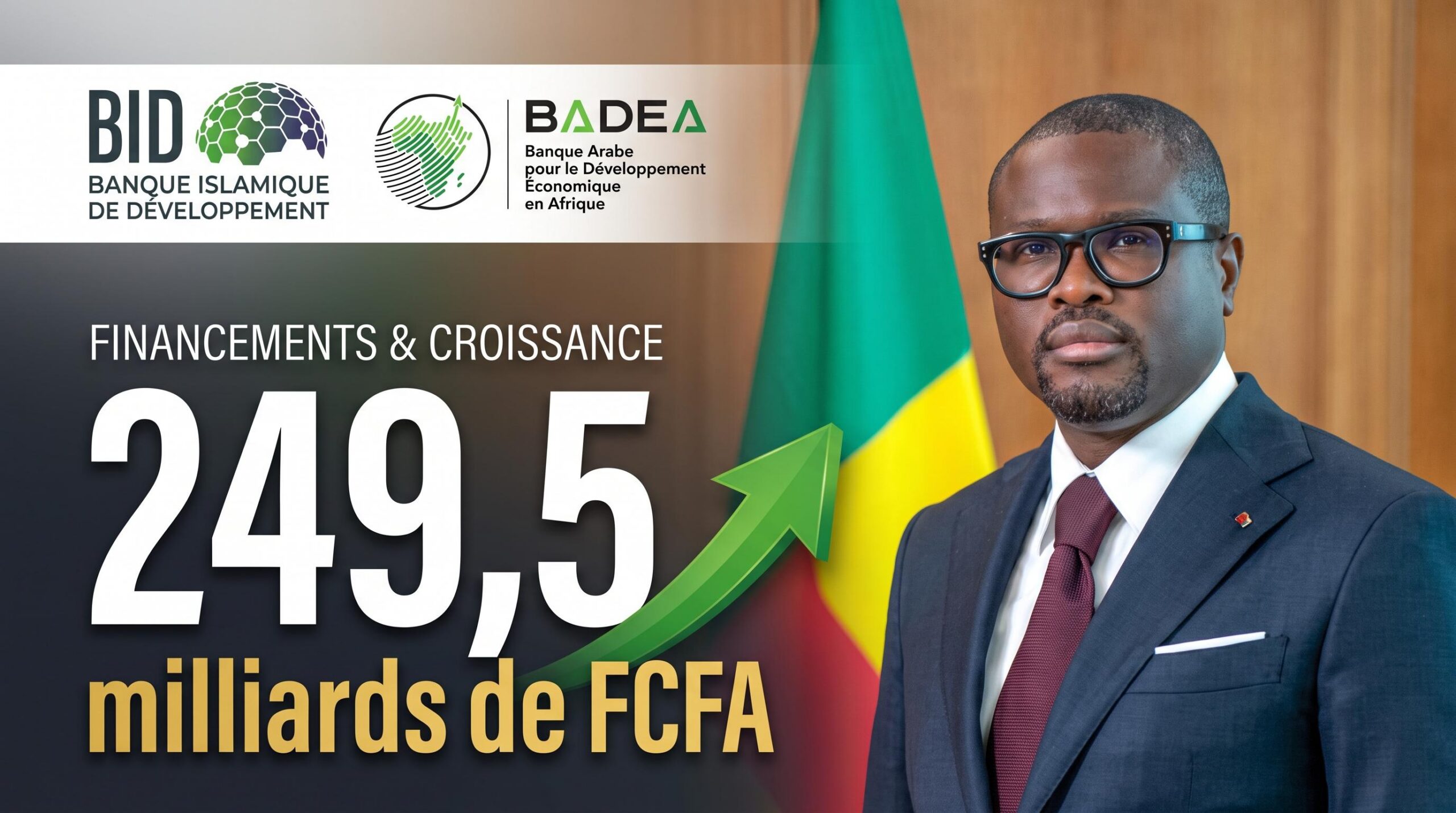
The Republic of Benin has finalized three major financing agreements totaling 249.5 billion West African CFA francs ($460 million) with the Islamic Development Bank (IsDB) and the Arab Bank for Economic Development in Africa (ABEDA). The move underscores Benin’s strategic financial positioning on the global stage following high-level negotiations during the IMF and World Bank Annual Meetings in Bangkok.
Direct injection fuels infrastructure expansion and economic ambition
Benin’s government has successfully mobilized these funds to accelerate critical infrastructure projects across transportation, energy, and public services. The agreements were formally signed on October 12 and 13, 2026, marking a significant milestone in the country’s ongoing efforts to leverage external financing while maintaining fiscal discipline. According to official statements, the proceeds will be allocated to high-impact projects designed to stimulate private sector growth and enhance regional connectivity.
A model of responsible borrowing and long-term vision
This funding initiative reflects a clear commitment to balanced economic growth. Unlike speculative borrowing, Benin’s strategy emphasizes transparency, project feasibility, and measurable returns on investment. The government has emphasized that each franc borrowed will be deployed toward sustainable development goals—such as modernizing ports, expanding renewable energy capacity, and improving rural access to electricity—with clear timelines for implementation and repayment.
Three pillars of financial credibility
- Fiscal consolidation: Achieved a reduction in the fiscal deficit from 7.2% of GDP in 2021 to an estimated 3.1% in 2024, reflecting disciplined budget management and improved revenue collection.
- Debt sustainability: Public debt has stabilized and, in some sectors, decreased—even after integrating previously underreported liabilities from state-owned enterprises.
- Investor confidence: Enhanced ratings from multilateral institutions, driven by structural reforms and a consistent track record of fiscal responsibility.
Strategic partnerships expand financial options for Benin
The collaboration with IsDB and ABEDA diversifies Benin’s funding sources beyond traditional Western lenders. This approach provides access to more favorable terms—including longer maturities and lower interest rates—while reducing exposure to volatile foreign exchange markets. It also enables Benin to align financing with the social and environmental priorities outlined in its national development strategy.
Analysts highlight that such diversification strengthens macroeconomic resilience. By not relying solely on one type of creditor or financial instrument, Benin mitigates risk and gains leverage in negotiating future terms.
From funding to tangible progress
The real test of success lies in how these funds translate into visible change for Benin’s citizens. The announced projects aim to:
- Upgrade national highways and rural roads to improve market access and reduce transport costs
- Expand solar and hydroelectric power generation to increase energy access from 52% to over 70% by 2028
- Construct new vocational training centers and digital hubs to prepare youth for high-demand sectors
- Strengthen water and sanitation infrastructure in secondary cities to reduce disparities across regions
The government has committed to publishing regular progress reports, including detailed expenditure tracking and third-party audits, to ensure accountability and maintain public trust.
Balancing growth with fiscal prudence
While the 249.5 billion FCFA injection is a strong vote of confidence, Benin’s leadership acknowledges that fiscal prudence remains essential. The goal is not simply to increase expenditure, but to ensure every investment generates economic and social value. This requires:
- Strict project prioritization based on cost-benefit analysis
- Transparent procurement processes to prevent waste and corruption
- Continuous monitoring of debt service capacity and refinancing risks
- Community engagement to validate local needs and adoption of solutions
In this context, the newly secured funding acts not as a financial windfall, but as a catalyst for sustainable transformation—one that empowers households, empowers businesses, and positions Benin as a regional leader in responsible economic growth.
A foundation for future prosperity
Benin’s ability to secure these funds—and deploy them effectively—sends a clear signal to international investors: this West African nation is open for business, committed to reform, and prioritizing long-term stability over short-term gains. The signing of these agreements is more than a financial transaction—it is a strategic endorsement of Benin’s vision for inclusive, resilient, and forward-looking development.