The Malian military has acknowledged a ‘tragic incident’ resulting in deaths and injuries during a military operation, but provided no specifics about the location, timing, or casualties. This admission follows reports of deadly airstrikes in Zanakoro and comes as international observers document persistent allegations of human rights abuses linked to Malian forces and their Russian partners.
In a brief statement released on October 14, 2026, the Malian Armed Forces General Staff confirmed reports of a ‘tragic incident occurring in an operational zone’ that resulted in ‘loss of life and injuries.’ The statement mentions individuals traveling on high-powered motorcycles between two settlements, yet omits critical details such as the exact location, date, casualty figures, or the circumstances surrounding the event.
Zanakoro bombings fuel concerns over military transparency
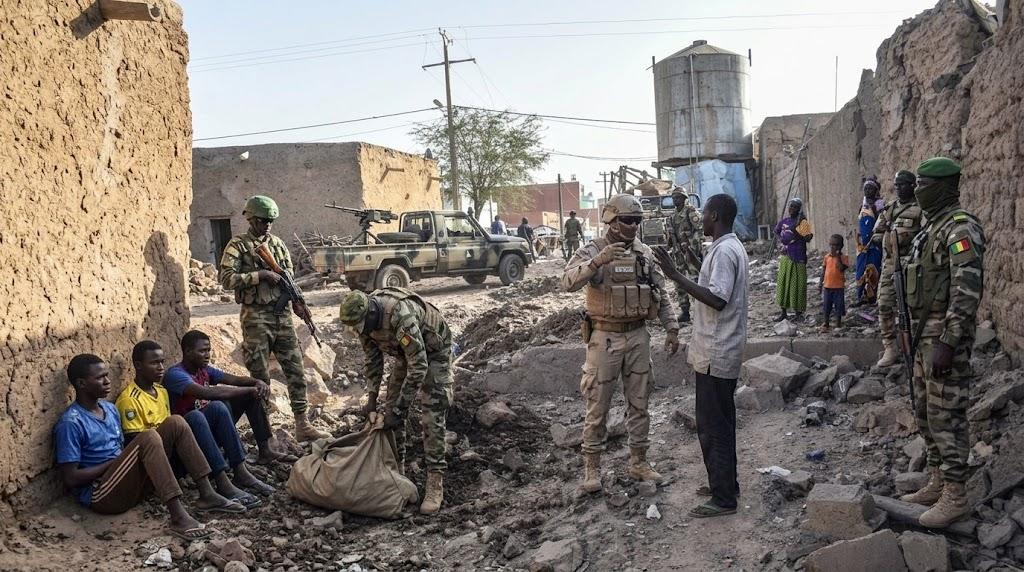
The vague communiqué arrives at a time of heightened scrutiny, particularly after reports of a deadly airstrike on October 12 in Zanakoro, within the Ségou region. Eyewitness accounts from local residents and community leaders indicate at least eight fatalities—primarily women and children, including a pregnant woman and three girls under the age of ten. Several others sustained serious injuries. Some accounts suggest the toll may be even higher.
According to testimonies, the strikes occurred as families returned from a baptism ceremony. Survivors describe successive bombings, damaged homes, and forced displacement into nearby villages and bushland. While the military’s statement does not explicitly connect the incident to Zanakoro, the proximity in timing has intensified public suspicion.
For affected families and displaced communities, the lack of clarity only deepens uncertainty. Without official confirmation or an independent investigation, accountability remains elusive, and the true scale of the tragedy remains unclear.
Pattern of abuse casts long shadow over military operations
This latest admission is not an isolated case. Human rights organizations have documented widespread allegations of abuses by Malian forces and their Russian affiliates during counterterrorism operations. A September 2026 report by Amnesty International identified seven incidents between June 2023 and December 2025 along the Mauritanian border, in which 34 civilians were allegedly killed through executions, throat-cutting, and burning. The report also documents torture, arbitrary detentions, enforced disappearances, looting, and property destruction.
Ethnic Fulani, Tuareg, and Arab communities are reportedly disproportionately affected, often targeted based on unfounded suspicions of supporting armed groups. The organization warns that several documented acts may constitute war crimes and calls for independent investigations and prosecutions of those responsible.
Africa Corps: continuity of violence despite new label
The transition from Wagner Group’s operations to Africa Corps has done little to alleviate concerns. This Russian-led force assumed Wagner’s role in Mali in 2025, aligned with the transitional government’s military strategy. Analysts note that despite the rebranding, the pattern of reported abuses—including airstrikes, executions, and torture—has continued unchecked.
In July 2026, Human Rights Watch reported that eight civilians, including three children, were killed in an Africa Corps airstrike in Kyrnia, Mopti region. Two bombs struck near a village chief’s residence and livestock market, though the presence of the Group for the Support of Islam and Muslims (JNIM) in the area did not justify indiscriminate targeting. The attack raised serious concerns about disproportionate force and the failure to protect civilian infrastructure.
International law demands clarity and accountability
The Malian government faces a dual challenge: combating jihadist violence while upholding the rights of civilians. Groups such as JNIM have caused immense suffering through attacks, displacement, and economic disruption. However, the response cannot include indiscriminate strikes or collective punishment.
International humanitarian law requires all parties to distinguish between combatants and civilians, take all feasible precautions to spare lives, and avoid disproportionate attacks. When civilians are harmed, authorities must investigate the incident thoroughly, determine whether violations occurred, and hold those responsible to account. Transparency is not a political concession—it is the foundation of public trust.
The admission is just the beginning
The military’s acknowledgment of civilian casualties is a necessary first step—but it is far from sufficient. To restore credibility, authorities must answer critical questions: Where did the incident occur? When did it happen? How many were killed or injured? Were civilians targeted? Has an investigation been launched, and have families been informed?
Without verifiable details, the cloud of uncertainty will linger over Zanakoro and other contested areas. For the victims and their communities, the pursuit of truth and justice cannot be deferred. The army’s admission must serve as the starting point for accountability—not an endpoint.
As long as grave allegations persist without credible investigations or transparent processes, the shadow of military operations will continue to darken the lives of Mali’s most vulnerable.